
Climate change is accelerating globally, leading to more frequent extreme weather events, rising water and food insecurity, and growing health impacts. These changes are causing significant damage to infrastructure and ecosystems, along with major economic losses and increased threats to lives and livelihoods. As a result, the need for climate adaptation is rising sharply, especially… [Read More]
UNDP Boosts Community Livelihoods and Commerce in Jamaica

Six months after Hurricane Melissa struck Jamaica, the United Nations Development Programme (UNDP) reports that recovery is steadily underway under its Jamaica Resilient Recovery Initiative (JARRI). The programme is helping hundreds of small and micro enterprises rebuild livelihoods while also restoring local markets and supporting community members through debris clearance and paid work opportunities. A… [Read More]
South Sudan Food Crisis Deepens with Millions Facing Acute Hunger
The Food and Agriculture Organization (FAO), World Food Programme (WFP), and UNICEF have warned of a rapidly worsening hunger crisis in South Sudan, where 7.8 million people—around 56 percent of the population—are projected to face high levels of acute food insecurity between April and July 2026. This includes a sharp rise in the most extreme… [Read More]
Lifesaving Food Aid in Somalia Supported by Flexible WFP Funding

The United Nations World Food Programme (WFP) has announced that it has received USD 18.7 million in flexible funding from Belgium, Canada, France, Ireland, Luxembourg, the Netherlands, Norway, Qatar, and Switzerland to sustain emergency food assistance in Somalia. This support will allow WFP to continue providing lifesaving food aid to drought-affected communities through July, after… [Read More]
EU Supports Reopening of Hostomel Primary School in Ukraine
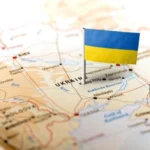
A primary school in Hostomel, Kyiv oblast, has reopened after a major EU-financed renovation aimed at restoring education infrastructure damaged during Russia’s full-scale invasion. Primary School No. 1, which was heavily affected in the early phase of the war, has been rebuilt under a €613,000 project supported through the European Investment Bank (EIB), with €511,000… [Read More]
EBRD and EU Boost Support for Ukrainian Railways

The European Bank for Reconstruction and Development (EBRD) and the European Union (EU), with additional support from the United Kingdom, are increasing financial assistance to Ukrainian Railways (Ukrzaliznytsia) to strengthen Ukraine’s energy security, transport resilience, and critical infrastructure amid ongoing war-related damage. A €44 million EU investment grant under the Ukraine Investment Framework is being… [Read More]
IRC and Gavi ZIP Programme Delivers 30M Vaccine Doses
The International Rescue Committee (IRC), together with partners in the Gavi-funded REACH consortium, has announced that it has delivered over 30 million vaccine doses in fragile and conflict-affected settings, reaching more than 1 million children who had previously received no vaccines. The announcement was made in New York ahead of World Immunization Week 2026. Since… [Read More]
Urgent Action Needed on Fertiliser Shortages in Africa
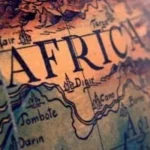
The ongoing geopolitical conflict involving the United States, Israel, and Iran is disrupting global fertiliser trade flows, particularly through the Strait of Hormuz, a key transit route for ammonia, urea, and other essential agricultural inputs. These disruptions are expected to significantly affect African farmers, who depend heavily on imported fertilisers to sustain food production across… [Read More]
Strengthening SMEs in Mozambique’s Expanding Energy Value Chain

The African Development Bank Group is organizing a high-level webinar focused on strengthening small and medium-sized enterprises (SMEs) within Mozambique’s energy supply chains, particularly as the country expands its Liquefied Natural Gas (LNG) sector. The discussion draws on insights from two initiatives, the Linkar Project and the Moz YWEB Start-Up Programme, which have been supported… [Read More]
South Sudan: Nearly 8 Million at Risk of Acute Hunger
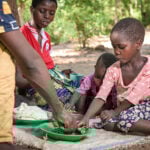
Nearly eight million people in South Sudan are facing acute hunger as worsening conflict, displacement, and economic instability deepen an already severe humanitarian crisis, according to a recent United Nations report. The report warns that about 7.8 million people, representing 56% of the population, will experience high levels of food insecurity in the coming months,… [Read More]
Landmark Deal: EBRD Sells Giurgiulesti Port to Constanța
The European Bank for Reconstruction and Development (EBRD) has completed the sale of ICS Danube Logistics, the operator of Moldova’s Giurgiulesti International Free Port, to Romania’s state-owned Port of Constanța, which now becomes the sole owner of the facility. The transaction followed an international competitive tender process aimed at selecting a long-term strategic investor capable… [Read More]
EBRD and EU Boost Support for Ukrainian Railways
The European Bank for Reconstruction and Development (EBRD) and the European Union (EU), along with support from the United Kingdom, are providing expanded financial assistance to Ukrainian Railways (Ukrzaliznytsia) to strengthen Ukraine’s energy security, transport resilience, and critical infrastructure during the ongoing war. The support package includes a €44 million EU investment grant under the… [Read More]
Ukraine Recovery: Building a Path to Future Prosperity

The European Bank for Reconstruction and Development (EBRD), in partnership with Chatham House, is convening a high-level half-day conference focused on Ukraine’s wartime recovery and long-term economic prosperity. The discussion builds on analysis from both institutions and aims to outline a strategic roadmap for rebuilding Ukraine’s economy after extensive war-related destruction. The conference highlights the… [Read More]
Two Decades On, Darfur Children Still Face Brutal Violence

UNICEF’s new Child Alert report, “Darfur: 20 Years On, Children Under Threat,” warns that children in Darfur are once again facing extreme violence, echoing the atrocities seen two decades ago, but on a larger and more severe scale. The report highlights that international attention is limited even as the humanitarian situation rapidly deteriorates. Since April… [Read More]
WHO Urges Faster Progress on Viral Hepatitis Elimination
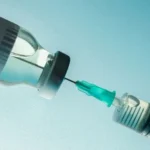
The WHO report highlights major progress in the global fight against hepatitis B and C, which together account for about 95% of all hepatitis-related deaths worldwide. Despite these gains, the diseases still caused around 1.34 million deaths in 2024, while new infections continue at an estimated 1.8 million annually, or more than 4,900 cases each… [Read More]
Syria, Cuba, Myanmar: Key Global Updates on Rights and Aid

UN human rights investigators have been informed of a mass grave discovered last month in Al-Hassakeh Governorate during a five-day mission in Syria. According to the UN human rights office (OHCHR), the mission recorded testimonies of serious human rights violations, including killings, enforced disappearances, arbitrary detention, and the transfer of detainees to Iraq. The OHCHR… [Read More]
Crisis from Hormuz to Lebanon Disrupts Trade and Aid Networks

The Director-General of the Food and Agriculture Organization (FAO), Qu Dongyu, warned that the closure of key maritime routes, particularly the Strait of Hormuz, is severely disrupting global energy supplies, fertilizer flows, and agricultural inputs, with wide-ranging implications for food security. He stressed that peace and stability are essential for ensuring the right to food,… [Read More]
WHO Boosts Biomanufacturing Workforce for Health Security

The World Health Organization (WHO) has designated a network of regional training centres for biomanufacturing across all six WHO regions, marking a significant step toward strengthening the global workforce required to produce vaccines, biotherapeutics, and other essential biological products. The announcement was made in Geneva on 29 April 2026 as part of WHO’s broader effort… [Read More]
Progress in Hepatitis Elimination Falls Short of 2030 Targets
Global efforts to combat viral hepatitis are showing measurable progress in reducing infections and deaths, but the disease continues to pose a major public health challenge, according to a new WHO report launched at the World Hepatitis Summit. Hepatitis B and C, which account for 95% of hepatitis-related deaths worldwide, caused about 1.34 million deaths… [Read More]
Comprehensive Abortion Care Training and Delivery

The HRP learning programme, developed under the UNDP/UNFPA/UNICEF/WHO/World Bank Special Programme of Research, Development and Research Training in Human Reproduction and delivered through the WHO Academy, is designed to help health workers provide abortion care that is safe, respectful, and of high quality. It brings together key elements of comprehensive abortion care into a structured… [Read More]
Cambodia Advances Jobs and Social Protection Implementation

Translating national commitments into measurable progress requires Cambodia to move beyond policy ambition and focus on strong delivery systems that can track results and align institutions around shared priorities. In April 2026, the Royal Government of Cambodia, together with the United Nations, held a technical consultation in Phnom Penh with over 90 stakeholders from government… [Read More]
Americas Strengthen Pandemic Response in Polaris II Exercise

Exercise Polaris II was conducted on April 22–23 with participation from Brazil, Colombia, El Salvador, Paraguay, and Suriname to assess and strengthen national pandemic response capacities across the Americas. Coordinated by the World Health Organization with support from the Pan American Health Organization, the simulation tested how countries respond to a rapidly spreading novel pathogen… [Read More]
PAHO–CARPHA Webinar Focuses on Improving Medicine Quality Through Labs
The Pan American Health Organization, in collaboration with the Caribbean Public Health Agency, hosted a technical webinar titled “Strengthening Medicines Quality through Laboratory Testing: The Indian Pharmacopoeia,” aimed at improving medicines quality assurance systems across the Caribbean. The session brought together nearly 100 participants from 16 countries and territories, reflecting strong regional engagement on pharmaceutical… [Read More]


