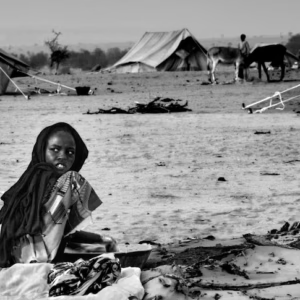
Nearly eight million people in South Sudan are facing acute hunger as worsening conflict, displacement, and economic instability deepen an already severe humanitarian crisis, according to a recent United Nations report. The report warns that about 7.8 million people, representing 56% of the population, will experience high levels of food insecurity in the coming months, prompting urgent calls from the Food and Agriculture Organization, World Food Programme, and UNICEF for immediate international action to prevent an “irreversible humanitarian catastrophe.”
The situation is especially critical for children, with acute malnutrition among those aged six months to five years rising by 100,000 in just six months, reaching a total of 2.2 million children. The report also estimates that around 700,000 children are at grave risk of death due to severe malnutrition, highlighting the scale of the crisis among the most vulnerable.
Humanitarian conditions have further deteriorated as ongoing fighting has damaged or closed many nutrition and health services across the country. Supply shortages and insufficient funding have reduced access to life-saving treatment, worsening the risk of acute malnutrition in affected communities.
The crisis is being driven by a combination of factors, including ethnic conflict, climate-related shocks, and spillover violence from the conflict in neighboring Sudan. South Sudan, which became independent in 2011, continues to struggle with political instability and extreme poverty, making it highly vulnerable to repeated humanitarian shocks.
Economic decline has further intensified the crisis, leaving the country among the poorest globally and increasing fears of a return to full-scale civil war. This comes more than seven years after a peace agreement was signed in 2018 to end a conflict that previously killed nearly 400,000 people.
Recent months have seen renewed and intensified clashes between government forces, including the South Sudan People’s Defence Forces, and opposition groups. These tensions are linked to long-standing political rivalries, particularly between President Salva Kiir Mayardit and suspended Vice President Riek Machar, who is currently on trial in Juba on serious criminal charges that he denies.