
A major review published in The Lancet has confirmed that mRNA vaccines are a safe and effective medical technology, based on evidence from laboratory research, clinical trials, and real-world safety monitoring. The review examined more than two decades of mRNA vaccine research and data from billions of vaccine doses administered worldwide. Researchers concluded that serious… [Read More]
cat
UN Food Systems Hub Strengthens Regional Cooperation Across the Caribbean and Central America
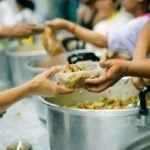
The UN Food Systems Coordination Hub has concluded a high-level regional mission across the Caribbean and Central America aimed at accelerating food systems transformation through stronger partnerships, improved coordination, and increased investment in sustainable agriculture and nutrition. The mission, led by Carlos Watson, Director a.i. of the UN Food Systems Coordination Hub, brought together government… [Read More]
EBRD Supports Community Clean-Up Initiative in Amman to Promote Sustainable Waste Management
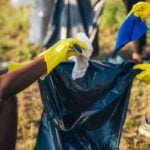
The European Bank for Reconstruction and Development (EBRD), together with the European Union, Austria, the Green Climate Fund (GCF), and the TaiwanBusiness–EBRD Technical Cooperation Fund, has partnered with the Greater Amman Municipality to support a community clean-up initiative in Amman aimed at improving sustainable waste management and environmental awareness. The event took place at Queen… [Read More]
Uzbekistan Endorses Agrifood Investment Roadmap to Accelerate Climate Action

Uzbekistan has officially endorsed a new agrifood investment roadmap aimed at accelerating the transition toward climate-smart agriculture and strengthening the resilience of its food systems. The initiative marks a shift from national climate commitments to concrete, investment-ready projects designed to modernize the country’s agricultural sector. Developed with support from the European Bank for Reconstruction and… [Read More]
ILO Training in Turin Strengthens Collective Bargaining and Negotiation Skills

The International Labour Organization’s (ILO) International Training Centre (ITCILO) in Turin has delivered a multilingual training course aimed at strengthening negotiation skills for effective collective bargaining among employers’ and workers’ representatives. The programme, supported by the Government of Canada, brought together 102 participants from diverse industrial relations backgrounds. Held from 25 to 29 May 2026,… [Read More]
Over 20,000 Children in Türkiye Supported to Stay in School Through ILO Initiative

More than 20,000 children in Türkiye have been supported to remain in education through a large-scale initiative led by the International Labour Organization (ILO), in collaboration with the Ministry of Labour and Social Security. The project focuses on eliminating child labour in seasonal agriculture and strengthening long-term systems to keep vulnerable children in school. The… [Read More]
Nepal Advances Care Cooperatives to Boost Women’s Employment and Community Care Services

Nepal is launching a new national initiative to promote care cooperatives, aiming to strengthen community-based care services, support care workers, and reduce unpaid care responsibilities that continue to limit women’s participation in the workforce. The program is being developed with support from the International Labour Organization (ILO) and implemented in coordination with national cooperative institutions…. [Read More]
Green Climate Fund Approves $30 Million for Climate Resilience in Tajikistan

The Green Climate Fund (GCF) has approved a $30 million climate adaptation project aimed at strengthening climate resilience and protecting food security in Tajikistan, according to the United Nations World Food Programme (WFP). The initiative is expected to directly benefit around 73,500 people in climate-vulnerable regions of the country. Implemented in partnership with Tajikistan’s Committee… [Read More]
World Bank Group Recommends Reforms to Boost Private Investment and Create 300,000 Jobs in Uzbekistan

The World Bank Group has outlined a set of policy recommendations aimed at unlocking private investment and generating more than 300,000 jobs in Uzbekistan, according to a new Country Private Sector Diagnostic (CPSD) released on July 6, 2026. The report identifies logistics, tourism, and pharmaceuticals as three high-potential sectors where targeted reforms could significantly attract… [Read More]
EIB and Bpifrance Strengthen Partnership With €550 Million for Renewable Energy, Security and Defence

The European Investment Bank (EIB) and Bpifrance have announced a new €550 million financing package aimed at accelerating renewable energy deployment and strengthening France’s security and defence sectors. The agreement deepens a long-standing partnership between the two institutions focused on supporting strategic industries and advancing Europe’s economic and energy autonomy. The financing is divided into… [Read More]
EIB Grants €500 Million to CDC Habitat to Boost Affordable Housing in France
The European Investment Bank (EIB) has approved a second €250 million tranche of financing for France’s CDC Habitat, bringing total support to €500 million for the development of intermediate rental housing across the country. The funding is part of a broader 2025 agreement aimed at addressing housing shortages in high-demand urban areas. The latest tranche… [Read More]
EIB Provides €345 Million to Alperia for Sustainable Energy Infrastructure in South Tyrol

The European Investment Bank (EIB) has approved financing of up to €345 million for Italian energy company Alperia to support a wide-ranging sustainable infrastructure upgrade in South Tyrol. The investment is aimed at strengthening energy security, modernizing renewable energy systems, and accelerating the region’s clean energy transition. The financing, structured as a green loan, will… [Read More]
EIF Backs Climentum With €40 Million to Boost Europe’s Climate-Tech Startups
The European Investment Fund (EIF) has committed €40 million to Climentum Capital Fund II, a Denmark-based venture capital fund focused on early-stage climate technology companies across Europe. The investment is part of a broader €60 million first close, supported by additional contributions from Denmark’s export and investment fund EIFO and the Danish Society of Engineers… [Read More]
Five Insights for Building Africa’s Inclusive Prosperity
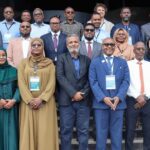
A new World Bank–Agence Française de Développement (AFD) analysis highlights key priorities for achieving inclusive prosperity across Africa, emphasizing that current growth patterns are not sufficient to reduce poverty or create enough quality jobs for the continent’s rapidly expanding population. Despite economic resilience across Sub-Saharan Africa, projected growth is expected to remain around 4% in… [Read More]
UNDP Urges Creatives to Tap AfCFTA’s 1.4 Billion Market and Boost Investment
The United Nations Development Programme (UNDP) has called on Nigerian entrepreneurs in the fashion, leather, and creative industries to take advantage of the African Continental Free Trade Area (AfCFTA), which provides access to a market of about 1.4 billion people. The appeal was made during the Enterprise Spotlight event held in Lagos under the theme… [Read More]
Caribbean Leads Global Effort to Eliminate Mother-to-Child Disease Transmission

The Caribbean is emerging as a global leader in eliminating mother-to-child transmission (EMTCT) of diseases such as HIV, syphilis, and hepatitis B, supported by coordinated regional health reforms and international partnerships. The initiative, led by the Pan American Health Organization (PAHO), is strengthening maternal and child health systems across CARICOM member states through targeted investments… [Read More]
Côte d’Ivoire Secures $399 Million World Bank Financing to Support Private Investment

Côte d’Ivoire has ratified two loan agreements worth approximately $399.2 million with the World Bank Group, aiming to strengthen private sector investment and accelerate job creation. The announcement was made on July 2, following the signing of the agreements in June. The financing package includes a $299.8 million loan from the International Development Association and… [Read More]
Africa Finance Corporation Prices $500 Million Eurobond at Record-Low Spread
Africa Finance Corporation (AFC) has successfully priced a $500 million five-year Eurobond, marking a significant milestone in its funding strategy with its lowest-ever spread over U.S. Treasury securities for a bond of similar maturity. The deal, announced on July 2, highlights strong global investor confidence in the institution’s credit profile and Africa-focused infrastructure mandate. The… [Read More]
Tanzania Secures $3.1 Billion Five-Year Health Deal With the U.S.

Tanzania and the United States have signed a five-year health cooperation agreement valued at $3.1 billion, marking a major step in strengthening the country’s healthcare system and expanding long-term health security. The agreement was announced on July 1, 2026, by the U.S. Embassy in Tanzania and is designed to promote joint investment, infrastructure development, and… [Read More]
Côte d’Ivoire Approves $366.3 Million Funding for Health and Energy Projects
Côte d’Ivoire has approved approximately $366.3 million in new financing aimed at boosting its health system and expanding energy infrastructure, marking another step in the country’s long-term development strategy. The decision was finalized during a cabinet meeting held on July 1, with funding secured through partnerships with international development institutions. A significant portion of the… [Read More]
Supporting Food System Sovereignty in Burkina Faso
UNOPS (UNOPS Official Website) is working with the government of Burkina Faso under a World Bank (World Bank Official Website)-financed initiative to strengthen food system resilience and advance agricultural modernization. The effort is part of the West Africa Food System Resilience Programme, which aims to improve food security and build long-term self-sufficiency in the region…. [Read More]
Burkina Faso Backs ADF-17 to Strengthen African Development Financing Ownership

Burkina Faso has contributed XOF 100 million (around $167,000) to the 17th replenishment of the African Development Fund (ADF-17), the concessional financing arm of the African Development Bank Group. This move highlights growing African participation in funding its own development agenda and reducing dependence on external aid. The contribution reflects a broader shift across the… [Read More]
Mali Ratifies AfDB Loans to Boost Electricity Supply in Bamako

Mali has formally ratified loan agreements with the African Development Bank Group (AfDB) to support a major electricity infrastructure project aimed at strengthening power supply in the capital city, Bamako, and surrounding areas. The approval, made by Mali’s National Transitional Council (CNT), enables the implementation of the Bamako North 225 kV Loop Project, a large-scale… [Read More]


