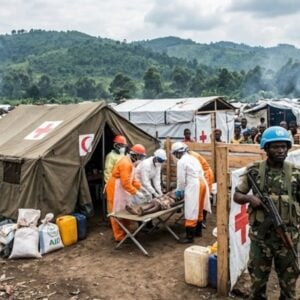
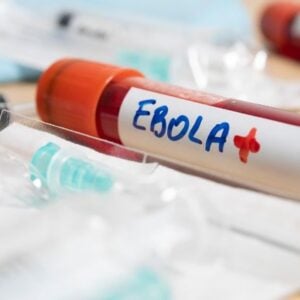
The Democratic Republic of Congo (DRC) is facing a new Ebola outbreak in its conflict-ravaged east, compounding one of the world’s most severe humanitarian emergencies. The outbreak involves the Bundibugyo strain, a rare form of Ebola with no licensed vaccine or targeted treatment, making containment especially difficult.
The DRC was already in crisis before the outbreak. According to the IRC’s 2026 Emergency Watchlist, nearly 15 million people are in urgent need of humanitarian assistance, with 26.7 million facing crisis-level food insecurity. Armed conflict involving more than 120 groups continues to destabilize the east, while collapsing health services and drastic aid cuts have left communities vulnerable.
The outbreak is centered in Ituri Province, with confirmed cases in Goma, a densely populated transport hub. The World Health Organization (WHO) has declared it a Public Health Emergency of International Concern, while the Africa CDC has labeled it a Public Health Emergency of Continental Security.
Unlike past outbreaks caused by the Zaire strain, the Bundibugyo strain lacks a vaccine. Containment depends entirely on early detection, infection prevention, community trust, and rapid response. Four healthcare workers have already died, further weakening overstretched systems.
Challenges to containment include conflict and insecurity restricting health workers and supplies, funding cuts weakening surveillance networks, mass displacement making contact tracing nearly impossible, and community mistrust hampering prevention efforts.
Women, children, healthcare workers, and displaced communities in overcrowded settlements face the highest risks. Neighboring countries are increasing surveillance to prevent cross-border spread.
The International Rescue Committee (IRC) has launched an emergency response to reach over 500,000 people, focusing on infection prevention and control through PPE distribution and hygiene improvements, risk communication to counter misinformation, and protection services including psychosocial support and assistance for vulnerable households.
Rapid international support, sustained funding, and regional coordination are critical. Communities must have access to accurate public health information and safe healthcare, with special attention to the needs of women and girls, who are consistently hardest hit in Ebola outbreaks.