The International Organization for Migration (IOM) has urged governments and international partners to strengthen cross-border cooperation in response to the ongoing Ebola outbreak in the Democratic Republic of the Congo (DRC) and Uganda, warning that border closures alone may worsen transmission risks.
According to the latest figures from the World Health Organization (WHO), the outbreak has resulted in 321 confirmed cases and 48 deaths in the DRC, while Uganda has reported nine confirmed cases and one death. The disease involved is the Bundibugyo strain of Ebola virus disease.
IOM officials emphasize that restricting border movement can drive people toward informal crossing points, making it more difficult for health authorities to conduct screenings, surveillance, and contact tracing. Instead, the organization advocates for coordinated regional measures that allow safe and monitored mobility while maintaining public health protections.
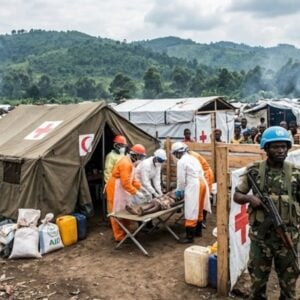
The outbreak is centered in eastern DRC, a region already facing significant humanitarian challenges, including conflict and large-scale displacement. More than 3.6 million people are currently displaced across the country, with nearly 922,000 located in Ituri Province, where the outbreak is concentrated.
Cross-border transmission between the DRC and Uganda has increased concerns among health authorities. Daily movement across borders remains essential for trade, employment, and access to basic services, highlighting the need for a collaborative response among neighboring countries.
IOM is supporting governments by strengthening border health operations, disease surveillance systems, mobility tracking, community engagement, and risk communication efforts. The organization says understanding migration and travel patterns is critical for preventing further spread and ensuring timely detection of new cases.
Despite ongoing response efforts, significant funding gaps continue to challenge containment operations. IOM has called for additional international support to maintain surveillance networks, expand community-based prevention programs, and strengthen healthcare services in displacement camps and border communities.
Health experts stress that Ebola remains a preventable and controllable disease when rapid detection, coordinated action, and adequate resources are in place. Strengthening regional cooperation will be essential to limiting the outbreak and protecting vulnerable populations across Central Africa.