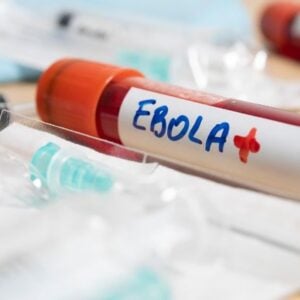
Brazzaville/Brussels/Copenhagen — June 2, 2026 — The European Union (EU) and the World Health Organization (WHO) have stepped up joint efforts to combat the ongoing Ebola outbreaks in the Democratic Republic of the Congo (DRC) and Uganda, reinforcing surveillance, infection prevention, community engagement, and essential health services.
The EU has allocated €15 million in humanitarian funding, including €5 million directly to WHO, to support emergency operations and preparedness in affected areas and neighboring countries. In addition, the EU launched a Humanitarian Air Bridge operation, delivering 100 tonnes of emergency supplies such as medicines, PPE, tents, and operational equipment to eastern DRC.
WHO Regional Directors Dr Hans Henri P. Kluge (Europe) and Dr Mohamed Yakub Janabi (Africa) praised the EU’s rapid support, noting that viruses do not stop at borders and that strong multilateral cooperation is essential. “The EU’s partnership with WHO for rapid response, investment in surveillance, genomic sequencing, and vaccine research is exactly what effective multilateral action looks like,” said Dr Kluge.
The EU has also co-financed WHO’s Regional Emergency Hub in Dakar with €1.5 million, enabling the deployment of medical supplies and expert teams to the DRC. Commissioner Hadja Lahbib emphasized that investing in preparedness and rapid response is both a humanitarian imperative and a strategic necessity.
This cooperation reflects the EU’s Global Health Resilience Initiative, translating political commitment into concrete action through WHO-led partnerships. By supporting outbreak response at the source, the EU and WHO aim to protect communities in Africa while reducing risks to Europe and beyond.
The joint response underscores a shared commitment to contain the outbreaks quickly and strengthen resilience against future health emergencies, demonstrating the power of Europe–Africa solidarity in times of crisis.