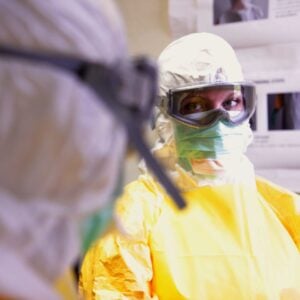
Geneva — May 28, 2026 — The World Health Organization (WHO) has urged warring parties in the eastern Democratic Republic of Congo (DRC) to agree to an immediate ceasefire to allow health workers to respond to a deadly outbreak of the Bundibugyo strain of Ebola. WHO Director General Tedros Adhanom Ghebreyesus warned that stopping transmission “depends entirely on humanitarian access,” as conflict continues to obstruct containment efforts.
The outbreak in Ituri province has created what Tedros described as a “catastrophic collision of disease and conflict.” Fighting between the DRC army and the M23 rebel group has displaced thousands, pushed exposed contacts into overcrowded camps, and led to repeated attacks on health facilities. The Africa CDC has warned that the outbreak could infect up to 7,500 people, with nearly 1,000 suspected cases and over 100 deaths already reported.
Community mistrust has further complicated the response. In recent days, residents attacked and torched tents housing Ebola patients at Mongbwalu General Referral Hospital, demanding the release of bodies for burial despite the risk of infection. One patient died while attempting to escape the flames, and others fled the facility.
International travel restrictions have added pressure. The United States and Canada have closed borders to citizens from the DRC, Uganda, and South Sudan, while the European Centre for Disease Prevention and Control (ECDC) stressed that the risk to Europe remains low but emphasized the need for rapid detection and isolation of symptomatic travellers.
Meanwhile, scientists are racing to adapt existing Ebola treatments to the Bundibugyo strain. Trials are being extended to test oral antivirals such as Obeldesivir and Molnupiravir, while monoclonal antibody therapies like MBP134 are showing promise in laboratory studies. The DRC has requested access to experimental treatments developed in the US to launch clinical trials for confirmed patients.
With no approved vaccines or treatments for Bundibugyo and a fatality rate of up to 50 percent, WHO insists that humanitarian access is critical. “We cannot build community trust or isolate the sick while bombs are falling,” Tedros said, calling for safe corridors for medical teams to contain the outbreak.