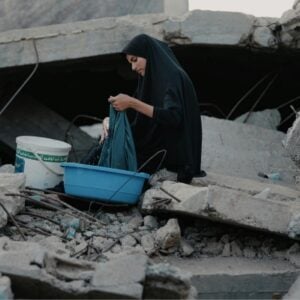
Modern conflicts are becoming increasingly dangerous for women and girls as wars shift from distant battlefields into cities and communities. Civilians are now directly exposed to violence through the destruction of homes, hospitals, schools, and shelters. According to recent UN findings, hundreds of millions of women live close to active conflict zones, where daily life can suddenly collapse under bombardment, displacement, and the breakdown of essential services. While war affects everyone, women and girls often face unique and disproportionate consequences shaped by existing inequalities.
During conflicts, women and girls are more likely to be displaced, lose access to education and healthcare, suffer trauma, and experience poverty and hunger. They are also expected to carry the burden of caring for children, the elderly, and injured family members while surviving dangerous and unstable conditions themselves. Despite their critical role in sustaining families and communities during war, women are frequently excluded from peace negotiations and political decision-making processes.
Recent years have shown a troubling increase in civilian harm directed toward women and children. Conflicts in places such as Ukraine, Gaza, Sudan, and the Democratic Republic of the Congo have resulted in rising female casualties as warfare increasingly takes place in populated areas. Air strikes, drone attacks, and missile bombardments have devastated civilian infrastructure, leaving many women trapped in unsafe environments with nowhere to escape. Residential neighborhoods, hospitals, and shelters have become frequent targets, intensifying the risks faced by civilians.
The article highlights how sexual violence sharply increases during war and is often used deliberately as a weapon to terrorize and destabilize communities. Women and girls in conflict zones face rape, forced marriage, trafficking, and other forms of gender-based violence. In countries like Sudan, reports of such violence have risen dramatically, while fear, stigma, and weak accountability systems prevent many survivors from seeking justice or support. International organizations stress that these crimes are not accidental consequences of war but calculated strategies used to exert control and spread fear.
Displacement caused by conflict creates additional dangers for women and girls. Millions of women across Gaza, Sudan, Lebanon, and other regions have been forced to flee repeatedly, often living in overcrowded shelters with little security, privacy, or access to healthcare. Many become separated from family support systems while carrying responsibility for children and elderly relatives. The uncertainty of displacement leaves women vulnerable to exploitation, violence, and severe emotional exhaustion.
War also deeply damages women’s physical and mental health. In places like Gaza, healthcare systems have nearly collapsed due to attacks on hospitals and shortages of medical supplies. Women have struggled to access maternal care, treatment for injuries, and basic necessities such as menstrual hygiene products. Hunger and food insecurity have worsened, with women frequently sacrificing their own nutrition to feed their families. At the same time, prolonged exposure to violence and displacement has triggered rising levels of depression, anxiety, and post-traumatic stress disorder among women in conflict zones, while mental health support remains extremely limited.
Conflict severely impacts women’s economic security and livelihoods. Many women lose jobs and income as businesses collapse, schools close, transport systems fail, and public services disappear. Since women are more likely to work in unstable or low-paid sectors, they are often among the first to face unemployment during crises. At the same time, unpaid care responsibilities increase significantly, leaving women with fewer opportunities to recover economically. Displacement can also strip women of savings, property, legal documents, and social support networks, increasing their vulnerability to exploitation and poverty.
Girls’ education is another major casualty of war. Across conflict-affected countries, girls are far more likely to drop out of school due to insecurity, displacement, poverty, and restrictive social norms. In Ukraine, attacks have destroyed schools and interrupted learning for millions of children. In Afghanistan, restrictions imposed after the Taliban takeover have effectively barred girls from secondary education, worsening inequality and limiting future opportunities for young women. Denial of education not only harms individuals but also weakens long-term social and economic development.
Despite these hardships, women continue to play essential roles in rebuilding communities and supporting survival during conflict. Women-led organizations provide food, healthcare, psychosocial support, and economic assistance in some of the world’s most dangerous environments. However, many of these organizations face severe funding shortages even as humanitarian needs continue to rise.
The article also emphasizes the importance of including women in peace processes. Evidence from countries such as Colombia, Mali, Niger, South Sudan, and Yemen shows that peace agreements are often more inclusive and durable when women participate in negotiations. Yet globally, women remain significantly underrepresented in formal peace talks. While women frequently lead local peacebuilding efforts and community recovery, they are still too often excluded from official decision-making spaces.
UN Women continues to support women and girls in conflict zones by providing emergency aid, protection services, mental health support, cash assistance, and livelihood opportunities. The organization also works to ensure women’s voices are included in humanitarian responses and peacebuilding initiatives. The article concludes by stressing that war does not affect everyone equally and that recognizing the experiences of women and girls is essential for building fairer, more lasting solutions to conflict and recovery.