• Skip to primary navigation
  • Skip to main content
  • Skip to primary sidebar

fundsforNGOs News

Grants and Resources for Sustainability

  • Subscribe for Free
  • Premium Support
  • Premium Login
  • Premium Sign up
  • Home
  • Funds for NGOs
    • Agriculture, Food and Nutrition
    • Animals and Wildlife
    • Arts and Culture
    • Children
    • Civil Society
    • Community Development
    • COVID
    • Democracy and Good Governance
    • Disability
    • Economic Development
    • Education
    • Employment and Labour
    • Environmental Conservation and Climate Change
    • Family Support
    • Healthcare
    • HIV and AIDS
    • Housing and Shelter
    • Humanitarian Relief
    • Human Rights
    • Human Service
    • Information Technology
    • LGBTQ
    • Livelihood Development
    • Media and Development
    • Narcotics, Drugs and Crime
    • Old Age Care
    • Peace and Conflict Resolution
    • Poverty Alleviation
    • Refugees, Migration and Asylum Seekers
    • Science and Technology
    • Sports and Development
    • Sustainable Development
    • Water, Sanitation and Hygiene (WASH)
    • Women and Gender
  • Funds for Companies
    • Accounts and Finance
    • Agriculture, Food and Nutrition
    • Artificial Intelligence
    • Education
    • Energy
    • Environment and Climate Change
    • Healthcare
    • Innovation
    • Manufacturing
    • Media
    • Research Activities
    • Startups and Early-Stage
    • Sustainable Development
    • Technology
    • Travel and Tourism
    • Women
    • Youth
  • Funds for Individuals
    • All Individuals
    • Artists
    • Disabled Persons
    • LGBTQ Persons
    • PhD Holders
    • Researchers
    • Scientists
    • Students
    • Women
    • Writers
    • Youths
  • Funds in Your Country
    • Funds in Australia
    • Funds in Bangladesh
    • Funds in Belgium
    • Funds in Canada
    • Funds in Switzerland
    • Funds in Cameroon
    • Funds in Germany
    • Funds in the United Kingdom
    • Funds in Ghana
    • Funds in India
    • Funds in Kenya
    • Funds in Lebanon
    • Funds in Malawi
    • Funds in Nigeria
    • Funds in the Netherlands
    • Funds in Tanzania
    • Funds in Uganda
    • Funds in the United States
    • Funds within the United States
      • Funds for US Nonprofits
      • Funds for US Individuals
      • Funds for US Businesses
      • Funds for US Institutions
    • Funds in South Africa
    • Funds in Zambia
    • Funds in Zimbabwe
  • Proposal Writing
    • How to write a Proposal
    • Sample Proposals
      • Agriculture
      • Business & Entrepreneurship
      • Children
      • Climate Change & Diversity
      • Community Development
      • Democracy and Good Governance
      • Disability
      • Disaster & Humanitarian Relief
      • Environment
      • Education
      • Healthcare
      • Housing & Shelter
      • Human Rights
      • Information Technology
      • Livelihood Development
      • Narcotics, Drugs & Crime
      • Nutrition & Food Security
      • Poverty Alleviation
      • Sustainable Develoment
      • Refugee & Asylum Seekers
      • Rural Development
      • Water, Sanitation and Hygiene (WASH)
      • Women and Gender
  • News
    • Q&A
  • Premium
    • Premium Log-in
    • Premium Webinars
    • Premium Support
  • Contact
    • Submit Your Grant
    • About us
    • FAQ
    • NGOs.AI
You are here: Home / cat / SME Credit Guarantees: Global Insights and the Jobs Agenda

SME Credit Guarantees: Global Insights and the Jobs Agenda

Dated: May 21, 2026

The World Bank Group has placed job creation at the center of its strategy, recognizing small and medium enterprises (SMEs) as vital drivers of employment in emerging markets. However, a multi-trillion-dollar credit gap continues to constrain these firms, which are expected to absorb 1.2 billion young people entering the workforce over the next decade. Credit guarantee schemes have become a common policy tool, existing in more than half of developing countries, yet systematic evidence on their effectiveness has been limited until now.

A new global survey of 108 institutions across 74 countries reveals that these programs are larger than often assumed, averaging 2 percent of national economic output in 2024. East Asia and the Pacific stand out with guarantees exceeding 5 percent of GDP, while Sub-Saharan Africa records just 0.1 percent despite its pressing need for SME finance. On average, guarantees cover about 11 percent of SME loans, raising questions about risk-sharing and whether these schemes truly expand access to credit.

Evidence shows that guaranteed firms in high-income countries grow faster and create jobs, but only when guarantees reach businesses that banks would otherwise reject. Many schemes, however, appear to grow alongside stronger banking systems rather than opening doors for underserved firms. This undermines their potential to deliver meaningful employment gains.

The survey highlights that the strongest predictor of program size is the depth of a country’s financial system, not the design of the scheme. While governance and leverage matter for efficiency and risk management, many programs remain underused or overly cautious. Schemes funded solely by government budgets often lack incentives to manage risk actively, while those backed by multilateral institutions or retained earnings are more disciplined in their operations.

A key concern is that many schemes lack data on whether they are truly reaching excluded businesses. Guarantees that simply back loans banks would have made anyway generate no additional jobs, instead shifting risk to governments at a fiscal cost. This underscores the need for sharper targeting and better monitoring.

Credit guarantee schemes sit at the intersection of the World Bank Group’s jobs agenda, combining efforts to build enabling business environments and mobilize private capital. When well-designed, they can direct scarce public resources toward SMEs that banks overlook. When poorly managed, they substitute fiscal risk for credit risk without boosting employment or productivity.

The report identifies four priorities for governments and partners: aligning program size with the depth of local credit markets, enforcing strong governance standards, focusing on clearly defined gaps with explicit job creation targets, and investing in data systems to measure impact. Together, these steps can ensure guarantee schemes deliver sustainable support to SMEs and contribute meaningfully to job creation in developing economies.


 

Related Posts

  • Somalia Economic Growth 2026: Jobs and Livelihoods at Risk
  • Partnership Between UNDP and Berne Union Targets $4.3 Trillion SDG Financing Gap
  • Citi and HPS Strengthen Private Credit Market With €15 Billion EMEA Initiative
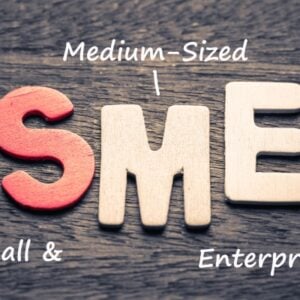
  • Wooden letters spell 'SME' on a wooden surface, with handwritten notes 'Medium-Sized' above and 'Small & Enterprises' beside—illustrating the SME acronym.
    Grassroots Economy: Empowering Rural & Semi-Urban MSMEs
  • UNICEF and UNESCO Warn Economic Inequality Is Shaping Children’s Futures Worldwide

Primary Sidebar

Latest News

5 Ways You Can Protect and Heal Nature Today

Slovenia and FAO Host Global Forum on Sustainable Beekeeping

FAO & Uzbekistan Partner to Boost Sweet Cherry Value Chain

Pacific Region: Why the Blue Economy and Coral Reefs Matter

India’s IITs Boost Global Space Research

Malaysia and Indonesia Central Banks Sign MoU to Boost Financial Ties

EBRD’s InvestEU to Boost Romania Financial Sector

Russia Fails to Block WHO Debate on Ukraine Healthcare Attacks

Indonesia Overhauls National Standards for Syphilis & Hepatitis Care

First National ToT Workshop on Cooperatives Concludes in Pakistan

EBRD Backs Massive Battery Storage Across Central Europe

ILO Launches Global Database to Map National Social Dialogue

Famine Risk Returns to Somalia as 6 Million Face Critical Hunger

EBRD, BNP Paribas Back Business Resilience in Türkiye

ADB Sells $4 Billion 5-Year Global Benchmark Bond

EIB Approves €1.1B to Transform Hamburg’s Energy and Transit Grids

EIB Group Endorses €6 Billion to Boost Clean Energy and Innovation

EIF Backs AFIN IFN With €480K to Boost Romanian Social Firms

Lebanon Food Retail Gets Sustainable Boost from EBRD, EU

World Bank Blueprint: How to Protect Jobs Amid Global Shocks

World Bank’s Valerie Hickey: Nature Is the Ultimate Technology

World Bank Report: Transport Corridors Don’t Create Jobs—Cities Do

Global Update: Ukraine War, Africa Weather Alert, Rohingya Appeal

World Bank Approves New 10-Year Strategy to Boost Belize Economy

World Bank Approves $54.7M to Secure Barbados Water Supply

How to Measure Digital Government: 4 Lessons From the IDB

AfDB IDEV Panel: Turning Capital Growth Into Scaled Delivery

PAHO Warns of Urgent Crisis as Youth Suicide Spikes 38% in the Americas

Why Climate, Food, and Health Funding Must Merge Into One Plan

Malawi Electricity Access Brings Opportunity to Millions

Gender and Conflict: How War Affects Women and Girls

Medical professionals interacting with futuristic digital health display.

Healthcare AI Startup Commure Secures $70M Funding Led by General Catalyst to Scale Agentic AI Systems

LJMU Receives Funding to Expand Low Carbon Eco Innovatory for Business Sustainability and Net Zero Goals

New Illinois Data Protection Measures Improve Security Standards for State Agencies and Private Data Holders

Moldova Municipalities Join EU–UNDP Mission-Oriented Economy Initiative for Local Economic Transformation

Spain Introduces €15.5 Billion Investment Fund to Support Technology, Industry, and National Growth

Construction Tech Funding Rounds May 2026: AI and Automation Startups Attract Fresh Capital

Embodied AI Sparks Funding Surge in China Robotics Sector Amid Growing IPO Pipeline

Wooden letters spell 'SME' on a wooden surface, with handwritten notes 'Medium-Sized' above and 'Small & Enterprises' beside—illustrating the SME acronym.

SME Credit Guarantees: Global Insights and the Jobs Agenda

ADB and Global Fund Join Forces to Strengthen Philippines’ Universal Health Care System

Funds for NGOs
Funds for Companies
Funds for Media
Funds for Individuals
Sample Proposals

Contact us
Submit a Grant
Advertise, Guest Posting & Backlinks
Fight Fraud against NGOs
About us

Terms of Use
Third-Party Links & Ads
Disclaimers
Copyright Policy
General
Privacy Policy

Premium Sign in
Premium Sign up
Premium Customer Support
Premium Terms of Service

©FUNDSFORNGOS LLC.   fundsforngos.org, fundsforngos.ai, and fundsforngospremium.com domains and their subdomains are the property of FUNDSFORNGOS, LLC 1018, 1060 Broadway, Albany, New York, NY 12204, United States.   Unless otherwise specified, this website is not affiliated with the abovementioned organizations. The material provided here is solely for informational purposes and without any warranty. Visitors are advised to use it at their discretion. Read the full disclaimer here. Privacy Policy. Cookie Policy.