• Skip to primary navigation
  • Skip to main content
  • Skip to primary sidebar

fundsforNGOs News

Grants and Resources for Sustainability

  • Subscribe for Free
  • Premium Support
  • Premium Login
  • Premium Sign up
  • Home
  • Funds for NGOs
    • Agriculture, Food and Nutrition
    • Animals and Wildlife
    • Arts and Culture
    • Children
    • Civil Society
    • Community Development
    • COVID
    • Democracy and Good Governance
    • Disability
    • Economic Development
    • Education
    • Employment and Labour
    • Environmental Conservation and Climate Change
    • Family Support
    • Healthcare
    • HIV and AIDS
    • Housing and Shelter
    • Humanitarian Relief
    • Human Rights
    • Human Service
    • Information Technology
    • LGBTQ
    • Livelihood Development
    • Media and Development
    • Narcotics, Drugs and Crime
    • Old Age Care
    • Peace and Conflict Resolution
    • Poverty Alleviation
    • Refugees, Migration and Asylum Seekers
    • Science and Technology
    • Sports and Development
    • Sustainable Development
    • Water, Sanitation and Hygiene (WASH)
    • Women and Gender
  • Funds for Companies
    • Accounts and Finance
    • Agriculture, Food and Nutrition
    • Artificial Intelligence
    • Education
    • Energy
    • Environment and Climate Change
    • Healthcare
    • Innovation
    • Manufacturing
    • Media
    • Research Activities
    • Startups and Early-Stage
    • Sustainable Development
    • Technology
    • Travel and Tourism
    • Women
    • Youth
  • Funds for Individuals
    • All Individuals
    • Artists
    • Disabled Persons
    • LGBTQ Persons
    • PhD Holders
    • Researchers
    • Scientists
    • Students
    • Women
    • Writers
    • Youths
  • Funds in Your Country
    • Funds in Australia
    • Funds in Bangladesh
    • Funds in Belgium
    • Funds in Canada
    • Funds in Switzerland
    • Funds in Cameroon
    • Funds in Germany
    • Funds in the United Kingdom
    • Funds in Ghana
    • Funds in India
    • Funds in Kenya
    • Funds in Lebanon
    • Funds in Malawi
    • Funds in Nigeria
    • Funds in the Netherlands
    • Funds in Tanzania
    • Funds in Uganda
    • Funds in the United States
    • Funds within the United States
      • Funds for US Nonprofits
      • Funds for US Individuals
      • Funds for US Businesses
      • Funds for US Institutions
    • Funds in South Africa
    • Funds in Zambia
    • Funds in Zimbabwe
  • Proposal Writing
    • How to write a Proposal
    • Sample Proposals
      • Agriculture
      • Business & Entrepreneurship
      • Children
      • Climate Change & Diversity
      • Community Development
      • Democracy and Good Governance
      • Disability
      • Disaster & Humanitarian Relief
      • Environment
      • Education
      • Healthcare
      • Housing & Shelter
      • Human Rights
      • Information Technology
      • Livelihood Development
      • Narcotics, Drugs & Crime
      • Nutrition & Food Security
      • Poverty Alleviation
      • Sustainable Develoment
      • Refugee & Asylum Seekers
      • Rural Development
      • Water, Sanitation and Hygiene (WASH)
      • Women and Gender
  • News
    • Q&A
  • Premium
    • Premium Log-in
    • Premium Webinars
    • Premium Support
  • Contact
    • Submit Your Grant
    • About us
    • FAQ
    • NGOs.AI
You are here: Home / cat / Malawi Electricity Access Brings Opportunity to Millions

Malawi Electricity Access Brings Opportunity to Millions

Dated: May 21, 2026

Launched in 2019, the Malawi Electricity Access Project significantly expanded access to electricity across the country, bringing power to nearly two million people and surpassing its original target of 1.6 million beneficiaries. The initiative combined national grid expansion with private-sector-led solar home systems to improve energy access in one of the world’s least-electrified countries. The project also played an important role in advancing gender equity, with a growing share of female-headed households gaining access to electricity. Increased access to reliable energy has encouraged small-scale entrepreneurship in newly connected communities, especially among women, while contributing to the broader Mission 300 initiative led by the World Bank Group and the African Development Bank to connect 300 million Africans to electricity by 2030.

At the start of the project, Malawi faced severe energy challenges, with only 11 percent of the population connected to electricity in 2019. The disparity between urban and rural areas was particularly stark, as rural electrification stood at just 4 percent compared to 42 percent in urban centers. Most households depended on candles, kerosene, and firewood for lighting and cooking. Expanding electricity access was difficult due to high connection costs, limited infrastructure, and the financial limitations of the national utility company, particularly in serving rural and low-income communities.

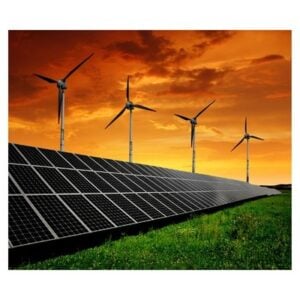
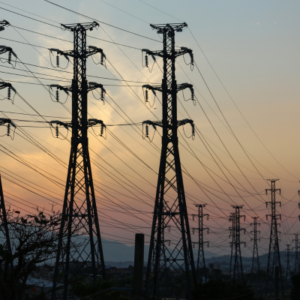
To address these challenges, the World Bank Group partnered with Malawi’s Electricity Supply Corporation and Ministry of Energy to implement a practical two-part strategy. Instead of investing heavily in new transmission lines, the project focused on connecting households located near existing grid infrastructure through affordable low-voltage extensions, service drops, and prepaid electricity meters. For households unable to afford internal wiring, the project provided low-cost “ready boards” to facilitate access. In remote areas beyond the reach of the national grid, the project supported private solar energy providers through the Off-Grid Market Development Fund, which offered financing and performance-based incentives to scale the installation of certified solar home systems. The initiative also strengthened institutional capacity through electrification planning tools and programs aimed at increasing women’s participation in the energy sector workforce.

The project achieved results that exceeded expectations. More than 190,000 households were connected to the national grid, while nearly 257,000 solar home systems were installed in off-grid communities. Female-headed households accounted for a significant share of both off-grid and grid-based connections, surpassing the project’s gender inclusion targets. Additionally, the proportion of women working in technical and engineering roles within the national utility nearly doubled during the project period.

Electricity access created new economic opportunities across connected communities. Many households used electricity to start or expand small businesses such as grocery shops, food processing activities, barber shops, and mobile phone charging services. These opportunities helped generate income and improve livelihoods, particularly for women. The experience of residents like Bertha Macheso from Chiradzulu District illustrates how access to electricity can transform daily life and support entrepreneurship in rural communities.

The project also provided important lessons for future electrification efforts. One key insight was the importance of aligning project goals with the operational capacity of implementing agencies. Early delays caused by procurement and contract management challenges were addressed through project restructuring and revised targets. Another major lesson was the effectiveness of private-sector-led off-grid energy delivery. The Off-Grid Market Development Fund proved highly successful in expanding solar access and demonstrated a scalable model that could be replicated in other low-income countries seeking to increase electrification.

Building on the project’s success, the World Bank Group continues to support Malawi’s energy sector through the Accelerating Sustainable and Clean Energy Access Transformation in Malawi project. This next phase focuses on increasing energy generation capacity and strengthening regional integration to meet rising electricity demand. Long-term sustainability will depend on improving the financial strength of the national utility and ensuring that private solar providers continue offering reliable maintenance and after-sales support for off-grid systems.
Related Posts

  • ADB and Singapore Renew 3-Year Cross-Border Clean Energy Deal
  • EIB Provides €200 Million to N-ERGIE for Electricity Grid Expansion in Bavaria
  • Lightrock Expands Climate Investment Portfolio With New Accelerate7 Fund
  • Bangladesh and UNDP Launch $3.7M Low-Carbon Urban Energy Project
  • Maryland Strengthens Clean Energy Push With $56 Million in Efficiency Grants

Primary Sidebar

Latest News

5 Ways You Can Protect and Heal Nature Today

Slovenia and FAO Host Global Forum on Sustainable Beekeeping

FAO & Uzbekistan Partner to Boost Sweet Cherry Value Chain

Pacific Region: Why the Blue Economy and Coral Reefs Matter

India’s IITs Boost Global Space Research

Malaysia and Indonesia Central Banks Sign MoU to Boost Financial Ties

EBRD’s InvestEU to Boost Romania Financial Sector

Russia Fails to Block WHO Debate on Ukraine Healthcare Attacks

Indonesia Overhauls National Standards for Syphilis & Hepatitis Care

First National ToT Workshop on Cooperatives Concludes in Pakistan

EBRD Backs Massive Battery Storage Across Central Europe

ILO Launches Global Database to Map National Social Dialogue

Famine Risk Returns to Somalia as 6 Million Face Critical Hunger

EBRD, BNP Paribas Back Business Resilience in Türkiye

ADB Sells $4 Billion 5-Year Global Benchmark Bond

EIB Approves €1.1B to Transform Hamburg’s Energy and Transit Grids

EIB Group Endorses €6 Billion to Boost Clean Energy and Innovation

EIF Backs AFIN IFN With €480K to Boost Romanian Social Firms

Lebanon Food Retail Gets Sustainable Boost from EBRD, EU

World Bank Blueprint: How to Protect Jobs Amid Global Shocks

World Bank’s Valerie Hickey: Nature Is the Ultimate Technology

World Bank Report: Transport Corridors Don’t Create Jobs—Cities Do

Global Update: Ukraine War, Africa Weather Alert, Rohingya Appeal

World Bank Approves New 10-Year Strategy to Boost Belize Economy

World Bank Approves $54.7M to Secure Barbados Water Supply

How to Measure Digital Government: 4 Lessons From the IDB

AfDB IDEV Panel: Turning Capital Growth Into Scaled Delivery

PAHO Warns of Urgent Crisis as Youth Suicide Spikes 38% in the Americas

Why Climate, Food, and Health Funding Must Merge Into One Plan

Malawi Electricity Access Brings Opportunity to Millions

Gender and Conflict: How War Affects Women and Girls

Medical professionals interacting with futuristic digital health display.

Healthcare AI Startup Commure Secures $70M Funding Led by General Catalyst to Scale Agentic AI Systems

LJMU Receives Funding to Expand Low Carbon Eco Innovatory for Business Sustainability and Net Zero Goals

New Illinois Data Protection Measures Improve Security Standards for State Agencies and Private Data Holders

Moldova Municipalities Join EU–UNDP Mission-Oriented Economy Initiative for Local Economic Transformation

Spain Introduces €15.5 Billion Investment Fund to Support Technology, Industry, and National Growth

Construction Tech Funding Rounds May 2026: AI and Automation Startups Attract Fresh Capital

Embodied AI Sparks Funding Surge in China Robotics Sector Amid Growing IPO Pipeline

Wooden letters spell 'SME' on a wooden surface, with handwritten notes 'Medium-Sized' above and 'Small & Enterprises' beside—illustrating the SME acronym.

SME Credit Guarantees: Global Insights and the Jobs Agenda

ADB and Global Fund Join Forces to Strengthen Philippines’ Universal Health Care System

Funds for NGOs
Funds for Companies
Funds for Media
Funds for Individuals
Sample Proposals

Contact us
Submit a Grant
Advertise, Guest Posting & Backlinks
Fight Fraud against NGOs
About us

Terms of Use
Third-Party Links & Ads
Disclaimers
Copyright Policy
General
Privacy Policy

Premium Sign in
Premium Sign up
Premium Customer Support
Premium Terms of Service

©FUNDSFORNGOS LLC.   fundsforngos.org, fundsforngos.ai, and fundsforngospremium.com domains and their subdomains are the property of FUNDSFORNGOS, LLC 1018, 1060 Broadway, Albany, New York, NY 12204, United States.   Unless otherwise specified, this website is not affiliated with the abovementioned organizations. The material provided here is solely for informational purposes and without any warranty. Visitors are advised to use it at their discretion. Read the full disclaimer here. Privacy Policy. Cookie Policy.