
Excessive speeding continues to be one of the leading causes of fatal crashes in Jamaica, prompting renewed efforts to strengthen road safety enforcement. On May 12, 2026, five new laser speed guns were handed over to the Public Safety and Traffic Enforcement Branch (PSTEB) by the Pan American Health Organization/World Health Organization (PAHO/WHO) and the… [Read More]
Anthropic Partners with Gates Foundation in Major $200M Push for AI in Global Development

Anthropic and the Gates Foundation have announced a $200 million, four-year partnership aimed at using artificial intelligence to address global challenges in health, education, and economic mobility. The initiative focuses on developing AI-driven tools and public resources that can support underserved communities worldwide, particularly in low- and middle-income countries. The funding will be shared between… [Read More]
ILO 2026: Urgent Call for Decent Work for Migrant Workers

The International Labour Organization (ILO) has called for stronger rights‑basedThe International Labour Organization (ILO) has called for stronger rights‑based labour migration governance and renewed commitments to decent work for migrant workers worldwide. The announcement came during the second International Migration Review Forum (IMRF), where member states adopted a Progress Declaration reaffirming their commitment to implementing… [Read More]
Govt Awards $1M to Reopen Tarawera and Ōkataina Tracks

Conservation Minister Tama Potaka has announced $1 million from the International Visitor Conservation and Tourism Levy to upgrade tracks and campgrounds around Tarawera and Ōkataina. The investment will reopen the Eastern Ōkataina Walkway and support improvements across more than 22 kilometres of tracks and three campgrounds, enhancing visitor facilities and addressing safety issues following the… [Read More]
StepForward Initiative Scaled by S&P Global Foundation to Prepare Youth for AI-Driven Future Jobs

S&P Global and the S&P Global Foundation have announced the next phase of their StepForward initiative, a $10 million global program designed to equip young people with the skills needed for an AI-driven workforce. The initiative focuses on improving workforce readiness through education, training, and partnerships with nonprofit and institutional collaborators worldwide. Launched in December… [Read More]
UN Warns of Growing Global Instability as Conflicts, Inequality, and Climate Risks Intensify

The United Nations warns that global instability is increasing as multiple overlapping crises continue to intensify across different regions. These include ongoing armed conflicts, widening inequality, climate-related shocks, and economic pressures that are affecting millions of people worldwide. The report highlights that conflicts remain a major driver of humanitarian need, causing displacement, destruction of infrastructure,… [Read More]
Wellington Airport’s $100M+ Seawall Project Gets Fast-Track Approval

Fast‑track approval has been granted for the Wellington International Airport Southern Seawall Renewal project, a major infrastructure initiative valued at more than $100 million. The project will safeguard the airport’s long‑term operations, protect critical assets, create two kororā (little penguin) colonies, and generate hundreds of jobs. Associate Transport Minister James Meager described the project as… [Read More]
Japan Backs Humanitarian Agriculture Recovery Initiative in Conflict-Affected Regions of Syria

The United Nations Mine Action Service and the Food and Agriculture Organization have welcomed new funding support from the Government of Japan to help restore agricultural livelihoods in conflict-affected areas of northwest Syria. The initiative focuses on improving food security and enabling communities to safely return to agricultural activities after years of conflict and explosive… [Read More]
NZ Govt Strengthens Plant Variety Rights to Boost Exports

The New Zealand Government has announced strengthened plant variety rights (PVR) to protect investments that underpin high‑value exports, regional jobs, and global demand for New Zealand produce. Ministers Todd McClay and Cameron Brewer emphasized that horticulture relies on decades of breeding and testing, and the updated Plant Variety Rights Act 2022 provides the intellectual property… [Read More]
New Canadian Funding to Accelerate Plastics Research and Environmental Innovation
The Natural Sciences and Engineering Research Council of Canada has announced new funding to support research projects focused on advancing plastics science and developing more sustainable solutions for plastic production, use, and recycling. The investment is intended to strengthen scientific innovation while addressing growing environmental concerns related to plastic waste and pollution. The funding will… [Read More]
HRW Report: US Foreign Aid Cuts Damage Global Human Rights

Human Rights Watch has issued a 42‑page paper warning of the severe consequences of the United States government’s abrupt cuts to nearly all foreign aid in 2025. The report, Every Autocrat’s Dream: A Global Snapshot of the Human Rights Harms of US Foreign Aid Cuts, documents how the withdrawal of funding undermined human rights defenders… [Read More]
Federal Support Expands UND’s Vets2Wings Program for Veteran Aviation Careers

The University of North Dakota has received new federal funding to extend its Vets2Wings program, an initiative designed to help military veterans transition into civilian aviation careers through professional pilot training and workforce development support. The program provides veterans with access to aviation education, career guidance, and specialized resources aimed at addressing workforce shortages within… [Read More]
Nova Scotia Funds New Eastern Shore Arboretum to Promote Conservation, Education, and Tourism
The Government of Nova Scotia has announced new funding support for the development of an arboretum on the province’s Eastern Shore, aiming to strengthen environmental conservation, public education, and tourism opportunities in the region. The project is expected to create a dedicated space for preserving native and diverse plant species while encouraging community engagement with… [Read More]
Minister Murnane O’Connor Awards €136k to Traveller Creative Projects
Minister Jennifer Murnane O’Connor has announced the successful applicants of the Traveller Wellbeing Through Creativity programme, a fund designed to support Traveller organisations and Primary Health Care Projects in tackling health inequalities and improving wellbeing through creative approaches. The initiative builds on the success of a pilot programme run in 2022–2023 by the Creative Ireland… [Read More]
New Yukon Conservation Fund Aims to Strengthen Wildlife Protection and Habitat Conservation

The Government of Yukon has launched the new Yukon Conservation Fund, introducing a dedicated funding initiative designed to support wildlife conservation, habitat protection, and environmental stewardship projects across the territory. The government has committed an initial investment of $450,000 to help strengthen conservation efforts and encourage broader participation in protecting Yukon’s ecosystems. The fund is… [Read More]
Robotera Expands Global Humanoid Robot Deployment After Securing $200M Investment

Chinese embodied AI and humanoid robotics company Robotera has raised more than $200 million in a new funding round aimed at accelerating the commercialization and large-scale deployment of its humanoid robot systems. The round was led by SF Group and included participation from major investors such as HSG, IDG Capital, Hillhouse Investment, and CICC Capital,… [Read More]
Mental Health Research Charity McPin Foundation Reveals Positive Funding and Financial Outlook
The McPin Foundation’s latest funding report highlights continued growth in financial support for its mental health research and community engagement activities. The organization reported a positive financial position, with reserves increasing and donations rising significantly during the reporting period. This improvement reflects growing support for mental health research initiatives that integrate lived experience into policy,… [Read More]
Yogyakarta Emerges as Model for Linking Climate Finance With Local Environmental Action

The United Nations Development Programme highlights how local communities in Yogyakarta, Indonesia, are strengthening climate resilience through grassroots environmental initiatives supported by improved access to climate finance and institutional coordination. The effort focuses on connecting community-led climate action with long-term planning and financing systems that can help sustain and expand local solutions. The initiative operates… [Read More]
UN Warns Afghanistan Crisis Worsens as 28 Million Struggle to Meet Basic Living Needs

The United Nations Development Programme has warned that Afghanistan’s humanitarian and economic crisis continued to worsen throughout 2025, with nearly 28 million people unable to meet their most basic living needs. Rising poverty, prolonged drought conditions, and declining international aid have significantly increased pressure on families already struggling with food shortages and unemployment. According to… [Read More]
Japan Supports UNMAS–FAO Project to Rebuild Farming and Rural Livelihoods in Syria
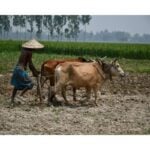
The United Nations Mine Action Service (UNMAS) and the Food and Agriculture Organization (FAO) have welcomed generous funding from the Government of Japan to support a joint initiative aimed at restoring agricultural livelihoods in conflict-affected regions of northwest Syria. The project focuses on improving food security and enabling safe access to farmland damaged by war… [Read More]
UC Irvine Secures $1.2 Million Keck Foundation Funding to Boost Student-Faculty Research Teams

The W. M. Keck Foundation has awarded $1.2 million to the University of California, Irvine to support early-career scientists who are currently facing uncertainty due to reductions in federal research funding. The grant is part of a broader initiative designed to sustain scientific progress and ensure that promising research projects continue without interruption. The funding… [Read More]
Student Innovation Platform TechForChange Expanded by NASSCOM Foundation and Ciena in India

NASSCOM Foundation, in collaboration with Ciena, has expanded its TechForChange initiative to further strengthen student-led innovation in India. The program is designed as a structured platform that enables college students to develop technology-based solutions for real-world social challenges, particularly in areas such as healthcare, education, agriculture, and sustainability. The initiative focuses on guiding students through… [Read More]
Best Cure Foundation and Kitsault Energy to Host Dual Press Events in India on Energy and Health Initiatives

Best Cure Foundation and Kitsault Energy have announced plans to host two upcoming press conferences in India, where they will present initiatives focused on energy development, healthcare innovation, and lifestyle improvement solutions. The events are intended to showcase long-term development proposals aimed at addressing both infrastructure and public welfare challenges. The first press conference is… [Read More]


