
The New South Wales Government has announced nearly $1 million in grant funding for community projects in Port Kembla, aiming to strengthen local infrastructure, improve community facilities, and support social development initiatives across the region. The funding has been awarded through the Port Kembla Community Investment Fund, which was established to deliver long-term benefits to… [Read More]
PRIO Research School Concludes 2026 PhD Conflict Methods Course

The course led by Jeff Checkel at PRIO was designed to be highly student‑driven, encouraging active participation and engagement. In its first half, the course focused on research epistemology, ethics, and transparency, before moving into key methodological approaches such as case studies, case selection, and techniques for capturing processes. The second half shifted from conceptual… [Read More]
NSW Invests in Virtual Family Support

The New South Wales Government has announced renewed funding for the Virtual Residential Parenting Service (VRPS), committing $14 million over the next five years to continue supporting families with young children across the state. The service provides free online parenting assistance for families with children aged between zero and three years and has supported more… [Read More]
WHO Warns Nicotine Pouch Brands Target Youth as Sales Surge

The World Health Organization (WHO) has issued a strong warning about the rapid global spread of nicotine pouch products, which are being aggressively marketed to adolescents and young people. The warning comes ahead of World No Tobacco Day, which this year will focus on nicotine addiction and industry tactics aimed at hooking a new generation… [Read More]
NSW Begins Construction on Dorrigo Great Walk

Construction has officially commenced on the Dorrigo Escarpment Great Walk project in New South Wales, marking a major investment aimed at boosting tourism across the Coffs Coast and Mid North Coast regions. The NSW Government has committed $56.4 million toward redeveloping the Dorrigo Rainforest Centre and developing a new multi-day walking experience through the World… [Read More]
Disaster Resilience Spending Surges Across Asia

Governments, banks, and investors have collectively invested nearly $100 billion in disaster resilience and climate adaptation projects across Asia over the last five years. The investments were largely directed toward strengthening infrastructure, improving water management systems, and reducing climate-related risks in vulnerable regions. The study covering these investments mainly focused on China, India, and Southeast… [Read More]
PAHO Launches HEARTS 2.0 to Fight Hypertension and Kidney Disease
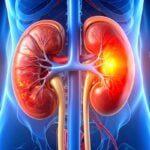
The Pan American Health Organization (PAHO) has introduced HEARTS 2.0, an updated clinical pathway for the Americas that builds on the original model for hypertension control while expanding recommendations to integrate cardio‑renal‑metabolic conditions. This pathway provides a standardized, evidence‑based approach for managing hypertension and cardiovascular risk in primary health care, covering diagnosis, treatment, and follow‑up… [Read More]
US Pledges Extra $1.8B for UN Aid Linked to Efficiency Reforms

The Trump administration has announced $1.8 billion in new funding for United Nations humanitarian aid efforts, following a previous $2 billion commitment made in December. The announcement was made by Jeremy Lewin, State Department undersecretary for foreign assistance, who emphasized that the U.S. remains deeply engaged in humanitarian work despite perceptions to the contrary. The… [Read More]
S&P Global Unveils Next Phase of $10M AI Skills Initiative

S&P Global and the S&P Global Foundation have launched StepForward, a three‑year $10 million initiative designed to prepare the next generation for success in an AI‑driven economy. Launched in December 2025, the program supports organizations delivering innovative workforce readiness and AI education programs worldwide, complemented by skills‑based volunteering from S&P Global employees. The initiative is… [Read More]
Anthropic and Gates Foundation Launch $200M AI Public Goods Initiative

Anthropic has announced a major partnership with the Gates Foundation to accelerate the use of artificial intelligence in areas that directly affect people’s lives, such as public health, education, and economic mobility. The US‑based AI company has committed $200 million in grant funding, usage credits, and technical support over four years, with a focus on… [Read More]
Healing Beyond Walls: Restoring Nirak Health Center in Ethiopia
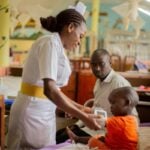
At the Nirak Health Center in Ethiopia’s Amhara Region, health workers once provided essential care to more than 20,000 people despite difficult conditions of arid land, environmental degradation, and humanitarian challenges. This lifeline was abruptly cut off when conflict forced staff to flee, leaving the facility in ruins. When they returned, the center was stripped… [Read More]
Action Against Hunger Revives Critical Healthcare Services in Ethiopia

Ethiopia continues to face severe humanitarian and health challenges, particularly in conflict-affected regions where healthcare systems have been heavily disrupted. In Ethiopia’s Amhara Region, the Nirak Health Center once served as a critical source of medical care for more than 20,000 people living in difficult conditions marked by environmental degradation, food insecurity, and ongoing humanitarian… [Read More]
Tanzania Investment Summit 2026 to Unlock $2.85 Billion Investment Pipeline

Tanzania has announced the upcoming Tanzania Investment Summit 2026, an international investment event designed to attract global capital into the country’s major economic sectors. The summit aims to unlock an investment pipeline worth approximately USD 2.85 billion through a portfolio of public investment-ready projects across multiple development sectors. The Tanzania Investment Summit 2026 will take… [Read More]
$1 Million Prize Announced to Support Innovations in Mental Health Science

Wellcome has launched the world’s largest global prize dedicated to mental health science in partnership with Nature. The new initiative, called the Wellcome Prize for Mental Health Science with Nature, aims to recognize and support breakthrough innovations that improve understanding, prevention, and treatment of mental health conditions such as anxiety, depression, and psychosis. The prize… [Read More]
Sudan IPC Update 2026: 19.5 Million People Face Acute Hunger
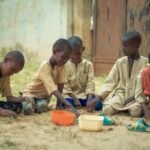
New data from the IPC shows that nearly 19.5 million people in Sudan are facing acute food insecurity, with projections indicating that 825,000 children under five will suffer from severe acute malnutrition in 2026. This represents a sharp increase compared to previous years, driven by ongoing conflict, adverse weather, and the collapse of basic services…. [Read More]
Tunisia Eliminates Trachoma as Public Health Problem, WHO Confirms

The World Health Organization (WHO) has officially validated Tunisia as having eliminated trachoma as a public health problem, marking a major achievement in the country’s public health history. The milestone reflects decades of continuous national efforts aimed at controlling and preventing one of the world’s leading infectious causes of blindness. WHO Director-General Tedros Adhanom Ghebreyesus… [Read More]
WHO Global Traditional Medicine Strategy Drives Healthcare Action Across Africa

Leaders from governments, academic institutions, regulatory agencies, community organizations, and youth networks gathered in Nairobi during the World Health Summit Regional Meeting to discuss the growing role of traditional medicine in strengthening healthcare systems across Africa. The high-level session focused on integrating traditional medicine into primary healthcare and universal health coverage strategies throughout the continent…. [Read More]
India & Uzbekistan 17th FOC: New Strategic Roadmap for 2026

India and Uzbekistan have held a new round of high‑level political consultations in New Delhi, reaffirming their commitment to strengthening their strategic partnership. The talks focused on expanding cooperation across key sectors, reflecting a shared vision to enhance economic and security collaboration amid shifting geopolitical dynamics in Asia. Discussions centered on mechanisms to deepen partnerships… [Read More]
£210,000 Funding Boost Supports Community Projects Across Suffolk
Six organizations supporting communities across East Suffolk have received a combined £210,000 from the Sizewell C Community Fund. The latest funding round supports a variety of local initiatives aimed at strengthening community wellbeing, improving facilities, promoting positive mental health, and encouraging participation in sports and social activities. Since its launch just over 18 months ago,… [Read More]
ADB Commits $1.75B Crisis Support for PH Amid Mideast Conflict
Asian Development Bank (ADB) President Masato Kanda met Philippine President Ferdinand R. Marcos Jr. at Malacañan Palace and announced that ADB is ready to provide up to $1.75 billion in additional financing to help the Philippines manage the economic impact of the Middle East conflict. Kanda emphasized that ADB, headquartered in Manila, will act swiftly… [Read More]
UN Reports Growing Humanitarian Emergencies in Somalia, DR Congo, and Cuba in Latest Global Update

The United Nations reports worsening malnutrition in Somalia, where children and vulnerable communities are facing severe food insecurity driven by prolonged drought, conflict, and limited access to essential humanitarian assistance. Health services are under significant strain as malnutrition cases continue to rise, particularly among displaced populations. In the Democratic Republic of the Congo, the hunger… [Read More]
$200 Million Anthropic-Gates Foundation Pact to Advance AI in Global Health

Anthropic and the Gates Foundation have announced a new $200 million partnership focused on using artificial intelligence to improve global health and education outcomes. The initiative combines grant funding, technical support, and usage credits for Anthropic’s Claude AI model to expand access to AI-driven solutions in areas where commercial markets alone may not provide adequate… [Read More]
SRHR 2026: Global Leaders Reaffirm Political Commitment to Health

On 20 April, the multi‑party initiative (MPI) for global health and sexual and reproductive health and rights (SRHR) was officially re‑launched in the Netherlands. The event at Nieuwspoort brought together Members of Parliament, civil society organizations, and experts to discuss the importance of strong Dutch leadership in these areas. New research was presented, highlighting the… [Read More]


