
Ukraine has faced severe disruption to basic services and human capital due to the ongoing conflict, putting its prospects for economic growth and job creation at risk. Between February 2022 and December 2025, 55,600 civilian casualties were recorded, with 5.9 million refugees and 3.3 million internally displaced by January 2026. The conflict, coupled with deteriorating… [Read More]
Rising Demand and Costs Challenge Food Aid Charities

New data from Bermuda’s food aid providers reveals a complex situation. Despite one of the lowest unemployment rates in the island’s history, demand for food assistance has continued to rise since the pandemic. However, finalised figures for 2025 show fewer meals and grocery bags distributed compared with 2023, not due to reduced need but because… [Read More]
India Delivers Emergency Relief to Afghanistan

Afghanistan has been struck by severe flooding and a powerful earthquake in late March and early April 2026, resulting in significant casualties, widespread displacement, and extensive damage to infrastructure. Thousands of families are left without shelter or access to basic necessities, with rural communities being particularly hard hit. Roads, bridges, and essential services have been… [Read More]
Caribbean Strengthens Climate Resilience for a Sustainable Future

Staff at Princess Alexandra Hospital in Anguilla spent hours each day filling oxygen canisters, often handling the task themselves to maintain patient care, particularly during the Covid-19 pandemic. The hospital faced frequent shortages due to reliance on small local suppliers and imports from neighboring islands, a vulnerability highlighted during extreme events like Hurricane Irma in… [Read More]
NZ Rejects WHO Pandemic Regulations: Implications Explained
New Zealand recently decided to reject the latest amendments to the World Health Organization’s International Health Regulations (IHR), drawing attention more for the unclear reasoning than the content of the amendments themselves. Health Minister Simeon Brown cited incomplete domestic processes despite two years of review, while Foreign Affairs Minister Winston Peters framed the decision as… [Read More]
NZ Rejects WHO Pandemic Regulations: Implications Explained

New Zealand recently decided to reject the latest amendments to the World Health Organization’s International Health Regulations (IHR), drawing attention more for the unclear reasoning than the content of the amendments themselves. Health Minister Simeon Brown cited incomplete domestic processes despite two years of review, while Foreign Affairs Minister Winston Peters framed the decision as… [Read More]
Myanmar’s Path to Inclusive Recovery: Supporting Women with Disabilities
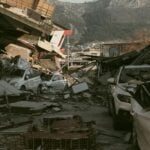
When the earthquake struck on 28 March 2025 in Myanmar, Khin Phyu Wai, a Project Facilitator with the Myanmar Independent Living Initiative (MILI), experienced the immediate challenges faced by women with disabilities. Although she was far from the epicentre, the quake shook the building she was in, and finding her crutch became critical for escape…. [Read More]
National Policy Dialogue Boosts Cambodia’s Disaster Resilience

Cambodia is strengthening its disaster risk reduction efforts with a focus on gender equality, recognizing that resilience cannot be achieved without women’s leadership and participation. On 22 January 2026, 88 representatives from government ministries, civil society organizations, and local communities convened in Phnom Penh for a national policy dialogue led by the National Committee for… [Read More]
Empowering Women for Peace in Rural Indonesia: Volunteer Stories

In Indonesia’s East Nusa Tenggara Province, communities face intertwined climate and social challenges. Two UN Community Volunteers, Untung Nomleni and Maria S. Daros, played key roles in fostering resilience and peace by empowering women through the “Empowered Women for Sustainable Peace” (WE NEXUS) project, implemented by UN Women with support from the Korea International Cooperation… [Read More]
Russell Family Foundation Invests $2.3M in Environmental Education and Climate Solutions

The Russell Family Foundation (TRFF) has announced a new round of grants and investments totaling $2.33 million to support its Environmental Education (EE) and Food for Climate Solutions (FCS) programs. This year’s funding reflects an intentional increase in grantmaking, aligned with the Foundation’s plan to maintain an average 10% annual spend rate from 2025 to… [Read More]
Campus Sexual Harassment: Challenges and Best Practices

Bangladesh has made notable social, political, and economic progress over the past decades, and it has met the criteria for graduation from the least developed country (LDC) category. However, these gains are overshadowed by persistently high levels of gender-based violence (GBV). According to the national Violence Against Women Survey (2024), 70% of women experience intimate… [Read More]
World Health Day 2026: WHO Calls for Unity and Support for Science

The World Health Organization (WHO) is urging people worldwide to recommit to collaboration and the support of science as essential drivers of better health, marking World Health Day 2026 with the theme: “Together for health. Stand with science.” The campaign coincides with the anniversary of WHO’s founding on 7 April 1948 and launches a year-long… [Read More]
Funding Boost for Highland Refugee Film Initiative

A film project supporting young refugees and asylum seekers in the Highlands has secured crucial funding to continue for the next three years. Compass Collective’s Film Futures initiative, which began about a year ago, has already produced two short films viewed by more than 600 people in Inverness, Fort William, and Evanton. The charity, awarded… [Read More]
Asia Fund II: $220M Raised by Circulate Capital for Circular Economy Growth

Circulate Capital has raised $220 million at the first close of its Asia-focused fund, Circulate Capital Asia II, surpassing 70% of its $300 million target and exceeding the size of its predecessor, which closed at $188 million. The Singapore-based investment manager plans to use the new capital to scale circular supply chains and recycling businesses… [Read More]
Circulate Capital Secures $220M for Asia Circular Economy Fund
Singapore-based circular economy investment manager Circulate Capital announced the first close of its new fund, Circulate Capital Asia II, raising $220 million to support circular supply chains and recycling businesses across South and Southeast Asia. The fund has now reached over 70% of its $300 million target, surpassing its predecessor, Fund I, which closed at… [Read More]
WINGS Initiative: Supporting Nigeria’s Displaced Women

Ladi Ashifa was seventeen when she began rebuilding her life after being displaced from Borno State in 2014. Living in Nigeria’s Kuchingoro Camp with her family, she survived on small-scale catering, earning less than ₦20,000 ($13) a month. Her education was interrupted, and her future uncertain. Joining the WINGS initiative transformed her trajectory. Through a… [Read More]
Mongolia Housing Upgrades Boost Urban Jobs

In Ulaanbaatar’s Ger districts, residents like Bat-Erdene face harsh winter conditions in structurally fragile homes, relying on coal stoves that struggle to heat poorly insulated spaces. These informal settlements, home to over half of the city’s population, suffer from inadequate services, severe air pollution, and substandard housing. The resulting health impacts reduce productivity and workforce… [Read More]
Scaling Mobile Data for Statistics in West Africa

In West Africa, decision-makers in both public and private sectors increasingly need faster, more granular, and high-frequency data to respond to complex development challenges. Traditional sources such as censuses and household surveys are slow and costly, whereas mobile phones generate continuous signals that can provide near-real-time insights on populations across the region. Recognizing this potential,… [Read More]
Türkiye Railway Jobs: Empowering Women in Transport

Türkiye is seizing the opportunity to create more and better jobs for women in the transport sector, a critical part of the World Bank Group’s development agenda focused on empowering youth and strengthening communities. Investments in infrastructure, including railways, roads, electricity, and digital access, are key pathways to building human and physical capital, creating business… [Read More]
South Sudan Development: Strengthening Resilience and Governance
South Sudan is at a critical juncture, facing increasingly frequent climate shocks, particularly severe flooding, which displace communities, destroy crops, and drive up food prices. Economic fragility, rooted in dependence on oil, chronic macro‑instability, and limited private sector development, exacerbates vulnerabilities. External aid, once a crucial safety net, is declining just as these pressures intensify…. [Read More]
Development Accounting for Accountants: A Practical Perspective
When economists hear “development accounting,” they often think of a macroeconomic exercise that decomposes income differences across countries into factors like education, capital, and total factor productivity. However, there is a growing field of research that approaches development from an accounting perspective, emphasizing practical applications in developing countries. The Accounting and Development Forum, organized by… [Read More]
Financial Institutions and the Emerging Resilience Market

Insured losses from natural catastrophes have exceeded $100 billion for six consecutive years, highlighting the growing impact of climate-related events on banks in emerging markets. Loan defaults from flood-affected farmers, devalued collateral, and uninsured small businesses are increasingly common, showing that climate impacts are now a core part of financial risk management. Traditionally, climate adaptation… [Read More]
Investing in Armenia: How Tourism Boosts Local Economies

Armenia is harnessing the potential of tourism by improving accessibility to its cultural heritage sites, including medieval monasteries, historic towns, and traditional neighborhoods. Investments backed by the World Bank have revitalized surrounding municipalities, creating opportunities for small businesses, employing local residents, and encouraging reinvestment into communities. These initiatives have not only diversified the economy but… [Read More]


