• Skip to primary navigation
  • Skip to main content
  • Skip to primary sidebar

fundsforNGOs News

Grants and Resources for Sustainability

  • Subscribe for Free
  • Premium Support
  • Premium Login
  • Premium Sign up
  • Home
  • Funds for NGOs
    • Agriculture, Food and Nutrition
    • Animals and Wildlife
    • Arts and Culture
    • Children
    • Civil Society
    • Community Development
    • COVID
    • Democracy and Good Governance
    • Disability
    • Economic Development
    • Education
    • Employment and Labour
    • Environmental Conservation and Climate Change
    • Family Support
    • Healthcare
    • HIV and AIDS
    • Housing and Shelter
    • Humanitarian Relief
    • Human Rights
    • Human Service
    • Information Technology
    • LGBTQ
    • Livelihood Development
    • Media and Development
    • Narcotics, Drugs and Crime
    • Old Age Care
    • Peace and Conflict Resolution
    • Poverty Alleviation
    • Refugees, Migration and Asylum Seekers
    • Science and Technology
    • Sports and Development
    • Sustainable Development
    • Water, Sanitation and Hygiene (WASH)
    • Women and Gender
  • Funds for Companies
    • Accounts and Finance
    • Agriculture, Food and Nutrition
    • Artificial Intelligence
    • Education
    • Energy
    • Environment and Climate Change
    • Healthcare
    • Innovation
    • Manufacturing
    • Media
    • Research Activities
    • Startups and Early-Stage
    • Sustainable Development
    • Technology
    • Travel and Tourism
    • Women
    • Youth
  • Funds for Individuals
    • All Individuals
    • Artists
    • Disabled Persons
    • LGBTQ Persons
    • PhD Holders
    • Researchers
    • Scientists
    • Students
    • Women
    • Writers
    • Youths
  • Funds in Your Country
    • Funds in Australia
    • Funds in Bangladesh
    • Funds in Belgium
    • Funds in Canada
    • Funds in Switzerland
    • Funds in Cameroon
    • Funds in Germany
    • Funds in the United Kingdom
    • Funds in Ghana
    • Funds in India
    • Funds in Kenya
    • Funds in Lebanon
    • Funds in Malawi
    • Funds in Nigeria
    • Funds in the Netherlands
    • Funds in Tanzania
    • Funds in Uganda
    • Funds in the United States
    • Funds within the United States
      • Funds for US Nonprofits
      • Funds for US Individuals
      • Funds for US Businesses
      • Funds for US Institutions
    • Funds in South Africa
    • Funds in Zambia
    • Funds in Zimbabwe
  • Proposal Writing
    • How to write a Proposal
    • Sample Proposals
      • Agriculture
      • Business & Entrepreneurship
      • Children
      • Climate Change & Diversity
      • Community Development
      • Democracy and Good Governance
      • Disability
      • Disaster & Humanitarian Relief
      • Environment
      • Education
      • Healthcare
      • Housing & Shelter
      • Human Rights
      • Information Technology
      • Livelihood Development
      • Narcotics, Drugs & Crime
      • Nutrition & Food Security
      • Poverty Alleviation
      • Sustainable Develoment
      • Refugee & Asylum Seekers
      • Rural Development
      • Water, Sanitation and Hygiene (WASH)
      • Women and Gender
  • News
    • Q&A
  • Premium
    • Premium Log-in
    • Premium Webinars
    • Premium Support
  • Contact
    • Submit Your Grant
    • About us
    • FAQ
    • NGOs.AI
You are here: Home / cat / Council of Europe Adopts New Social Rights Declaration

Council of Europe Adopts New Social Rights Declaration

Dated: March 26, 2026

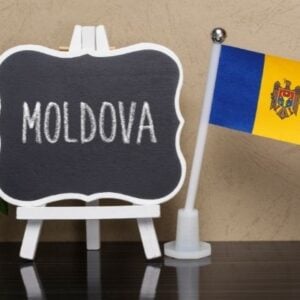
The Council of Europe and its member states have adopted a new declaration in Chișinău, Moldova, reaffirming their commitment to protecting and advancing social rights at a time of growing political uncertainty across Europe. Known as the Chișinău Declaration, the agreement comes against a backdrop of rising authoritarianism, expanding anti-rights political agendas, and increasing concern that democratic institutions are being weakened by social and economic instability. The declaration is being viewed as a significant political statement because it explicitly links the protection of social rights with the defense of democracy itself.

A central message of the declaration is that democratic stability and security are being directly affected by widening socio-economic inequalities and the ongoing cost-of-living crisis. It recognizes that when large sections of the population feel excluded from progress or denied access to basic rights and opportunities, trust in democratic systems can erode. By emphasizing that social rights are essential to countering threats to democracy, the declaration frames issues such as poverty, housing, health, education, employment, and social protection not just as welfare concerns, but as core pillars of democratic resilience and long-term political stability.

The declaration draws heavily on the European Social Charter, one of the Council of Europe’s foundational human rights instruments. Originally signed in 1961 and revised in 1996, the Charter is often described as the “social constitution of Europe” because it sets out a broad framework of economic and social rights. These include rights related to work, housing, healthcare, education, social security, and protection from poverty and social exclusion. By explicitly referencing the Charter, the Chișinău Declaration reinforces the idea that these rights are not optional policy goals, but established legal and moral commitments that European governments should actively uphold.

The renewed focus on social rights comes at a particularly important moment, as political movements openly hostile to human rights and social justice continue to gain traction in parts of Europe. According to the article, many governments are increasingly adopting policies that weaken existing protections or seek to roll back rights altogether. In that context, the declaration signals a deliberate pushback against these trends, suggesting that stronger social protections and more inclusive public policies are necessary to address the root causes of political disillusionment and democratic decline.

Experts and senior human rights figures have also underscored the link between social rights and public trust in democracy. Aoife Nolan, President of the European Committee of Social Rights, has argued that delivering social rights is fundamental to sustaining confidence in democratic systems. Similarly, Michael O’Flaherty, the Council of Europe’s Human Rights Commissioner, and Olivier de Schutter, the UN Special Rapporteur on Poverty, warned in a joint statement that many current threats to democratic life stem from the perception among some groups that they are being left behind and excluded from broader social and economic progress.

The Chișinău Declaration directly addresses this widening gap in democratic trust by acknowledging that unfulfilled promises on rights and equality have contributed to public frustration and vulnerability to anti-democratic narratives. In response, it commits governments to greater investment in social rights, describing this not only as a moral obligation but also as a strategic choice to strengthen democratic resilience. This is a notable shift in emphasis, as it presents social policy as a critical component of democratic defense rather than merely an economic or humanitarian issue.

Ultimately, the declaration’s importance will depend on whether European governments and regional institutions translate these commitments into real action. The article stresses that the momentum created by the Chișinău Declaration should now be used to pursue concrete reforms and meaningful investments that improve people’s lives, especially for those who feel neglected or excluded. Rebuilding public trust in democratic institutions will require more than rhetoric; it will depend on governments taking social rights seriously and ensuring that economic and social progress is shared more fairly across society. In that sense, the declaration offers both a warning and an opportunity for Europe at a pivotal political moment.

Related Posts

  • Moldova Conference Reinforces Commitment to Social Rights
  • Black Voting Rights in Mississippi: History, Barriers, and Ongoing Struggles
  • Europe’s Economic Security Starts With Human Rights
  • Stamping Out Racial Discrimination: UN Calls for Action
  • WHO and The Lancet Highlight Social Prescribing in New Series

Primary Sidebar

Latest News

Africa’s Clean Cooking Gap Leaves Nearly 1 Billion Without Access

Australians for Mental Health Welcomes $517 Million Disability Support Program

Malawi Flood Crisis: Heavy Rains Displace Tens of Thousands

Falconer Unveils Fresh Aid for Displaced Communities in Lebanon (EN/AR)

Sudan: NGOs Urge Action as Conflict Impacts Worsen Regionally

Lower-Income Countries Set Record Investment in Immunisation Programmes

UAE Plans Thousands of Jobs in Non-Profit Sector with Dh100M Fund

Funding Boost for Hundreds of Grassroots Groups to Unite Communities

EU Supports Ukrainian Civil Society Project to Strengthen Justice Reforms

UK and IFC Partner to Boost Agribusiness and Job Creation in the DRC

IFC, Santander Brazil Join Forces to Expand Eco Invest Sustainable Financing in Brazil

Africa Vaccine Manufacturing Boost: IFC, EIB Group and EU Support Biovac Expansion

FAO Hosts Indigenous Consultation in Suriname for REDD+ Climate Finance Readiness

FAO Urges Faster Action to Close Global Water and Sanitation Gaps

Food Value Chain Losses: Where Food Is Wasted and How to Save It

Senegal Tackles Food Waste with FAO-Supported Touba Project

FAO Report Highlights Women’s Role in Africa’s Agrifood Systems

Senegal: FAO Boosts Efforts to Cut Post-Harvest Losses

Ghana Boosts Vaccine Manufacturing Ambition with Clinical Trials

World Health Day 2026: How Nigeria Focused on People and Evidence

Amnesty Calls on Maldives to Scrap Death Penalty Bill

Amnesty Warns India’s Digital Media Rules May Enable Abusive Powers

Over 100 NGOs Dissolved in Burkina Faso Crackdown on Civil Society

Ontario Invests $57M in Indigenous Postsecondary Institutes

Her Voice Fund Evaluation Launched by Womankind

Learnings from a Trilateral Climate-Smart Agriculture Programme

New Funding Announced for Displaced Communities in Lebanon

Climate Change and Work: ILO Urges Stronger Social Protection

Japan SMEs Gain New ILO Business and Human Rights Case Studies

WFP Launches HungerMap Live for Real-Time Hunger Intelligence

KSrelief and WFP Provide Nutrition Aid to Families in Somalia

Bhutan School Nutrition Programme Launched by KOICA and WFP

Japan Donates $2 Million for Disaster Relief in Pakistan

Africa’s Growth at Risk as Middle East Crisis May Reduce GDP by 0.2%

Key Lessons from US Inflation Reduction Act for Future Clean Energy Tax Policy

EU and Partners Pledge €811 Million to Address Sudan Humanitarian Crisis

UK Awards £2 Million to Community Groups to Strengthen Unity Across England

Sudan Food Crisis 2026: Key Facts on Hunger, Agriculture Collapse, and Urgent Aid Needs

Measles Vaccines Save Nearly 20 Million Lives in Africa Since 2000

IFAD Joins World Bank’s Water Forward Initiative to Boost Water Security for 1 Billion People

Funds for NGOs
Funds for Companies
Funds for Media
Funds for Individuals
Sample Proposals

Contact us
Submit a Grant
Advertise, Guest Posting & Backlinks
Fight Fraud against NGOs
About us

Terms of Use
Third-Party Links & Ads
Disclaimers
Copyright Policy
General
Privacy Policy

Premium Sign in
Premium Sign up
Premium Customer Support
Premium Terms of Service

©FUNDSFORNGOS LLC.   fundsforngos.org, fundsforngos.ai, and fundsforngospremium.com domains and their subdomains are the property of FUNDSFORNGOS, LLC 1018, 1060 Broadway, Albany, New York, NY 12204, United States.   Unless otherwise specified, this website is not affiliated with the abovementioned organizations. The material provided here is solely for informational purposes and without any warranty. Visitors are advised to use it at their discretion. Read the full disclaimer here. Privacy Policy. Cookie Policy.