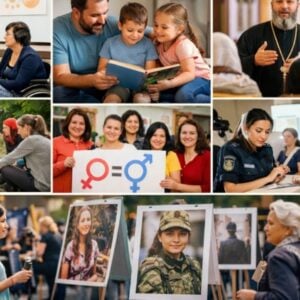
Dublin — May 27, 2026 — Taoiseach Micheál Martin and Minister for Social Protection Dara Calleary have unveiled Ireland’s new Roadmap for Social Inclusion 2026–2030, setting out a five‑year plan to reduce poverty and strengthen social inclusion nationwide. The launch took place at the Social Inclusion Forum in Dublin’s Aviva Stadium, attended by over 250 participants in person and many more online.
The Roadmap builds on decades of anti‑poverty strategies and outlines 63 cross‑government actions spanning income supports, housing, employment, education, health, childcare, transport, and community services. It focuses on groups most affected by poverty, including families with children on low incomes, lone parents, older people, disabled persons, and disadvantaged communities such as Travellers and Roma.
Aligned with the EU’s first Anti‑Poverty Strategy, the Roadmap commits Ireland to reducing the consistent poverty rate to 2 percent or less by 2030, tackling income inequality, and embedding social inclusion across all state policies. It also emphasizes collaboration with communities and people with lived experience of poverty to ensure policies are informed by real challenges.
Speaking at the Forum, Taoiseach Martin stressed the importance of evidence‑based action and community engagement. “This marks a renewed and ambitious commitment by Government to reducing poverty, supporting families and individuals, and building an Ireland where everyone can live with dignity and participate fully in society,” he said.
Minister Calleary highlighted the need for a whole‑of‑government approach, noting that the 63 actions reflect the multi‑dimensional nature of poverty. He emphasized that delivery will require ongoing collaboration with the voluntary sector and those directly impacted by poverty.
Progress will be overseen by an inter‑departmental Steering Group, with quarterly updates and annual reports published on Gov.ie. A mid‑term review in 2028 will assess progress and allow adjustments if needed.
The Roadmap represents Ireland’s most ambitious anti‑poverty framework to date, aiming to make the country one of the most socially inclusive members of the EU by the end of the decade.