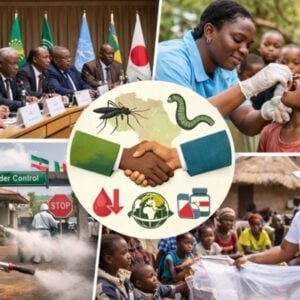
Health specialists from across the Americas gathered in Bogotá, Colombia, for a regional meeting organized by the Pan American Health Organization to strengthen yellow fever surveillance and improve outbreak preparedness across the region.
The four-day meeting brought together experts in epidemiology, immunization, entomology, clinical management, laboratory surveillance, and risk communication from more than 10 countries. The discussions focused on updating operational definitions and technical guidance for yellow fever epidemiological surveillance in the Americas.
Officials emphasized that yellow fever remains a major public health concern despite the availability of a highly effective vaccine. According to Pedro Fernando da Costa Vasconcelos, severe yellow fever cases continue to place heavy pressure on health systems, making prevention and rapid response essential.
One of the key outcomes of the meeting was the validation of a new operational matrix developed by PAHO to guide countries in preparing for and responding to yellow fever outbreaks. The framework organizes public health interventions according to transmission risks and includes strategies for surveillance, vector control, immunization, clinical care, laboratory monitoring, and community engagement.
The updated guidance also recognizes that countries face different levels of risk. While some Central American nations have not recorded human yellow fever cases for decades, experts warned that favorable environmental conditions and the presence of disease-carrying mosquitoes still create the possibility of future outbreaks.
Andrea Vicari explained that the goal is to provide countries with practical tools that can be adapted to local realities while strengthening preparedness and response capacities.
Participants also discussed regional risk assessment models that incorporate epidemiological data, vector activity, environmental conditions, and population mobility patterns to improve early warning systems and outbreak detection.
Health officials highlighted the importance of a “One Health” approach, recognizing the close relationship between human health, animal populations, and environmental factors in the spread of yellow fever.
The meeting concluded with plans for PAHO to publish updated regional guidance aimed at helping countries strengthen surveillance systems, improve outbreak response, and prevent the re-establishment of urban yellow fever transmission across the Americas.