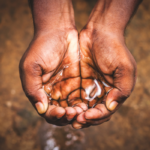
WaterAid Bangladesh, with support from the Embassy of Sweden in Bangladesh, hosted a national-level workshop on the ‘WASH for Urban Poor (WASH4UP) Phase II’ project, bringing together key stakeholders to reflect on progress, challenges, and future directions for urban water, sanitation, and hygiene (WASH) services. The workshop, held recently, focused on reviewing the project’s major… [Read More]
cat
UNFPA and FIGO Partner to Boost Innovation and Investment in Women’s Health

UNFPA and FIGO have signed a Memorandum of Understanding at UNFPA Headquarters in New York, marking a major step toward accelerating innovation, investment, and global collaboration in women’s health. This strategic partnership aims to strengthen maternal and reproductive health services while advancing efforts to eliminate women’s cancers worldwide. The collaboration will support countries, upon request,… [Read More]
Empowering Women in Agrifood Systems: Lessons from Odisha’s Gender-Inclusive Policies

The Indian state of Odisha has emerged as a strong example of how women can be placed at the center of agrifood system transformation. With 85 programs exclusively dedicated to women, 420 gender-sensitive initiatives, and nearly 45% of its state budget incorporating gender-responsive measures, Odisha is actively working toward building an agrifood system that is… [Read More]
Palisades & Eaton Wildfires: Key Lessons for Fire Management

The Palisades and Eaton wildfires highlighted that wildfire losses differ fundamentally from traditional property claims. Rather than being isolated events, they function as community-wide reconstruction and recovery projects influenced by regulatory complexity, access constraints, labor and material availability, documentation quality, and expectation management, rather than solely by policy coverage interpretation. More than a year after… [Read More]
Leadership Insights from the Luftwaffe in WWII

Firms often face the challenge of motivating top performers when financial incentives are limited or costly. Research using data from German fighter pilots during World War II shows that a tiered system of status-based awards can drive repeated bursts of effort from high-ability individuals. Rather than relying on pay raises or safer assignments, the Luftwaffe… [Read More]
Cracking the Energy & Climate Finance Puzzle

Building large-scale climate and energy infrastructure is less about the availability of capital and more about alignment. Governments must act as systems integrators, coordinating policy, de-risking commercialization, modernizing valuation methods, and synchronizing markets to enable private capital to move quickly and confidently. Effective democratic governance plays a crucial role in this process. Visible coordination across… [Read More]
Marshall Islands’ Reimaanlok Vision: Community-Led Ocean Conservation Expedition
National Geographic Pristine Seas has launched its 50th expedition this week in the Republic of the Marshall Islands (RMI) to gather essential marine biodiversity data that will support the country’s ocean management initiatives. The expedition aims to explore diverse ocean ecosystems recognized for their resilience and ecological richness. Conducted in collaboration with the RMI government… [Read More]
Why Nepal Struggles with Infrastructure Development
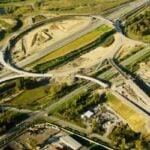
The Nagdhunga–Naubise–Mugling (NNM) road is a crucial transport corridor in Nepal, connecting the Kathmandu Valley to the Terai region and onward to India. As part of Asian Highway AH42, it handles an estimated 60–70 percent of goods entering Kathmandu, including food, fuel, construction materials, and medicines. Recent upgrades under the Strategic Road Connectivity and Trade… [Read More]
Seven Lessons on Financial Sustainability from Better Breed Cameroon

Better Breed Cameroon was founded thirteen years ago by Monique Kwachou in response to a simple question: when current leaders leave, who will be ready to take their place? Emerging from an academic award and the vision of a group of passionate Cameroonian youth, the organisation set out to nurture conscious, principled citizens capable of… [Read More]
National Strategy to Combat Technology-Driven GBV in Pakistan

Pakistan has launched its first comprehensive framework to tackle technology-facilitated gender-based violence (TFGBV) with the National Strategy for Addressing TFGBV 2026-2030. The strategy responds to the urgent need to protect women, girls, and marginalized communities in the country’s rapidly expanding digital space, where 8 million women came online in 2024 alone. TFGBV is recognized not… [Read More]
UNDP Launches ASEAN Responsible Business Collective

On 9 March 2026 in Jakarta, business leaders from across Southeast Asia launched the ASEAN Responsible Business Collective, a regional platform designed to help companies navigate emerging global standards on supply chains, human rights, and environmental practices. Supported by the United Nations Development Programme (UNDP) and funded by the Government of Japan, the platform brings… [Read More]
UNDP and Germany Back Flood-Resilient Housing in Balochistan
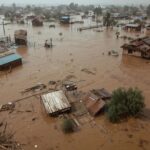
On 13 March 2026, the United Nations Development Programme (UNDP), supported by the Government of Germany through KfW Development Bank and in partnership with the Government of Balochistan, handed over 118 climate-resilient homes to families affected by the 2022 floods in Hanna-Urak, Quetta District. The new houses provide safer shelter, helping communities rebuild their lives… [Read More]
FfD4 Insights: Strategic Dialogues for Action

The UNDP Global Policy Centre for Governance (GPCG) designed a knowledge track to support stakeholders in navigating complex and politically sensitive issues during the 4th International Conference on Financing for Development (FfD4) in 2025. Through its Finance, Integrity and Governance (FIG) Initiative, GPCG created a safe space for multistakeholder engagement, bringing together diplomats, technical experts,… [Read More]
Government Aims to Go Further and Faster on Energy Security

On 15 March 2026, the Energy Secretary announced a package of measures to accelerate the UK’s pursuit of national energy security in response to recent events in the Middle East. The plan includes making low-cost, easy-to-install “plug-in solar” panels available for the first time in the UK, allowing households to generate free electricity on balconies,… [Read More]
EU Extends Sanctions on Russia: Member States Reach Agreement
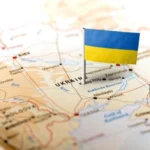
On 14 March 2026, the Council of the European Union unanimously decided to extend restrictive measures against individuals and entities undermining or threatening the territorial integrity, sovereignty, and independence of Ukraine. The sanctions will now remain in effect until 15 September 2026. Latvia strongly opposed any politically motivated attempts to remove specific individuals from the… [Read More]
USDA Launches Funding to Boost Local Farm Markets
The U.S. Department of Agriculture (USDA) has announced over $26.8 million in grants through the Local Agriculture Market Program (LAMP) to support local and regional food systems. The program aims to help producers connect directly with consumers, expand local markets, and strengthen local food enterprises. LAMP includes the Farmers Market Promotion Program (FMPP), the Local… [Read More]
Strengthening Field Epidemiology Capacity in SE Asia
Recent public health emergencies, including the COVID-19 pandemic, repeated zoonotic outbreaks, and rising antimicrobial resistance, have highlighted the urgent need for strong multisectoral field epidemiology capacities. This underscores the importance of developing a workforce equipped with One Health competencies to address health threats at the human-animal-environment interface. To meet this need, WHO collaborates with the… [Read More]
Why Community Voices Are Key to Effective Aid in Bangladesh
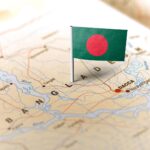
The influx of over one million Rohingya refugees since 2017 has dramatically altered the social and economic landscape of Cox’s Bazar, Bangladesh. While international aid has focused primarily on urgent humanitarian needs within refugee camps, the experiences of surrounding host communities highlight the importance of deeper engagement with both refugee and local populations. Rising living… [Read More]
The Lab Picks 8 Innovations to Drive $600M Climate Funding

The Global Innovation Lab for Climate Finance (the Lab) has selected eight early-stage climate finance solutions with the potential to unlock approximately USD 600 million in investment for nature restoration, resilient agriculture, and industrial decarbonization projects across emerging markets, including Brazil, the Andean Amazon, Vietnam, India, Madagascar, Mexico, and the Philippines. The ideas were chosen… [Read More]
$2M Emergency Health Funding Released by WHO for Middle East Crisis

On 15 March 2026, WHO released US$2 million from its Contingency Fund for Emergencies (CFE) to support urgent health responses in Lebanon, Iraq, and Syria. The CFE is a rapid financing mechanism that allows WHO to immediately fund critical health operations during emergencies while additional donor support is mobilized. Dr Hanan Balkhy, WHO Regional Director… [Read More]
Norway Boosts Aid for Middle East War Victims
Norway is increasing its humanitarian support for victims of the ongoing war in the Middle East by allocating an additional NOK 25 million (around USD 2.5 million) from its humanitarian reserve. The funds will be distributed to the Red Cross, the UN, and Norwegian aid organizations to help alleviate the growing crisis and provide immediate… [Read More]
More Queenslanders Eligible for Flood Disaster Assistance

Queenslanders affected by the ongoing flood emergency can now access disaster assistance payments ranging from $180 for individuals to up to $900 for families of five or more, helping cover essentials such as food, clothing, and medicine. Eligibility for assistance has expanded to include more residents in Bundaberg and Douglas, and additional flood-affected areas in… [Read More]
$21.2M to Drive Innovative Commercialisation Projects

The Industry Growth Program is providing crucial support to small and medium enterprises and startups, helping them commercialise innovative ideas and expand their businesses. The program has recently allocated $21.2 million in matched grant funding to support 13 cutting-edge projects. These projects align with government priorities and aim to strengthen Australian manufacturing capabilities. Among the… [Read More]


