The African Development Bank has pledged to work with international and regional partners to mobilise financing for the next phase of Africa’s Great Green Wall Initiative (GGWI), as leaders call for faster action on land restoration and climate resilience.
The commitment was announced during the 17th Conference of the Parties to the UN Convention to Combat Desertification (UNCCD COP17) in Ulaanbaatar, Mongolia. African ministers, development partners and international organisations gathered to discuss how the Great Green Wall can be expanded through continental cooperation and the African Union’s 2024–2034 strategy.
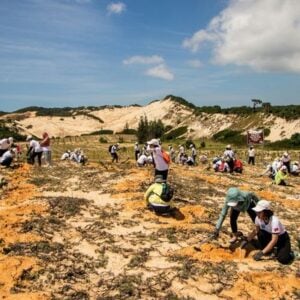
Launched by the African Union in 2007, the Great Green Wall was initially focused on restoring degraded land across 11 Sahelian countries. Its targets include restoring 100 million hectares of degraded land, creating 10 million green jobs and sequestering 250 million tonnes of carbon by 2030. The initiative is now expanding beyond its original geographic scope under the new continental strategy.
UN Deputy Secretary-General Amina J. Mohammed highlighted the initiative’s people-centred approach and pointed to progress in countries including Senegal, Chad and Djibouti. She called for renewed investment and stronger implementation, with women and young people placed at the centre of restoration and development efforts.
African Union representatives noted that Africa has lost an estimated 163 million hectares of land to degradation since 2015. The Great Green Wall also faces a financing gap of approximately $14 billion to meet its 2030 objectives, increasing the need for stronger investment pipelines and coordinated financing.
The African Development Bank is already supporting major ecosystem restoration efforts in Africa. Through the Ecosystem Restoration in the Zambezi River Basin programme, the Bank plans to mobilise $500 million between 2027 and 2031 with partners including the Global Environment Facility, Climate Investment Funds and Green Climate Fund.
The programme is expected to benefit 2.8 million people across eight countries, restore 300,000 hectares of degraded land and create 40,000 jobs for women and young people. It will also support the Southern Africa Great Green Wall Accelerator by developing regional investment plans and bankable projects.
Leaders at the COP17 dialogue emphasized the need to move from ambitious commitments to practical investment and measurable results. Priorities include developing bankable projects, using financing strategically to manage risk, creating markets and ensuring that restoration programmes deliver meaningful economic and social benefits.
With stronger financing, regional cooperation and locally tailored approaches, the Great Green Wall is being positioned as more than an environmental initiative. Its next phase aims to support land restoration, food security, job creation, climate resilience and sustainable economic growth across Africa.