You are here: Home/cat/ IOM Calls for Investment in Land Restoration to Reduce Displacement
IOM Calls for Investment in Land Restoration to Reduce Displacement
The International Organization for Migration (IOM) is calling for greater investment in land restoration, drought resilience and climate adaptation to reduce the risk of displacement before environmental pressures develop into humanitarian crises.
Speaking at the 17th session of the UN Convention to Combat Desertification (UNCCD COP17) in Ulaanbaatar, IOM highlighted the close connection between land degradation, livelihoods, human mobility and security.
Up to 40% of the world’s land is degraded, affecting around half of humanity. Land degradation can reduce access to food, water and productive land, leaving communities increasingly vulnerable to displacement. IOM also noted that weather-related disasters have caused approximately 200 million internal displacements over the past decade.
IOM Deputy Director General Ugochi Daniels stressed that investing in prevention and restoration can help communities retain the ability to remain safely in their homes, move when necessary or return with dignity.
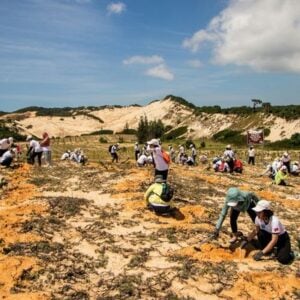
The organization is also advocating for stronger financing and locally led solutions, particularly in communities facing drought and desertification. Its initiatives include the Peace Forest Initiative for the Horn of Africa, which aims to restore degraded land and strengthen community resilience.
IOM and UNCCD are further developing a 2026–2030 Joint Roadmap for Action focused on land degradation, drought and human mobility. The organization is also emphasizing the involvement of young people, migrants and displaced communities in designing solutions.
IOM’s message at COP17 is that land restoration is not only an environmental priority but also an investment in livelihoods, resilience and the prevention of displacement.