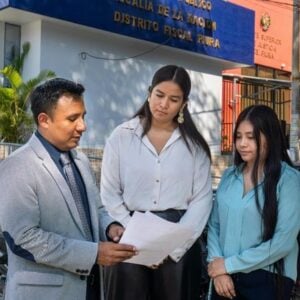
Twenty-three young law graduates gained practical experience in justice, human rights, refugee protection and humanitarian law during a two-day learning programme in Cox’s Bazar on August 19 and 20, 2026.
The programme was organised as part of the Attorney General’s Office (AGO) Internship Programme, with support from the United Nations Development Programme (UNDP) Bangladesh. The initiative aims to help aspiring lawyers understand how legal principles are applied in real-world settings beyond classrooms and textbooks.
On the first day, the interns visited the UNDP Sub-Office in Cox’s Bazar, where they were introduced to the work of UNDP and its partners supporting the Rohingya refugee response. Representatives from the United Nations High Commissioner for Refugees and the Office of the United Nations High Commissioner for Human Rights discussed their mandates and engagement with Rohingya communities.
The interns also took part in a workshop on International Criminal Law (ICL) and International Humanitarian Law (IHL) facilitated by Legal Action Worldwide. Sessions explored international courts, crimes, modes of liability, legal defences, universal jurisdiction and the domestic application of international criminal law.
The programme also examined how humanitarian law applies in different types of conflict and its relationship with international human rights law. A scenario-based exercise gave participants an opportunity to apply these principles to a fictional situation involving displacement and violence.
On the second day, the interns travelled to Camp 18 in Ukhiya, where they visited the UNHCR-supported BLAST Legal Assistance Centre. They learned about legal services available to refugees, common protection concerns, referral mechanisms and the challenges involved in delivering legal assistance in humanitarian settings.
The visit also covered case management, community outreach and dispute resolution. At the Camp-in-Charge Office, participants learned about the government’s role in camp administration and coordination with the Refugee Relief and Repatriation Commissioner, UN agencies and NGO partners.
Discussions at the camp also addressed community feedback, complaints, assistance services, referral mechanisms and the handling of protection, security and dispute-related matters.
The programme concluded with a visit to the IOM Rohingya Cultural Memory Centre. Rohingya volunteers led the interns through a community-focused tour highlighting Rakhine traditions, livelihoods, food, crafts and cultural heritage.
The experience gave the future lawyers a deeper understanding of the connection between legal principles and humanitarian work. It also highlighted the importance of community engagement, cultural identity, human dignity and access to justice when working with displaced and vulnerable populations.
The Cox’s Bazar programme ultimately provided the interns with practical insight into the responsibilities of legal professionals working in complex humanitarian environments, helping them better understand how law can be used to protect rights and support affected communities.