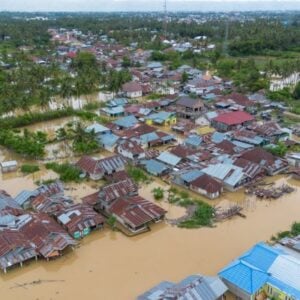
Climate change is often discussed as a scientific challenge, but some experts suggest it can also be understood through the lens of a strategic game. As extreme weather events become more frequent and unpredictable, understanding how different factors interact may help explain why climate risks continue to escalate and what can be done to address them.
At the heart of this perspective is the concept of emergence, where individual actions or elements combine to create outcomes far greater than the sum of their parts. In climate systems, interactions between greenhouse gases, rising temperatures, water cycles, ecosystems, and human activities can generate complex and often unexpected consequences.
Climate change is driven by a series of interconnected processes. Rising carbon dioxide levels trap more heat in the atmosphere, warmer temperatures increase evaporation, and greater amounts of water vapor can contribute to more intense rainfall and storms. When these factors combine with geographical and environmental conditions, the result can be severe climate-related disasters.
The growing complexity of climate systems means that risks often extend beyond a single event. Changes in temperature, rainfall patterns, ocean conditions, and ecosystems can trigger cascading impacts on agriculture, water resources, public health, economies, and communities around the world.
One of the biggest challenges is that these interconnected effects can be difficult to predict. Small changes within one part of a system may create significant consequences elsewhere, making climate adaptation and mitigation increasingly urgent.
However, the same principle that drives climate risks can also be applied to climate solutions. By creating positive interactions between policies, technologies, communities, and economic systems, societies can generate large-scale benefits that extend beyond individual interventions.
For example, investments in climate-smart agriculture can improve water management, increase farm productivity, strengthen local economies, and encourage wider adoption of sustainable practices. When these efforts reinforce one another, they can produce long-term improvements across entire regions.
Successful environmental initiatives often rely on coordinated action across governments, businesses, communities, and international organizations. Global agreements and collaborative efforts have shown that when policies, innovation, and public participation align, meaningful environmental progress is possible.
The fight against climate change ultimately depends on humanity’s ability to work together. While climate risks continue to grow through interconnected systems, collective action has the potential to create equally powerful positive outcomes.
As countries seek solutions to climate challenges, experts emphasize that strategic coordination, innovation, and sustained cooperation will be essential for building resilience, reducing emissions, and protecting communities from future climate impacts.
The path forward may be complex, but by understanding how systems interact and by aligning efforts across sectors, societies can strengthen their ability to respond to one of the defining challenges of our time.