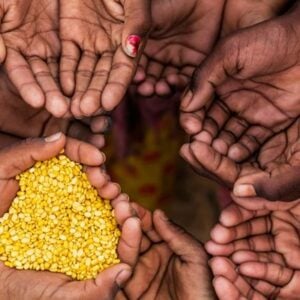
The latest Integrated Food Security Phase Classification (IPC) update, released by Haiti’s National Food Security Coordination (CNSA), shows that 5.83 million people—about 52% of the population—are currently facing acute food insecurity. This represents an increase of around 130,000 people compared to the previous assessment in September 2025, indicating a continued deterioration of the crisis across the country.
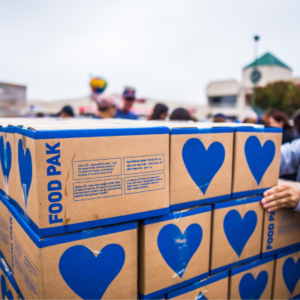
Out of the total affected population, more than 1.8 million people are in emergency conditions (IPC Phase 4) and require urgent humanitarian assistance. While coordinated efforts by the Haitian government and partners such as the Food and Agriculture Organization (FAO) and the World Food Programme (WFP) have helped around 200,000 people move out of emergency levels over the past year, officials warn that these gains remain fragile amid worsening conditions.
The CNSA has expressed cautious optimism, noting that improved governance mechanisms, including the creation of an Interministerial Committee on Food and Nutrition Security, could help strengthen coordination and resource mobilisation. However, the agency emphasizes that sustained investment and monitoring are essential to prevent further deterioration and ensure timely humanitarian response.
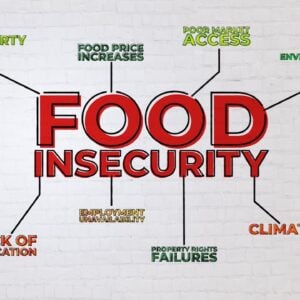
The crisis is being driven by a combination of factors, including widespread violence linked to armed groups, which has displaced over 1.4 million people and severely disrupted food supply chains. This insecurity has also restricted farmers’ access to agricultural land and contributed to rising prices of basic goods, reducing household purchasing power and deepening vulnerability.
Economic pressures are further worsening the situation, with global fuel price increases raising transportation and production costs, which in turn affect food availability and affordability. At the same time, climate shocks such as Hurricane Melissa in October 2025 have caused significant damage to crops and livestock in southern Haiti, weakening rural livelihoods and national food production capacity.
Humanitarian and development actors stress that addressing the crisis requires a dual approach combining emergency food assistance with long-term investment in agriculture. FAO highlights that strengthening local food production is essential not only for immediate recovery but also for reducing dependence on imports and external aid in the future.
WFP also warns that food insecurity is closely linked to stability, noting that families cannot rebuild or sustain peace without access to adequate nutrition. Emergency food assistance remains critical as the first line of response, while rebuilding resilient food systems is seen as key to long-term recovery.
In response to the worsening situation, CNSA, FAO, and WFP are jointly calling for urgent and increased support from national and international stakeholders. They urge accelerated investment in food security, improved humanitarian access, emergency agricultural support, and stronger assistance for smallholder farmers to prevent millions more people from falling into acute hunger.