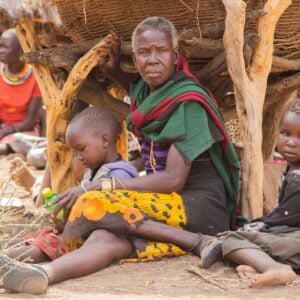
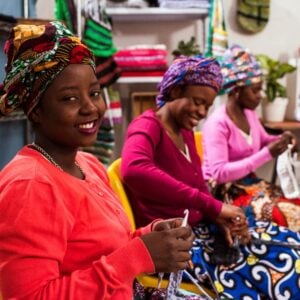
The reflection is written in the context of the FAO’s Year of the Woman Farmer and explores what meaningful partnership looks like when the goal is to strengthen women’s role in agriculture. It highlights that resilient, climate-smart and commercially viable supply chains cannot be built without investing in women, who play essential roles as farmers, workers, traders and knowledge holders. Despite their contribution to food security, biodiversity and natural resource management, women often remain excluded from key inputs such as land, finance, training and decision-making power, which directly weakens agricultural productivity and resilience.
Drawing on a long-term collaboration between ofi and Germany’s development agency Deutsche Gesellschaft für Internationale Zusammenarbeit (GIZ), the article describes a €10 million partnership supporting 83,000 smallholder farmers, including 28,000 women, across multiple commodity value chains. The collaboration aims to improve livelihoods and strengthen participation in higher-value, more sustainable supply chains, while aligning with broader goals such as FAO’s Commit to Grow Equality initiative and ofi’s ambition to support 250,000 women farmers by 2030.
A key lesson from this partnership is the importance of anchoring collaboration in a shared understanding of the core problem. Gender inequality in agriculture is framed not only as a social issue but also as a structural weakness that reduces productivity, resilience and long-term competitiveness. Evidence shows that closing the gender gap in agriculture could significantly increase food production and reduce emissions, reinforcing the economic and environmental case for action. This shared framing enables partners to design programmes that are both socially impactful and commercially relevant.
The piece also emphasizes the value of designing partnerships around complementary strengths. GIZ contributes deep technical and development expertise, while ofi brings sourcing networks and close relationships with farming communities. This combination allows programmes to be both technically sound and practically implementable. An example from Türkiye shows how combining agricultural interventions with health-focused support for women workers can address gaps that neither organisation could close alone.
Another major insight is the need to address root causes rather than isolated symptoms. Programmes are designed to go beyond training by also tackling access to finance, strengthening women-led cooperatives, and improving working conditions in agricultural supply chains. These interventions aim to shift social norms, strengthen women’s economic agency and ensure that solutions are shaped with communities rather than imposed on them.
Scalability is presented as dependent on long-term commitment and multi-stakeholder collaboration. The partnership spans multiple regions and brings together private companies, NGOs and local institutions to strengthen entire value chains. Examples, such as cocoa farming initiatives in Ecuador, show how combining climate-smart agriculture with women-led enterprise development can simultaneously improve incomes, sustainability and resilience.
Finally, the importance of measuring and communicating impact is highlighted as a critical component of effective partnerships. Strong reporting frameworks, combined with qualitative storytelling and transparent data practices, help demonstrate progress, attract new partners and strengthen accountability. The article concludes by calling for greater collaboration among donors, companies and investors to scale proven models and accelerate inclusive, climate-resilient agricultural systems, reinforcing the idea that empowering women farmers is both a development priority and a strategic investment.