• Skip to primary navigation
  • Skip to main content
  • Skip to primary sidebar

fundsforNGOs News

Grants and Resources for Sustainability

  • Subscribe for Free
  • Premium Support
  • Premium Login
  • Premium Sign up
  • Home
  • Funds for NGOs
    • Agriculture, Food and Nutrition
    • Animals and Wildlife
    • Arts and Culture
    • Children
    • Civil Society
    • Community Development
    • COVID
    • Democracy and Good Governance
    • Disability
    • Economic Development
    • Education
    • Employment and Labour
    • Environmental Conservation and Climate Change
    • Family Support
    • Healthcare
    • HIV and AIDS
    • Housing and Shelter
    • Humanitarian Relief
    • Human Rights
    • Human Service
    • Information Technology
    • LGBTQ
    • Livelihood Development
    • Media and Development
    • Narcotics, Drugs and Crime
    • Old Age Care
    • Peace and Conflict Resolution
    • Poverty Alleviation
    • Refugees, Migration and Asylum Seekers
    • Science and Technology
    • Sports and Development
    • Sustainable Development
    • Water, Sanitation and Hygiene (WASH)
    • Women and Gender
  • Funds for Companies
    • Accounts and Finance
    • Agriculture, Food and Nutrition
    • Artificial Intelligence
    • Education
    • Energy
    • Environment and Climate Change
    • Healthcare
    • Innovation
    • Manufacturing
    • Media
    • Research Activities
    • Startups and Early-Stage
    • Sustainable Development
    • Technology
    • Travel and Tourism
    • Women
    • Youth
  • Funds for Individuals
    • All Individuals
    • Artists
    • Disabled Persons
    • LGBTQ Persons
    • PhD Holders
    • Researchers
    • Scientists
    • Students
    • Women
    • Writers
    • Youths
  • Funds in Your Country
    • Funds in Australia
    • Funds in Bangladesh
    • Funds in Belgium
    • Funds in Canada
    • Funds in Switzerland
    • Funds in Cameroon
    • Funds in Germany
    • Funds in the United Kingdom
    • Funds in Ghana
    • Funds in India
    • Funds in Kenya
    • Funds in Lebanon
    • Funds in Malawi
    • Funds in Nigeria
    • Funds in the Netherlands
    • Funds in Tanzania
    • Funds in Uganda
    • Funds in the United States
    • Funds within the United States
      • Funds for US Nonprofits
      • Funds for US Individuals
      • Funds for US Businesses
      • Funds for US Institutions
    • Funds in South Africa
    • Funds in Zambia
    • Funds in Zimbabwe
  • Proposal Writing
    • How to write a Proposal
    • Sample Proposals
      • Agriculture
      • Business & Entrepreneurship
      • Children
      • Climate Change & Diversity
      • Community Development
      • Democracy and Good Governance
      • Disability
      • Disaster & Humanitarian Relief
      • Environment
      • Education
      • Healthcare
      • Housing & Shelter
      • Human Rights
      • Information Technology
      • Livelihood Development
      • Narcotics, Drugs & Crime
      • Nutrition & Food Security
      • Poverty Alleviation
      • Sustainable Develoment
      • Refugee & Asylum Seekers
      • Rural Development
      • Water, Sanitation and Hygiene (WASH)
      • Women and Gender
  • News
    • Q&A
  • Premium
    • Premium Log-in
    • Premium Webinars
    • Premium Support
  • Contact
    • Submit Your Grant
    • About us
    • FAQ
    • NGOs.AI
You are here: Home / cat / Lebanon Crisis Deepens as 700,000+ People Displaced, IRC Warns

Lebanon Crisis Deepens as 700,000+ People Displaced, IRC Warns

Dated: March 10, 2026

Escalating hostilities between Israel and Hezbollah have forced more than 700,000 people to flee their homes across Lebanon, creating a rapidly worsening humanitarian crisis. The International Rescue Committee (IRC) has issued an emergency Watchlist alert, warning that the renewed conflict is already triggering widespread displacement and placing immense pressure on families, host communities and humanitarian services. Lebanon had already been identified as one of the ten countries most at risk of humanitarian emergencies in the IRC’s 2026 Emergency Watchlist, which predicted that renewed violence could lead to significant civilian suffering and displacement.

The escalation is further worsening Lebanon’s existing economic crisis, which has already pushed more than 80 percent of the population into poverty. Many families are struggling to afford food and basic necessities, while health, protection and other essential services are increasingly overwhelmed by rising demand. The combination of conflict and economic hardship is intensifying vulnerability among already fragile communities.

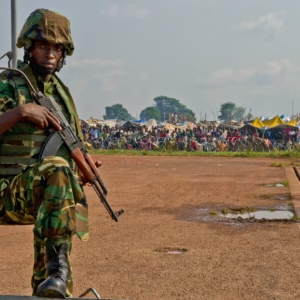
Humanitarian workers report that the majority of displaced people have not been able to access formal shelters. Only about one in five displaced individuals has reached collective shelters, while most are staying with relatives, neighbours or in temporary arrangements. In cities such as Beirut, some people are sleeping in cars or on the streets, while others rely on host families whose homes were already under strain. Severe overcrowding has also been reported in temporary shelters, including repurposed facilities where multiple families are forced to share small spaces with little privacy.

Aid organisations are attempting to respond to the urgent needs by distributing essential relief items such as mattresses, blankets and pillows to displaced families. However, humanitarian groups warn that the scale of needs is growing much faster than the resources available, raising concerns that many displaced people may soon lack access to even basic assistance.

The humanitarian consequences of the conflict extend beyond immediate displacement and casualties. According to the IRC, at least 400 people have been killed in recent strikes in Lebanon, while the broader regional conflict is also generating economic ripple effects. Rising fuel prices and disruptions to global fertilizer supplies could threaten food and energy security in many parts of the world, particularly for populations already struggling with rising costs of living.

There are also concerns that the escalating conflict may divert global attention and resources away from other severe humanitarian crises in places such as Sudan and Gaza. Humanitarian leaders warn that as focus shifts to new conflicts, existing emergencies risk receiving less diplomatic and financial support despite worsening conditions.

In response to the crisis, the IRC has called for urgent international action to protect civilians and ensure humanitarian assistance can reach those in need. The organisation stressed the importance of respecting international humanitarian law, safeguarding civilian infrastructure and providing flexible funding to scale up emergency aid, expand health and protection services and deliver cash assistance and essential supplies to displaced families.
Related Posts

  • Lebanon Crisis Deepens as Residents Fear What Comes Next
  • Lebanon Crisis: Causes, Impact, and How You Can Help
  • Israeli Military’s Broad Evacuation Orders in Lebanon Fuel Panic, Suffering
  • IOM Flags Rising Humanitarian Crisis on Afghanistan–Pakistan Border
  • Community Engagement in Somalia: Key Lessons for Strengthening Community-Led Humanitarian Response

Primary Sidebar

Latest News

High-voltage power substation with metal lattice towers, insulators, and long rows of electrical equipment across a gravel lot.

Lighting Up Africa: Insights from Global Electrification Success Stories

Do Loans Help Small Businesses Grow? Beyond Microfinance Insights

Close-up of a filing cabinet drawer with a white sign reading 'Jobs'.

Jobs and Growth: Northeast Brazil’s Economic Potential

Women in Agriculture Face Rising Costs from Tariffs

Somalia Risks New Disaster as Drought Worsens Without Aid

World Health Organization, Aga Khan University Unveil Women’s Cancer Initiative in Africa

Accelerating Asia’s Green Transition for Sustainable Growth

Ghana Rejects US Health Deal as South Africa, Zambia Struggle

$1.05M Grant Boosts HBCUs from Harvard University

International Rescue Committee Delivers 30M Vaccine Doses to Zero-Dose Children

HPV Vaccination Launched in Burundi to Prevent Cervical Cancer

Climate-Smart Agriculture Gains Momentum with FAO

Person wearing blue gloves sprinkling small blue fertilizer pellets into soil around a plant.

Hurricane Recovery Aid Reaches Jamaica Farmers

Two men in a farm barn with sheep; one man in a hat holds a lamb while a veterinarian in a white coat reviews a clipboard.

FAO and World Organisation for Animal Health Monitor Avian Influenza Spread

FAO Office Strengthening Agriculture in Europe & Central Asia

Rugged quarry landscape with a pile of rocks, a small stone building, and a metal elevated structure in a barren yard.

Protecting 45,000 Rohingya from Landslide Risks

Strengthening Preventive Livestock Services in West Africa

Australia Eliminates Trachoma as Public Health Threat

Vaccination and Malaria Response Improve in Angola

Eritrea Boosts Immunization for Hard-to-Reach Groups

Digital Tools Transform Farming in Southeast Asia

Supply Chain Finance Boost for African Businesses by IFC and Standard Chartered

Nigeria Energy Access Boosted by IFC and Norfund Initiative

New FIFA Rule Grants Recognition to Afghan Women’s Team

US Court Upholds Right to Seek Asylum

Transgender Rights in Nepal Face Stagnation

Middle East Crisis: Call for Sustainable Ceasefire and Civilian Protection

UN: Fossil Fuel Energy System ‘Inherently Volatile and Unstable’

Iran Crackdown Intensifies, UN Rights Chief Issues Warning

Ontario Invests $20M+ in Local Festivals and Events

Minister Heydon Unveils €100m Fuel Aid for Farmers, Contractors, Fishers

Four Green Financing Trends Shaping Development Finance

IOM and Norway Strengthen Migration Cooperation

ILO-EU-Sweden Programme Expands Jobs and Entrepreneurship in Bosnia

Indonesia Promotes Trade-Investment Policy Alignment for Jobs

Ukraine and ILO Strengthen Institutional Partnership

Brazil and ILO Boost South–South Cooperation on Care Economy

Jobs Grow in Ghana’s Agriculture Sector but Gaps Remain

Pakistan Introduces New Safety Code for Construction Industry

Cameroon Youth Jobs Boosted by ILO Initiative

Funds for NGOs
Funds for Companies
Funds for Media
Funds for Individuals
Sample Proposals

Contact us
Submit a Grant
Advertise, Guest Posting & Backlinks
Fight Fraud against NGOs
About us

Terms of Use
Third-Party Links & Ads
Disclaimers
Copyright Policy
General
Privacy Policy

Premium Sign in
Premium Sign up
Premium Customer Support
Premium Terms of Service

©FUNDSFORNGOS LLC.   fundsforngos.org, fundsforngos.ai, and fundsforngospremium.com domains and their subdomains are the property of FUNDSFORNGOS, LLC 1018, 1060 Broadway, Albany, New York, NY 12204, United States.   Unless otherwise specified, this website is not affiliated with the abovementioned organizations. The material provided here is solely for informational purposes and without any warranty. Visitors are advised to use it at their discretion. Read the full disclaimer here. Privacy Policy. Cookie Policy.