Twenty staff members from education-focused NGOs in Afghanistan have successfully completed advanced training in monitoring, evaluation, and learning (MEL) organized by UNESCO, equipping them to train other education providers across the country. The program addresses a critical gap in Afghanistan’s education sector, where many NGOs struggle to systematically monitor performance, adapt programs based on evidence,… [Read More]
FIFA Foundation Steps Up Aid for Hurricane Melissa Victims
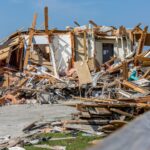
Following the devastating impact of Hurricane Melissa in Jamaica, the FIFA Foundation has stepped in to provide emergency humanitarian support to affected communities. Working closely with the Jamaica Football Federation (JFF), the initiative focuses on delivering essential aid to clubs, players, and local communities in the most severely impacted parishes, including Hanover, Manchester, St. Elizabeth,… [Read More]
£250,000 Grant Opens for Community and Creative Projects in Belfast
Belfast City Council has launched the Belfast Stories Community and Creative Grants Programme, a £250,000 initiative aimed at supporting story-based projects across the city. The programme offers ten small grants of up to £10,000 and five larger creative project grants of up to £30,000, encouraging community and cultural organisations to explore cultural identity, heritage, and… [Read More]
What Oregon’s Transport Funding Struggles Teach the Nation

Oregon’s transportation system is facing a severe financial crisis after decades of underfunding and legislative missteps, offering a cautionary tale for the nation’s broader infrastructure challenges. The Oregon Department of Transportation (ODOT) carries hundreds of millions in debt and must make difficult decisions to maintain essential services like road maintenance, snow removal, and landslide mitigation,… [Read More]
Key Insights from Running AMP & RCPP Agricultural Programs
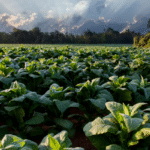
Over the past several years, experience running agricultural and conservation incentive programs alongside governments, companies, and financial institutions has revealed a clear truth: scaling programs is not primarily a policy challenge, but an execution challenge. Success depends largely on how easily producers can participate and how efficiently staff can manage information, rather than on the… [Read More]
Inspiring African Youth Success Stories in Governance and Peacebuilding

This knowledge product highlights the meaningful contributions of youth across Africa in promoting inclusive decision-making, social cohesion, and sustainable peace. It documents 44 initiatives from multiple countries, showcasing how young people are driving change in governance, peacebuilding, and community resilience. The examples demonstrate how youth can act as agents of social transformation, addressing complex challenges… [Read More]
Andean Agriculture: Slopes That Sustain the World
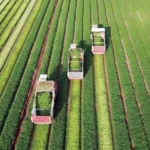
The world’s great mountain ranges hold ancestral knowledge that is increasingly urgent today. Long before modern engineering, mountain communities developed systems capable of retaining water, cultivating steep slopes, and sustaining biodiversity. In the Andes, this expertise reached an extraordinary level of sophistication, offering strategies that are now essential for addressing global environmental and food security… [Read More]
A Decade of EU Research for Sustainable Agri-Food
The European Union has invested significantly in research and innovation to support the global transformation of agri-food systems. A policy brief analyzing 15 completed projects funded between 2014 and 2024 highlights how these initiatives, aligned with EU frameworks like the Green Deal, Farm to Fork strategy, and the Global Gateway Strategy, have strengthened local research… [Read More]
Antonio Guterres Raises Alarm Over Global Human Rights Abuses
United Nations Secretary‑General António Guterres has warned that human rights are under attack globally, describing a world where the rule of law is being steadily replaced by the rule of force. He emphasized that this erosion is deliberate and often driven by those holding the greatest power, leaving millions to suffer through violence, discrimination, and… [Read More]
Moldova’s Green Transition: Why Local Solutions Matter

Moldova’s green transition is often discussed in terms of policy reforms, investments, and alignment with European standards. While these elements are important, the deeper challenge lies in systemic coherence. True coherence cannot be imposed externally—it must be cultivated from within the country. This perspective is informed both by experience in climate policy implementation and by… [Read More]
Ukraine Recovery: $588 Billion Needed Over 10 Years

The updated joint Rapid Damage and Needs Assessment (RDNA5), issued by the Government of Ukraine, the World Bank Group, the European Commission, and the United Nations, highlights the scale of reconstruction required as the full-scale Russian invasion enters its fifth year. The assessment reports that direct damage in Ukraine has now surpassed $195 billion, up… [Read More]
Updated Report Reveals Ukraine’s $588B Reconstruction Needs

Four years into Russia’s invasion, Ukraine faces unprecedented reconstruction and recovery challenges. An updated joint Rapid Damage and Needs Assessment (RDNA5) released by the Government of Ukraine, the World Bank Group, the European Commission, and the United Nations estimates that, as of 31 December 2025, Ukraine will require nearly $588 billion (€500 billion) over the… [Read More]
Apply Now: Green Assist Supports Green Investment Initiatives

On 23 February 2026, CINEA launched a new call for projects under Green Assist, the EU advisory initiative aimed at supporting the development of sustainable investment projects across Europe. With a total budget of €3 million, the call offers tailored advisory support to small and medium-sized enterprises (SMEs), helping them develop and scale their green… [Read More]
EU/Israel: Calls Grow for Palestinians’ Rights to Lead Peace Agenda

Amnesty International has called on EU foreign ministers to ensure that their meeting on 23 February with Nikolai Mladenov, Director-General of the Board of Peace and High Representative for Gaza, prioritizes the rights of Palestinians. The organization stressed that the EU must address the structural flaws of the Board of Peace mechanism and ensure its… [Read More]
Finland Grants €20M to Strengthen Humanitarian Response in Ukraine
At the start of 2026, Finland’s Ministry for Foreign Affairs prioritized humanitarian assistance to address urgent crises worldwide, with a particular focus on Ukraine, major refugee situations in Africa, and humanitarian needs in the Middle East. Out of a total €72 million in humanitarian aid allocated this year, €20 million has been earmarked specifically for… [Read More]
Advancing Adolescent Health in Central and West Africa
The International Development Research Centre (IDRC) launched the webinar series “Thriving in Safety: Advancing Adolescent Health and Rights and Ending Gender-Based Violence in Central and West Africa” to strengthen adolescent health and rights, marking the 30th anniversary of the International Conference on Population and Development Programme of Action. The series aimed to foster knowledge exchange,… [Read More]
Introducing the GSMA Innovation Fund for Sustainable Mobile Solutions

The GSMA has launched the Innovation Fund for Green Transition for Mobile, targeting small and growing enterprises across Africa, Central and South America, and South and Southeast Asia. The fund aims to address the dual challenge of advancing digital inclusion while promoting the clean energy transition, alongside exploring innovative solutions for refurbished handsets. By integrating… [Read More]
Leading the Fight Against AMR: Ghana Advances People-Focused Strategies in Africa
Antimicrobial resistance (AMR) occurs when bacteria, viruses, fungi, and parasites no longer respond to antimicrobial medicines, making infections harder or impossible to treat. This silent crisis is among the world’s top ten global health threats. AMR makes once-curable infections more difficult and costly to treat, placing immense pressure on health systems and endangering lives. Globally,… [Read More]
WHO Hosts Global Experts in Brazzaville to Boost Filovirus Clinical Care
The World Health Organization (WHO), with support from the Foreign, Commonwealth and Development Office (FCDO), convened a five-day Filovirus Disease Optimized Supportive Care Workshop in Brazzaville to update and harmonize clinical management guidelines for filovirus diseases (FVD). The workshop brought together 50 clinicians, researchers, and public health specialists from around the world to strengthen preparedness… [Read More]
UN Alerts: 280,000 Displaced Amid Escalating South Sudan Fighting

The recent escalation of fighting in South Sudan has intensified risks for civilians and aid workers, with three humanitarian personnel killed between 7 and 16 February in Jonglei and Upper Nile states, according to the UN Office for the Coordination of Humanitarian Affairs (OCHA). Despite repeated commitments by authorities to allow relief operations, access to… [Read More]
Ministers Celebrate Key Step Forward for Endangered Bird Conservation
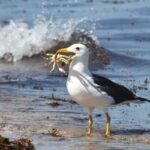
A major milestone has been reached in Ireland’s efforts to protect vulnerable ground-nesting bird species, as 170 landowners have committed to conservation management through the Breeding Waders European Innovation Partnership (EIP). This initiative brings over 2,340 hectares of land under active management to support breeding waders, including the Eurasian Curlew, Eurasian Oystercatcher, Northern Lapwing, Common… [Read More]
20 Years of the Maritime Labour Convention: Ensuring Workers’ Rights at Sea
The International Labour Organization (ILO) and the International Maritime Organization (IMO) are commemorating the 20th anniversary of the Maritime Labour Convention, 2006 (MLC, 2006), a landmark treaty that has significantly improved working and living conditions for seafarers worldwide while promoting fair competition in global shipping. Adopted on 23 February 2006 through a unique tripartite consensus… [Read More]
Asia Migrant Workers Struggle in Fishing and Seafood Processing
A regional survey conducted by the International Labour Organization (ILO) highlights persistent challenges faced by migrant workers in Asia’s fishing and seafood processing industries, emphasizing the urgent need to ratify and implement international labour standards on recruitment, work in fishing, and forced labour. The study, titled “Towards fair seas: Recruitment and working conditions for migrant… [Read More]


