
The European Investment Bank (EIB) is providing a €90 million loan to the Port of Rotterdam Authority to install shore power facilities at three deep-sea container terminals in the port. The project, delivered through Rotterdam Shore Power—a joint venture with Eneco—will equip eight kilometres of quay with 35 connection points for large container ships, allowing… [Read More]
EIB Global and BOI Partner to Boost Healthcare in Nigeria

EIB Global and the Bank of Industry (BOI) have signed a €50 million agreement to support the development of healthcare manufacturing projects in Nigeria. Announced during the Nigeria-EU Ministerial Summit in Abuja, the financing will provide a credit line for local manufacturers of pharmaceuticals, vaccines, diagnostics, and other medicinal products to address unmet medical needs… [Read More]
EIB Global, BOI Strengthen Nigeria’s Private Sector and Sustainable Farming

EIB Global and the Bank of Industry (BOI) have signed an €85 million agreement to strengthen agricultural value chains in Nigeria, with a focus on sustainable cocoa and dairy production. The financing, announced during the Nigeria-EU Ministerial Summit in Abuja, will support private sector companies, cooperatives, and MSMEs, aiming to increase value addition, productivity, and… [Read More]
Malawi Orders Reclamation of Auctioned Refugee Goods

In May 2023, during government enforcement measures requiring refugees to relocate to designated camps, authorities in Malawi confiscated shipping containers and goods belonging to refugees and asylum seekers who operated small businesses in urban areas. Many of these containers served as storage or warehouses for merchandise that represented the owners’ primary source of livelihood. At… [Read More]
Uzbekistan Modernizes Transport Infrastructure with World Bank Support

The World Bank’s Board of Executive Directors has approved a $200 million project to modernize transport infrastructure in Uzbekistan’s Surkhandarya region. The project aims to create new jobs and business opportunities along a reconstructed section of the M41 regional road corridor while supporting comprehensive reforms in the country’s transport sector. Uzbekistan’s transport sector contributes nearly… [Read More]
Barbados Modernizes Early Education with World Bank Support

The World Bank’s Board of Executive Directors has approved a US$50 million program to strengthen foundational learning skills and improve access to inclusive, climate-resilient education in Barbados. The Barbados Education Sector Transformation Program, implemented by the Ministry of Education Transformation, aims to lay the groundwork for more and better jobs by enhancing pre-primary and primary… [Read More]
Columbia University Students Explore Root Causes of Forced Labour

Students from Columbia University’s School of International and Public Affairs (SIPA) completed a study visit to the International Labour Organization (ILO) in Geneva on 20 March 2026. The visit, part of the ILO–SIPA Capstone collaboration under the Evidence and Data to End Forced Labour (EnD-FL) project, aimed to strengthen evidence on the determinants of forced… [Read More]
Nepal’s Labour Laws Need Continued Alignment, Says ILO

The International Labour Organization’s (ILO) Committee of Experts on the Application of Conventions and Recommendations (CEACR) published its 2026 report, marking the 100th anniversary of this independent supervisory body. The report assesses how ILO member states implement ratified international labour standards in national law and practice, promoting accountability, consistency, and progress toward social justice and… [Read More]
EBRD Provides €70M Loan to Boost SMEs in Serbia

The European Bank for Reconstruction and Development (EBRD) is providing a €70 million loan to NLB Komercijalna banka to expand financing for small and medium-sized enterprises (SMEs) across Serbia. The funding will be used to provide working capital and investment loans, helping to address the financing gaps faced by SMEs, particularly in less developed regions… [Read More]
FAO Innovations Cut Human–Wildlife Conflict in Southern Africa

The FAO-led Sustainable Wildlife Management (SWM) Programme took part in the International Parliamentary Roundtable on Human–Wildlife Coexistence (HWC) held in Gaborone, Botswana, from 19 to 21 January 2026. The programme shared field experiences and practical innovations from its sites in Botswana, Namibia, Zimbabwe, and Zambia, contributing to high-level policy discussions on human–wildlife conflict. Hosted by… [Read More]
Planetary Warming Accelerates: UN Issues Climate Alert
In 2024, concentrations of the three major greenhouse gases—carbon dioxide, methane, and nitrous oxide—reached record highs, marking the largest annual increase on record, according to John Kennedy, the agency’s scientific officer. Early data from 2025 suggest that these levels continue to rise, altering the energy balance of the planet. Under a stable system, the energy… [Read More]
Conflict in Middle East Damages Historic Sites
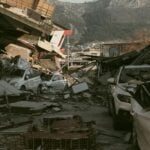
In Iran, several cultural sites, including Golestan Palace, Chehel Sotoun Palace, Masjed-e Jame mosque in Isfahan, and buildings near the Prehistoric Sites of the Khorramabad Valley, have been damaged amid the ongoing conflict. UNESCO has also reported damage to Israel’s White City of Tel-Aviv and Tyre in Lebanon, and warns that numerous other World Heritage… [Read More]
Hormuz Crisis Sparks Global Fertiliser Supply Threat
The Strait of Hormuz, a key global maritime chokepoint carrying about a quarter of seaborne oil along with large volumes of liquefied natural gas and fertilisers, is facing severe disruption amid the ongoing conflict in the region. Ship traffic through the Strait has fallen by more than 95 per cent since the crisis began, driving… [Read More]
Stamping Out Racial Discrimination: UN Calls for Action

The annual commemoration of the Sharpeville massacre on 21 March 1960 reminds the world that racism, in all its forms, continues to persist globally. General Assembly President Annalena Baerbock noted that racism can be both overt and subtle, causing deep and lasting harm that extends beyond individuals. UN Secretary-General António Guterres emphasized that racism fuels… [Read More]
EIB Global Expands MSME Support in Azerbaijan
EIB Global, the international partnerships and development arm of the European Investment Bank, has signed an additional €2 million top-up to its existing €10 million loan to Bank Respublika in Azerbaijan. This new financing strengthens ongoing efforts to improve access to funding for micro, small and medium-sized enterprises (MSMEs) in the country and builds on… [Read More]
Afghanistan NGOs Urge Respect for Humanitarian Law
The statement highlights that the latest airstrike in Kabul comes after months of rising tensions between Afghanistan and Pakistan, marked by repeated border clashes and multiple airstrikes. This prolonged instability has already had a serious humanitarian impact, with more than 115,000 civilians reportedly displaced. A significant number of those affected are children, underscoring the growing… [Read More]
Swedfund Commits $600,000 for Maternal Care in Kenya

Swedfund, the Swedish government’s development finance institution, has committed US$600,000 to Jacaranda Maternity to support the expansion of affordable, high-quality maternal healthcare services in Kenya. The investment is aimed at strengthening access to safe maternity and neonatal care, particularly for women living in low- and middle-income communities in and around Nairobi. Jacaranda Maternity has built… [Read More]
Peace Journalism Training in CAR: 3 Key Lessons

The article highlights how peace journalism training is helping journalists in the Central African Republic (CAR) rethink their role in a country deeply affected by conflict. Since 2012, civil war between the government and various armed groups has shaped daily life across the country, leading to widespread displacement and instability. As of January 2026, hundreds… [Read More]
Environment Agency Seeks Contractors for £6.6bn Framework

The Environment Agency has launched a major procurement programme known as the Collaborative Delivery Framework 2 (CDF2), with an estimated total value of £6.6 billion including VAT, to deliver engineering and environmental asset works across England over the next ten years. The framework is designed to support a wide range of infrastructure and environmental management… [Read More]
How Climate Change Is Driving Youth Innovation

Climate change is no longer a distant threat for many young people in Southeast Asia, but a lived reality that is actively shaping their values, studies and ambitions. For 19-year-old Nathania Frida, an environmental engineering student at the National University of Singapore (NUS), the effects of climate change became personal while growing up in Jakarta…. [Read More]
Helmsley Grants $8.6M for CHCC Surgical Expansion

The Commonwealth Healthcare Corporation (CHCC) has announced that it has received more than US$8.6 million in grant funding from The Leona M. and Harry B. Helmsley Charitable Trust to expand and modernize the surgical department at the Commonwealth of the Northern Mariana Islands’ only hospital-based facility. The funding is aimed at strengthening surgical services in… [Read More]
$6.7M Supports Safer First Nations Communities

The National Health and Medical Research Council (NHMRC) is investing AU$6.7 million in Aboriginal and Torres Strait Islander research aimed at improving family safety and wellbeing. The funding is intended to support research that builds on cultural knowledge, strengthens communities and generates practical evidence that can create meaningful change. By focusing on community priorities and… [Read More]
Where Water Security Begins for Communities
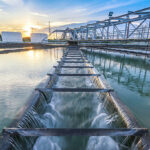
Climate change is making water security increasingly fragile, even in regions that were once considered stable and water-secure. Rising droughts, soil degradation and wildfire risks are exposing the limits of traditional water management approaches that rely mainly on engineered infrastructure such as dams, canals, reservoirs and pumping systems. The article argues that true water security… [Read More]


