• Skip to primary navigation
  • Skip to main content
  • Skip to primary sidebar

fundsforNGOs News

Grants and Resources for Sustainability

  • Subscribe for Free
  • Premium Support
  • Premium Login
  • Premium Sign up
  • Home
  • Funds for NGOs
    • Agriculture, Food and Nutrition
    • Animals and Wildlife
    • Arts and Culture
    • Children
    • Civil Society
    • Community Development
    • COVID
    • Democracy and Good Governance
    • Disability
    • Economic Development
    • Education
    • Employment and Labour
    • Environmental Conservation and Climate Change
    • Family Support
    • Healthcare
    • HIV and AIDS
    • Housing and Shelter
    • Humanitarian Relief
    • Human Rights
    • Human Service
    • Information Technology
    • LGBTQ
    • Livelihood Development
    • Media and Development
    • Narcotics, Drugs and Crime
    • Old Age Care
    • Peace and Conflict Resolution
    • Poverty Alleviation
    • Refugees, Migration and Asylum Seekers
    • Science and Technology
    • Sports and Development
    • Sustainable Development
    • Water, Sanitation and Hygiene (WASH)
    • Women and Gender
  • Funds for Companies
    • Accounts and Finance
    • Agriculture, Food and Nutrition
    • Artificial Intelligence
    • Education
    • Energy
    • Environment and Climate Change
    • Healthcare
    • Innovation
    • Manufacturing
    • Media
    • Research Activities
    • Startups and Early-Stage
    • Sustainable Development
    • Technology
    • Travel and Tourism
    • Women
    • Youth
  • Funds for Individuals
    • All Individuals
    • Artists
    • Disabled Persons
    • LGBTQ Persons
    • PhD Holders
    • Researchers
    • Scientists
    • Students
    • Women
    • Writers
    • Youths
  • Funds in Your Country
    • Funds in Australia
    • Funds in Bangladesh
    • Funds in Belgium
    • Funds in Canada
    • Funds in Switzerland
    • Funds in Cameroon
    • Funds in Germany
    • Funds in the United Kingdom
    • Funds in Ghana
    • Funds in India
    • Funds in Kenya
    • Funds in Lebanon
    • Funds in Malawi
    • Funds in Nigeria
    • Funds in the Netherlands
    • Funds in Tanzania
    • Funds in Uganda
    • Funds in the United States
    • Funds within the United States
      • Funds for US Nonprofits
      • Funds for US Individuals
      • Funds for US Businesses
      • Funds for US Institutions
    • Funds in South Africa
    • Funds in Zambia
    • Funds in Zimbabwe
  • Proposal Writing
    • How to write a Proposal
    • Sample Proposals
      • Agriculture
      • Business & Entrepreneurship
      • Children
      • Climate Change & Diversity
      • Community Development
      • Democracy and Good Governance
      • Disability
      • Disaster & Humanitarian Relief
      • Environment
      • Education
      • Healthcare
      • Housing & Shelter
      • Human Rights
      • Information Technology
      • Livelihood Development
      • Narcotics, Drugs & Crime
      • Nutrition & Food Security
      • Poverty Alleviation
      • Sustainable Develoment
      • Refugee & Asylum Seekers
      • Rural Development
      • Water, Sanitation and Hygiene (WASH)
      • Women and Gender
  • News
    • Q&A
  • Premium
    • Premium Log-in
    • Premium Webinars
    • Premium Support
  • Contact
    • Submit Your Grant
    • About us
    • FAQ
    • NGOs.AI
You are here: Home / cat / Switzerland Climate Governance Lessons: How Political Culture Shapes Climate Action

Switzerland Climate Governance Lessons: How Political Culture Shapes Climate Action

Dated: April 22, 2026

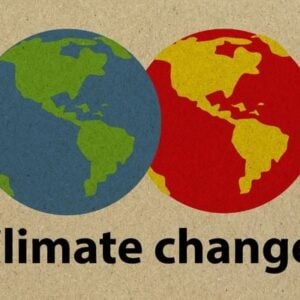
Climate action is often discussed in terms of policies, targets, and implementation tools, but its real limitations may lie in how climate risks are understood, prioritised, and translated into action. Switzerland provides a compelling example of how political culture, institutional design, and public legitimacy influence what kind of climate action becomes possible.

Climate governance is typically built around technical frameworks such as policies, financial mechanisms, and regulatory plans. However, even the most advanced systems have struggled to keep pace with the urgency of the climate crisis. One reason is that governance is not only about tools; it is also shaped by how institutions perceive and interpret the problems they are trying to solve. From an ecopsychological perspective, institutions are part of broader ecological and social systems already under stress. Their effectiveness depends not just on mandates and instruments, but on how they understand their role within these interconnected systems.

The way climate issues are framed plays a critical role in shaping responses. It determines what institutions consider urgent, legitimate, and achievable. This framing influences priorities, decision-making, and the types of solutions that emerge. Research in environmental humanities suggests that meaning is constructed through interpretation and lived experience, raising questions about responsibility. Since institutions operate within these dynamics, their ability to act depends on recognising interdependencies and responding to them. In Switzerland, climate governance reflects this through coordination, expertise, and stability. For instance, the Swiss CO₂ Act sets national targets but leaves much of the implementation to cantons, often reinforcing existing systems rather than transforming them. This approach shapes how responsibility is distributed and can limit the scope of action.

Switzerland’s federal system offers further insight into how governance structures affect climate action. Federalism here is not just about dividing authority but reflects a deeper relationship with consensus, proximity, and collective decision-making. Policies tend to gain acceptance when they are grounded in local realities and developed through consultation. While this strengthens trust and adaptability, it also means that climate risks are often viewed through a local lens. As a result, responses are typically gradual and negotiated, making it harder to implement faster or more ambitious measures. This was evident in March 2026 when voters rejected a proposed climate fund, whereas the 2023 Climate and Innovation Act was approved, showing a preference for incentive-based and incremental approaches.

These domestic dynamics also shape Switzerland’s role on the global stage. The country’s emphasis on coordination, stability, and technical solutions is reflected in its international climate strategy, particularly in promoting sustainable finance through market incentives and regulatory consistency. Its reputation as a reliable global actor is closely tied to these internal governance practices.

Looking at climate governance through a narrative lens shifts the focus from simply evaluating policies to understanding what makes certain actions possible or acceptable. It highlights that responsibility is not only about responding to climate impacts but also about what institutions are able to perceive and prioritise. This perspective helps explain why some climate initiatives gain momentum while others fail to materialise, despite strong technical capabilities.

Ultimately, this approach suggests the need to create space within governance systems to question underlying assumptions, explore alternative ways of framing climate risks, and better connect decision-making with lived, local realities. While it does not offer quick solutions, it provides a deeper understanding of the barriers and opportunities shaping effective climate action.
Related Posts

  • Climate Change and Work: ILO Urges Stronger Social Protection
  • Nepal Education Resilience: UNESCO and IIEP Strengthen Climate Data Systems
  • Green Climate Fund Selects Nairobi as Africa Hub in $960M Climate Finance Expansion
  • FAO Hosts Indigenous Consultation in Suriname for REDD+ Climate Finance Readiness
  • AfDB and ILX Complete First Renewable Energy Deal in Egypt

Primary Sidebar

Latest News

Private Sector Push in Education: GPE and LAC Business Council Join Forces

UNCDF Introduces Derisking Fund to Help Myanmar Small Businesses Rebuild After Earthquake

IMF Austerity in Argentina: What It Means for Lebanon

Navigating the First Loss and Damage Funding Cycle

Sudan Crisis: Rainy Season Risks Blocking Lifesaving Aid Delivery

Sri Lanka Builds Digital Safeguards Amid Crisis

Public Finance Analysis: Key Insights and Trends

4 Million Sudan Returns at Risk, Warns IOM

Japanese Trade Unions Promote Responsible Business Conduct and Labour Rights

Colombo Hosts Sub-Regional Hub on Decent Work and Care Economy

Iran-Russia Alliance: Key Lessons from the Ukraine War

€2M+ Call Launched to Support Civil Society in Cyprus

AfDB Grants €7.33M to Complete Compensation in Uganda Electrification Project

Switzerland Climate Governance Lessons: How Political Culture Shapes Climate Action

Nepal Education Resilience: UNESCO and IIEP Strengthen Climate Data Systems

5 Lessons for Organisations Partnering to Empower Women Farmers

NBSCALE Project Insights: How Startups Grow into International Scaleups

360 Tons of Turkish Humanitarian Aid Delivered to Lebanon Amid Israeli Strikes

Cross-Border Emergency Planning Project Launched to Improve Crisis Response

Emergency EU Funding for Fisheries and Aquaculture Hit by Middle East Conflict

IDNR and NOAA Award $1M for Lake Michigan Shoreline Protection in Illinois

African Union Signs Grants with 13 Think Tanks for Africa Think Tank Platform

How Will £3 Million in Arts and Culture Funding Be Used?

UNIDO Joins ENACT Partnership to Scale Finance for Nature-Based Industrial Solutions

Western Balkans: New Deal to Improve Nature Protection Funding

Books Delivered by Horseback to Children in Vanuatu

Save the Children Warns of Severe Child Malnutrition in Pakistan

Ireland Launches 2026 Shared Island Civic Society Fund Round

New Grant Funding Boost for Charities and Social Enterprises

Burkina Faso: Rising Crackdown on Civil Society Groups

Advancing Gender Justice in the Crimes Against Humanity Convention

Global Human Rights: The Current State of the World

Haiti Hunger Alert: More Than 50% Facing Acute Food Insecurity

EIB Group and MCC Sign €400M Deal for Italian SMEs and Mid-Caps

Ethiopia Secures €110M EIB Funding for Agri Finance and Women-Led SMEs

EIB Global and Zemen Bank Unlock €40M for Ethiopian Agriculture

EIB Group Backs €2.4 Billion Energy and Deep Tech Innovation

European Union Launches Youth Agriculture Skills Programme

Quantum Economy Blueprint in Saudi Arabia: 5 Key Lessons

Empowering Indigenous Peoples: GEF’s Leadership Commitment

Funds for NGOs
Funds for Companies
Funds for Media
Funds for Individuals
Sample Proposals

Contact us
Submit a Grant
Advertise, Guest Posting & Backlinks
Fight Fraud against NGOs
About us

Terms of Use
Third-Party Links & Ads
Disclaimers
Copyright Policy
General
Privacy Policy

Premium Sign in
Premium Sign up
Premium Customer Support
Premium Terms of Service

©FUNDSFORNGOS LLC.   fundsforngos.org, fundsforngos.ai, and fundsforngospremium.com domains and their subdomains are the property of FUNDSFORNGOS, LLC 1018, 1060 Broadway, Albany, New York, NY 12204, United States.   Unless otherwise specified, this website is not affiliated with the abovementioned organizations. The material provided here is solely for informational purposes and without any warranty. Visitors are advised to use it at their discretion. Read the full disclaimer here. Privacy Policy. Cookie Policy.