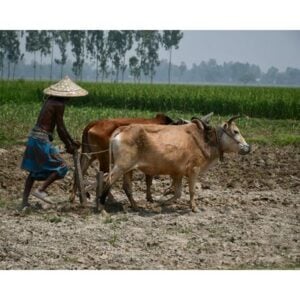
The United Nations Mine Action Service and the Food and Agriculture Organization have welcomed new funding support from the Government of Japan to help restore agricultural livelihoods in conflict-affected areas of northwest Syria. The initiative focuses on improving food security and enabling communities to safely return to agricultural activities after years of conflict and explosive contamination.
The project combines humanitarian mine action with agricultural recovery efforts in order to address both safety risks and livelihood challenges simultaneously. UNMAS will carry out landmine and unexploded ordnance clearance operations, conduct technical surveys, and provide explosive hazard risk education to local communities to ensure that farmland and surrounding areas become safe for civilian use.
Following the clearance process, FAO will support farming households through agricultural rehabilitation measures designed to restore food production and rural income opportunities. Planned assistance includes the rehabilitation of irrigation systems, restoration of agricultural infrastructure, and the provision of farming inputs and technical support to affected communities.
The initiative aims to help vulnerable families regain access to productive land while reducing dependence on humanitarian aid. By reconnecting communities with safe agricultural activities, the programme seeks to strengthen long-term resilience, improve local food availability, and support economic recovery in regions heavily impacted by conflict.
The funding from Japan reflects continued international support for integrated humanitarian and development approaches in Syria. UN agencies emphasized that combining mine clearance with agricultural restoration creates a more sustainable recovery model by addressing immediate safety concerns alongside livelihood and food security needs.
Overall, the programme highlights the importance of coordinated international efforts to support recovery in conflict-affected areas, where restoring safe access to farmland remains essential for rebuilding livelihoods, stabilizing communities, and improving long-term resilience.