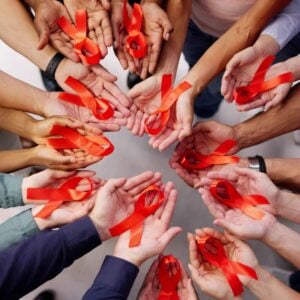
The United States and Russia were among eight countries that voted against a new United Nations Political Declaration on HIV/AIDS, which was adopted by a large majority of member states during a High-Level Meeting on HIV.
The declaration received support from 149 countries and aims to strengthen global efforts to end AIDS as a public health threat. However, the vote revealed ongoing disagreements over issues including technology transfer, human rights language, and approaches to HIV prevention.
The United States said it opposed the declaration because it included topics beyond the core HIV response and referenced issues it viewed as lacking international consensus. US officials also raised concerns about clauses related to technology transfer and intellectual property protections.
A key debate focused on access to medicines and the role of technology sharing. Malawi, speaking on behalf of the Africa Group, introduced a last-minute amendment removing the phrase “mutually agreed terms” from references to technology transfer. African countries argued that stronger commitments were needed to improve access to medicines, vaccines, and health products.
Russia also rejected the declaration, citing concerns over what it described as interference in domestic policies and the inclusion of language it considered politically sensitive. Russia specifically criticized references to harm reduction programmes, drug use policies, and gender-related terminology.
The declaration includes commitments to address discrimination and improve access to HIV services for groups most affected by the epidemic. The European Union supported the inclusion of terms related to sexual and reproductive health, gender-based violence, and key populations, which include communities facing higher barriers to HIV prevention and treatment.
Despite disagreements, the declaration highlights the need for urgent action as global HIV programmes face financial challenges. The document notes funding gaps, disruptions to services, and concerns that reduced international support could slow progress against AIDS.
The declaration also recognizes that HIV remains a public health emergency, with infections increasing in some regions between 2010 and 2025, including the Middle East and North Africa, Latin America, and Eastern Europe and Central Asia.
UNAIDS welcomed the adoption, saying the agreement represents a renewed commitment by most countries to reach the goal of ending AIDS as a public health threat by 2030.