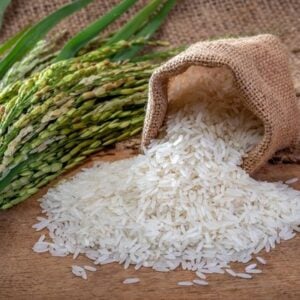
West Africa spends more than $3.5 billion annually importing rice despite the crop being widely grown across the region. Rice remains a staple food for millions, and increasing domestic production presents a significant opportunity to strengthen food security, improve rural livelihoods, create jobs, and reduce dependence on volatile international commodity markets.
The region possesses substantial agricultural advantages, including extensive arable land, abundant water resources, and a long history of rice cultivation. However, limited investment in productivity improvements, processing facilities, and market infrastructure has prevented the rice sector from reaching its full potential. In 2023, countries within the Economic Community of West African States (ECOWAS) produced nearly 24 million tons of rice but still imported around 10 million tons to meet growing demand.
Beyond food security, rice development has significant economic benefits. Agriculture remains the primary source of employment for much of West Africa’s population, and a stronger rice value chain can generate employment opportunities across farming, transportation, processing, marketing, and retail sectors. These opportunities can particularly benefit rural communities and young people seeking jobs.
To address these challenges, ECOWAS developed the Regional Rice Roadmap for 2025–2035 with support from international partners. The roadmap outlines a strategy for achieving rice self-sufficiency by 2035 through targeted investments and productivity improvements. It identifies 12 high-potential production zones where focused investments can deliver large-scale results. Success stories from countries such as Senegal, Mali, and Guinea demonstrate how improved seeds, irrigation systems, and modern farming practices can significantly increase yields.
Achieving the roadmap’s goals will require an estimated investment of $15–19 billion over the next decade. While substantial, this investment could reduce costly rice imports and generate long-term economic returns. Strengthening every stage of the value chain—from production and processing to distribution and marketing—is essential to creating a competitive domestic rice industry.
The article highlights that farmers need better access to quality inputs, reliable markets, and fair pricing mechanisms to increase production. Similarly, processors require dependable supplies and modern equipment to expand operations, while consumers need confidence in the quality of locally produced rice. Establishing stronger connections among all participants in the value chain is critical for sustainable growth.
Recent initiatives such as the World Bank Group’s AgriConnect program have increased momentum for agricultural transformation across the region. Several countries, including Senegal, Togo, Guinea, and Ghana, have already launched AgriConnect partnerships aimed at strengthening agricultural value chains and attracting investment.
Looking ahead, governments are encouraged to align national rice development strategies with regional goals and support greater intra-regional trade. Increased private-sector participation, supported by innovative financing mechanisms and risk-sharing tools, will be crucial for scaling successful projects. Development partners can also play an important role by helping transform investment opportunities into bankable projects capable of attracting large-scale capital.
The article concludes that improved market information, stronger data systems, and better climate forecasting will be essential for supporting informed decision-making across the rice sector. With West Africa’s rapidly growing population and increasing demand for employment opportunities, a modern, market-oriented rice value chain has the potential to create millions of jobs while strengthening food security and economic resilience across the region.