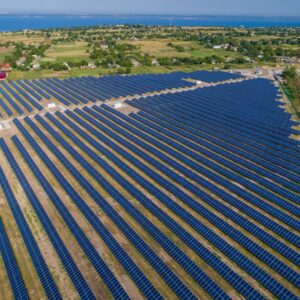
Norwegian renewable energy company Scatec has started construction of a 120 MW solar power plant in Sidi Bouzid, central Tunisia. The project marks another step in the country’s renewable energy expansion and follows the commissioning of Scatec’s 60 MW Sidi Bouzid 1 plant in the same region earlier this year.
The new project, known as Sidi Bouzid 2, is being developed in partnership with Aeolus SAS, a subsidiary of Japan’s Toyota Tsusho Group. Scatec said the development reflects its commitment to expanding clean energy capacity in Tunisia and strengthening cooperation with its project partners.
The solar plant is estimated to cost around €96 million, equivalent to nearly $110 million. Financing will be structured through a blended model, with about 70% coming from loans provided by the European Bank for Reconstruction and Development and the European Investment Bank, supported by European Union funding mechanisms. The remaining 30% will be contributed as equity by the project partners.
A 25-year power purchase agreement was signed in December 2024 with Tunisia’s state utility, the Tunisian Electricity and Gas Company, following a government tender. Once operational, the solar plant is expected to generate around 276 GWh of electricity each year and avoid approximately 107,000 tonnes of carbon dioxide emissions annually.
The Sidi Bouzid 2 project forms part of Scatec’s growing solar portfolio in Tunisia. The company is also developing a 60 MW solar plant in Tozeur and has secured a contract for a 120 MW facility in Tataouine. Tunisia is also moving forward with a tender for a 300 MW solar plant with battery storage in the Kebili region.
The project supports Tunisia’s wider strategy to diversify its energy mix and reduce dependence on imported natural gas. Natural gas currently accounts for about 92% of the country’s electricity generation, while imports of Algerian gas have continued to rise.
Tunisia has set a national target to increase the share of renewable energy in electricity generation to 35% by 2030. New solar projects such as Sidi Bouzid 2 are expected to help the country reduce emissions, strengthen energy security, and attract further investment into its clean energy sector.