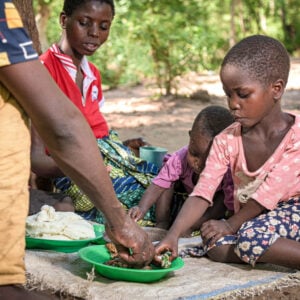
Democratic Republic of Congo, June 2026 – In the heart of North Kivu’s humanitarian crisis, the Congo Cash Consortium (CCC) has emerged as a groundbreaking partnership dedicated to localizing aid and restoring dignity to displaced communities. Led by the Danish Refugee Council (DRC) alongside ABCom, BIFERD, and GiveDirectly, the consortium has combined cash assistance with digital inclusion to reach more than 6,000 households in Masisi, offering families the freedom to define their own priorities.
The initiative was born out of the escalating violence in Masisi since 2025, when the armed group M23 captured the town, triggering massive displacement. With over 2.4 million internally displaced persons in North Kivu alone, urgent needs for food, healthcare, and shelter demanded a flexible and rapid response. The CCC answered by delivering mobile money transfers directly to affected households, ensuring swift access to resources while empowering families to make choices tailored to their circumstances.
At the core of the consortium’s success is its commitment to localization of humanitarian aid. ABCom and BIFERD, local NGOs deeply rooted in the communities, manage on-the-ground operations including communication with authorities, community awareness, and identification of vulnerable households. DRC, as lead, ensures compliance with international standards, robust data management, and accountability, while fostering equitable governance built on trust. This synergy allows each partner to share expertise and strengthen capacity, creating a model where local knowledge and international standards reinforce one another.
For local organizations, the CCC has been an opportunity to enhance skills in monitoring, data collection, and accountability. For DRC, it has meant adapting methods to local realities through co-created procedures and continuous learning. This collaborative model embodies the principles of humanitarian localization promoted since the World Humanitarian Summit of 2016, proving that national organizations, when given space and resources, are key actors rather than mere implementers.
The impact on communities has been decisive. In Masisi, 5,000 households accessed rapid cash assistance, enabling them to meet urgent needs such as food security. Beyond immediate survival, cash transfers allowed families to address diverse priorities: purchasing clothing, household items, or paying school fees. A mother in Kitsule shared her experience, emphasizing how the freedom to choose restored confidence and hope for the future.
By combining digital inclusion with localized expertise, the CCC demonstrates how humanitarian aid can be both efficient and empowering. It offers a blueprint for future interventions in fragile contexts, showing that when communities are trusted to define their own needs, aid becomes not just a lifeline but a pathway to resilience.