• Skip to primary navigation
  • Skip to main content
  • Skip to primary sidebar

fundsforNGOs News

Grants and Resources for Sustainability

  • Subscribe for Free
  • Premium Support
  • Premium Login
  • Premium Sign up
  • Home
  • Funds for NGOs
    • Agriculture, Food and Nutrition
    • Animals and Wildlife
    • Arts and Culture
    • Children
    • Civil Society
    • Community Development
    • COVID
    • Democracy and Good Governance
    • Disability
    • Economic Development
    • Education
    • Employment and Labour
    • Environmental Conservation and Climate Change
    • Family Support
    • Healthcare
    • HIV and AIDS
    • Housing and Shelter
    • Humanitarian Relief
    • Human Rights
    • Human Service
    • Information Technology
    • LGBTQ
    • Livelihood Development
    • Media and Development
    • Narcotics, Drugs and Crime
    • Old Age Care
    • Peace and Conflict Resolution
    • Poverty Alleviation
    • Refugees, Migration and Asylum Seekers
    • Science and Technology
    • Sports and Development
    • Sustainable Development
    • Water, Sanitation and Hygiene (WASH)
    • Women and Gender
  • Funds for Companies
    • Accounts and Finance
    • Agriculture, Food and Nutrition
    • Artificial Intelligence
    • Education
    • Energy
    • Environment and Climate Change
    • Healthcare
    • Innovation
    • Manufacturing
    • Media
    • Research Activities
    • Startups and Early-Stage
    • Sustainable Development
    • Technology
    • Travel and Tourism
    • Women
    • Youth
  • Funds for Individuals
    • All Individuals
    • Artists
    • Disabled Persons
    • LGBTQ Persons
    • PhD Holders
    • Researchers
    • Scientists
    • Students
    • Women
    • Writers
    • Youths
  • Funds in Your Country
    • Funds in Australia
    • Funds in Bangladesh
    • Funds in Belgium
    • Funds in Canada
    • Funds in Switzerland
    • Funds in Cameroon
    • Funds in Germany
    • Funds in the United Kingdom
    • Funds in Ghana
    • Funds in India
    • Funds in Kenya
    • Funds in Lebanon
    • Funds in Malawi
    • Funds in Nigeria
    • Funds in the Netherlands
    • Funds in Tanzania
    • Funds in Uganda
    • Funds in the United States
    • Funds within the United States
      • Funds for US Nonprofits
      • Funds for US Individuals
      • Funds for US Businesses
      • Funds for US Institutions
    • Funds in South Africa
    • Funds in Zambia
    • Funds in Zimbabwe
  • Proposal Writing
    • How to write a Proposal
    • Sample Proposals
      • Agriculture
      • Business & Entrepreneurship
      • Children
      • Climate Change & Diversity
      • Community Development
      • Democracy and Good Governance
      • Disability
      • Disaster & Humanitarian Relief
      • Environment
      • Education
      • Healthcare
      • Housing & Shelter
      • Human Rights
      • Information Technology
      • Livelihood Development
      • Narcotics, Drugs & Crime
      • Nutrition & Food Security
      • Poverty Alleviation
      • Sustainable Develoment
      • Refugee & Asylum Seekers
      • Rural Development
      • Water, Sanitation and Hygiene (WASH)
      • Women and Gender
  • News
    • Q&A
  • Premium
    • Premium Log-in
    • Premium Webinars
    • Premium Support
  • Contact
    • Submit Your Grant
    • About us
    • FAQ
    • NGOs.AI
You are here: Home / cat / UN Declaration on Enslavement: Three Key Lessons

UN Declaration on Enslavement: Three Key Lessons

Dated: April 10, 2026

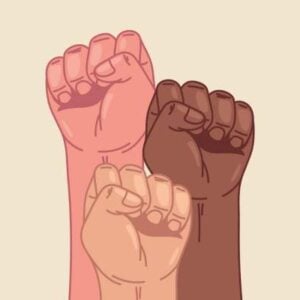
On 25 March 2026, the United Nations General Assembly adopted the Declaration on the Trafficking of Enslaved Africans and Racialised Chattel Enslavement of Africans as the Gravest Crime Against Humanity. Led by African and Caribbean states, the resolution was passed with 123 votes in favour, 3 against, and 52 abstentions, reflecting deep divisions within the international legal and political order. The Declaration, supported by statements calling for truth, healing, and reparative justice, seeks to reframe slavery not only as a historical injustice but as a continuing global legal and structural reality.

The first key insight of the Declaration is its rethinking of time in international law. It challenges the idea that slavery belongs solely to the past by emphasising its “enduring global consequences” and framing it as a legal system whose structures continue to shape the present. It highlights how slavery was embedded in law itself, through doctrines that transformed human beings into property and codified race as a basis for global systems of labour and inequality. In this sense, slavery is presented not as a closed chapter but as an ongoing condition shaped by legal and institutional continuities.

The Declaration also stresses that people of African descent have continuously resisted slavery and its legacies through legal, political, and social struggles. By invoking the principle that “a crime does not rot,” it argues that such grave injustices create ongoing obligations that cannot be limited by time. This framing establishes a legal and moral argument that the consequences of slavery remain present and demand continued attention through justice and reparative action.

The second lesson concerns the relationship between historical acknowledgment and legal obligation. While the Declaration builds on earlier anticolonial instruments calling for justice and reform, reactions from some states reveal continued resistance to translating historical wrongs into present-day legal responsibilities. Countries such as the United States and several European Union members expressed concerns about retroactive liability and legal uncertainty, relying on the principle of non-retroactivity to limit present obligations arising from past injustices.

The Declaration challenges this position by arguing that recognition without responsibility is insufficient. By linking slavery to jus cogens norms and principles of state responsibility, it reinforces the idea that certain crimes generate continuing obligations regardless of when they occurred. This approach disputes the notion that international law can fully separate past injustice from present accountability and calls for a more direct connection between historical harm and contemporary legal duty.

The third lesson highlights international law as a contested political space rather than a neutral system. The voting pattern on the Declaration reveals a divide between approaches that seek to preserve existing global legal and economic structures and those that push for transformative justice. One approach prioritises stability and closure, while the other demands interruption and structural change in response to historical injustice.

This tension is reflected in the concept of reparations as a “politics of refusal,” which rejects attempts to reduce systemic harm to symbolic recognition or limited remedies. Instead, it insists on confronting the ongoing structures produced by slavery and colonialism, challenging the idea that justice can be achieved without addressing material inequality and historical dispossession. In this view, reparations become a way of reshaping how global inequality is understood and addressed.

Ultimately, the Declaration reframes international law itself as a space of ongoing struggle over justice, responsibility, and historical memory. It presents slavery not as a concluded past event but as a continuing structure with present-day consequences, and it challenges the international community to reconsider how law responds to enduring historical harm.
Related Posts

  • Mexico Advances Sovereign Path for Trans Rights
  • Global Urgent Action Needed After Trump’s Apocalyptic Iran Threats
  • EU Judiciary Defends LGBTQ+ Rights in Key Ruling
  • Youth Climate Projects Secures €500K Investment
  • Lebanon: Urgent Action Needed as Israeli Attacks Escalate

Primary Sidebar

Latest News

Healing Beyond Walls: Restoring Nirak Health Center in Ethiopia

Action Against Hunger Revives Critical Healthcare Services in Ethiopia

Tanzania Investment Summit 2026 to Unlock $2.85 Billion Investment Pipeline

$1 Million Prize Announced to Support Innovations in Mental Health Science

Sudan IPC Update 2026: 19.5 Million People Face Acute Hunger

Tunisia Eliminates Trachoma as Public Health Problem, WHO Confirms

WHO Global Traditional Medicine Strategy Drives Healthcare Action Across Africa

India & Uzbekistan 17th FOC: New Strategic Roadmap for 2026

£210,000 Funding Boost Supports Community Projects Across Suffolk

ADB Commits $1.75B Crisis Support for PH Amid Mideast Conflict

UN Reports Growing Humanitarian Emergencies in Somalia, DR Congo, and Cuba in Latest Global Update

$200 Million Anthropic-Gates Foundation Pact to Advance AI in Global Health

SRHR 2026: Global Leaders Reaffirm Political Commitment to Health

EIF and LABORAL Kutxa Mobilise €150M for Spanish Social Firms

US Commits $1.8 Billion to UN Humanitarian Efforts Amid Rising Global Crises

EIB & FiberCop Sign €1B Deal to Boost Italy’s 10 Gbps Broadband

Norway Invests Nearly NOK 700 Million in Women’s Rights and Reproductive Health

UN OCHA Highlights Impact of $2 Billion US Humanitarian Funding Allocation

Unlocking Green Water: The Hidden Catalyst for 2026 Global Growth

UN Emphasizes Funding Gaps, Peacebuilding, and Humanitarian Response in Latest Update

Designing for Development: Creating Nurturing Spaces for Infants

IPC Sudan 2026: 19.5 Million Face Severe Hunger and Starvation

CARE Launches Next-Gen CARE PACKAGE for Emergencies on 80th Anniversary

UN Update Details Aid Deliveries, Civilian Impact, and Rising Violence Across Several Global Hotspots

Strait of Hormuz Crisis: How a Global Blockade is Fueling Hunger

More Queenslanders Eligible for $10k Flood Resilience Grants

How Science-Based Community Action Is Transforming Land Restoration Efforts Globally

New $1.75M IOM-Church Pact to Boost Jobs Across Latin America

Pakistan & WHO Launch Rs 67bn Hepatitis C Drive in Islamabad

Caregiver in blue scrubs assists an elderly man with a walking cane, helping him stand in a bright living room.

EU Introduces Global Health Resilience Initiative to Enhance Early Warning Systems and Health Equity

BioHope Secures NKF Innovation Fund Support to Improve Personalized Kidney Transplant Outcomes

Dominica & PAHO Finalize National Integrated Surveillance Rules

New £20,000 MAB Foundation Funding Initiative Aims to Strengthen Impact of UK Charities

The Invisible Killer: Why Reducing Salt is Your Best Health Move

Qatar Launches $30M Venture Fund to Accelerate AI, Robotics, and Climate Tech Startups

UN Report: $73M Investment Boosts Eastern Caribbean Well-being

JCF Receives New High-Tech Speed Guns for Road Safety Drive

Blue holographic DNA double helix floating in a high-tech data center with server racks and digital interfaces nearby

Anthropic Partners with Gates Foundation in Major $200M Push for AI in Global Development

ILO 2026: Urgent Call for Decent Work for Migrant Workers

Govt Awards $1M to Reopen Tarawera and Ōkataina Tracks

Funds for NGOs
Funds for Companies
Funds for Media
Funds for Individuals
Sample Proposals

Contact us
Submit a Grant
Advertise, Guest Posting & Backlinks
Fight Fraud against NGOs
About us

Terms of Use
Third-Party Links & Ads
Disclaimers
Copyright Policy
General
Privacy Policy

Premium Sign in
Premium Sign up
Premium Customer Support
Premium Terms of Service

©FUNDSFORNGOS LLC.   fundsforngos.org, fundsforngos.ai, and fundsforngospremium.com domains and their subdomains are the property of FUNDSFORNGOS, LLC 1018, 1060 Broadway, Albany, New York, NY 12204, United States.   Unless otherwise specified, this website is not affiliated with the abovementioned organizations. The material provided here is solely for informational purposes and without any warranty. Visitors are advised to use it at their discretion. Read the full disclaimer here. Privacy Policy. Cookie Policy.