• Skip to primary navigation
  • Skip to main content
  • Skip to primary sidebar

fundsforNGOs News

Grants and Resources for Sustainability

  • Subscribe for Free
  • Premium Support
  • Premium Login
  • Premium Sign up
  • Home
  • Funds for NGOs
    • Agriculture, Food and Nutrition
    • Animals and Wildlife
    • Arts and Culture
    • Children
    • Civil Society
    • Community Development
    • COVID
    • Democracy and Good Governance
    • Disability
    • Economic Development
    • Education
    • Employment and Labour
    • Environmental Conservation and Climate Change
    • Family Support
    • Healthcare
    • HIV and AIDS
    • Housing and Shelter
    • Humanitarian Relief
    • Human Rights
    • Human Service
    • Information Technology
    • LGBTQ
    • Livelihood Development
    • Media and Development
    • Narcotics, Drugs and Crime
    • Old Age Care
    • Peace and Conflict Resolution
    • Poverty Alleviation
    • Refugees, Migration and Asylum Seekers
    • Science and Technology
    • Sports and Development
    • Sustainable Development
    • Water, Sanitation and Hygiene (WASH)
    • Women and Gender
  • Funds for Companies
    • Accounts and Finance
    • Agriculture, Food and Nutrition
    • Artificial Intelligence
    • Education
    • Energy
    • Environment and Climate Change
    • Healthcare
    • Innovation
    • Manufacturing
    • Media
    • Research Activities
    • Startups and Early-Stage
    • Sustainable Development
    • Technology
    • Travel and Tourism
    • Women
    • Youth
  • Funds for Individuals
    • All Individuals
    • Artists
    • Disabled Persons
    • LGBTQ Persons
    • PhD Holders
    • Researchers
    • Scientists
    • Students
    • Women
    • Writers
    • Youths
  • Funds in Your Country
    • Funds in Australia
    • Funds in Bangladesh
    • Funds in Belgium
    • Funds in Canada
    • Funds in Switzerland
    • Funds in Cameroon
    • Funds in Germany
    • Funds in the United Kingdom
    • Funds in Ghana
    • Funds in India
    • Funds in Kenya
    • Funds in Lebanon
    • Funds in Malawi
    • Funds in Nigeria
    • Funds in the Netherlands
    • Funds in Tanzania
    • Funds in Uganda
    • Funds in the United States
    • Funds within the United States
      • Funds for US Nonprofits
      • Funds for US Individuals
      • Funds for US Businesses
      • Funds for US Institutions
    • Funds in South Africa
    • Funds in Zambia
    • Funds in Zimbabwe
  • Proposal Writing
    • How to write a Proposal
    • Sample Proposals
      • Agriculture
      • Business & Entrepreneurship
      • Children
      • Climate Change & Diversity
      • Community Development
      • Democracy and Good Governance
      • Disability
      • Disaster & Humanitarian Relief
      • Environment
      • Education
      • Healthcare
      • Housing & Shelter
      • Human Rights
      • Information Technology
      • Livelihood Development
      • Narcotics, Drugs & Crime
      • Nutrition & Food Security
      • Poverty Alleviation
      • Sustainable Develoment
      • Refugee & Asylum Seekers
      • Rural Development
      • Water, Sanitation and Hygiene (WASH)
      • Women and Gender
  • News
    • Q&A
  • Premium
    • Premium Log-in
    • Premium Webinars
    • Premium Support
  • Contact
    • Submit Your Grant
    • About us
    • FAQ
    • NGOs.AI
You are here: Home / cat / Rupantar Project: Integrated Extension Services Boost Farming Diversity

Rupantar Project: Integrated Extension Services Boost Farming Diversity

Dated: April 7, 2026

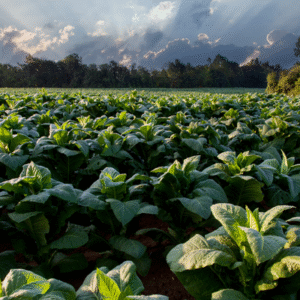
Small and marginal farmers in the Eastern Gangetic Plain (EGP), covering Bangladesh, India, and Nepal, have long been trapped in rice-wheat monocultures, facing poverty, food insecurity, and climate vulnerability. Despite decades of available technologies, adoption has remained low due to weak extension and advisory services (EAS), misaligned policies, limited mechanisation, water scarcity, credit constraints, and poor market linkages, especially for small and landless farmers.

The Rupantar project, launched in 2023, aims to transform smallholder food systems across four districts in the EGP by promoting sustainable and diversified farming. It moves beyond one-time top-down advice by integrating technical guidance, service delivery, participatory pathway design, and multi-stakeholder coordination. The project leverages local networks to demonstrate inclusive diversification pathways, define scaling processes, and generate evidence for enabling policies.

Rupantar begins with in-depth context analysis, including surveys, case studies, focus groups, and stakeholder workshops. Using the Scaling Assessment and Discussion (ScAD) tool, interventions are selected collaboratively to ensure relevance to diverse farmer typologies, including landless, smallholder, and women-headed households. The project implements three main pathways—plot-based, non-plot, and irrigation-constrained—linking advisory services to actionable inputs, credit, markets, and technical backstopping.

Gender-responsive approaches and inclusive training have been central, particularly in non-plot pathways where women lead adoption in poultry and goat rearing. The project’s monitoring, evaluation, and learning (MEL) framework tracks outcomes at individual, household, community, and system levels, informing adaptive management and sustainability. Digital tools like WhatsApp support routine advisory needs, while field visits address complex issues, balancing technology with local realities.

Challenges include last-mile input delivery gaps, misaligned incentives among actors, digital advisory limitations, and social barriers for women and landless farmers. Rupantar addresses these through partnerships with cooperatives, NGOs, and Farmer Producer Organisations, along with context-sensitive training, gender-segregated sessions, and real-time coordination.

The project has delivered measurable benefits in 3–4 seasons: households adopting zero-tillage mustard, improved dairy, or poultry have increased incomes, nutrition, and dietary diversity. Knowledge levels have risen, gender inclusion has strengthened, and circular farm integrations have enhanced resilience and household stability. Positive economic returns encourage continued adoption without ongoing project support, while ScAD-based participatory pathways ensure local ownership and scalability.

Lessons highlight the importance of context-driven, participatory extension: field staff must facilitate, women’s priorities must be pre-consulted, input availability must be mapped ahead, adaptive feedback loops are essential, and advisory services must be linked to tangible actions. Technology-push, tokenistic consultations, or one-size-fits-all approaches are ineffective; integrated, system-level approaches drive lasting adoption and impact.

Related Posts

  • Nigeria Secures $500 Million World Bank Funding to Boost Agriculture and Create Jobs
  • $50M Climate Fund Boosts Jamaica’s Farm Resilience with FAO Support
  • Funding Boost for Highland Refugee Film Initiative
  • World Bank Backs $8.3 Billion Rail Mega Project to Boost Türkiye’s Global Logistics Role
  • Safer Food Through Cleaner Markets in Cameroon

Primary Sidebar

Latest News

Healing Beyond Walls: Restoring Nirak Health Center in Ethiopia

Action Against Hunger Revives Critical Healthcare Services in Ethiopia

Tanzania Investment Summit 2026 to Unlock $2.85 Billion Investment Pipeline

$1 Million Prize Announced to Support Innovations in Mental Health Science

Sudan IPC Update 2026: 19.5 Million People Face Acute Hunger

Tunisia Eliminates Trachoma as Public Health Problem, WHO Confirms

WHO Global Traditional Medicine Strategy Drives Healthcare Action Across Africa

India & Uzbekistan 17th FOC: New Strategic Roadmap for 2026

£210,000 Funding Boost Supports Community Projects Across Suffolk

ADB Commits $1.75B Crisis Support for PH Amid Mideast Conflict

UN Reports Growing Humanitarian Emergencies in Somalia, DR Congo, and Cuba in Latest Global Update

$200 Million Anthropic-Gates Foundation Pact to Advance AI in Global Health

SRHR 2026: Global Leaders Reaffirm Political Commitment to Health

EIF and LABORAL Kutxa Mobilise €150M for Spanish Social Firms

US Commits $1.8 Billion to UN Humanitarian Efforts Amid Rising Global Crises

EIB & FiberCop Sign €1B Deal to Boost Italy’s 10 Gbps Broadband

Norway Invests Nearly NOK 700 Million in Women’s Rights and Reproductive Health

UN OCHA Highlights Impact of $2 Billion US Humanitarian Funding Allocation

Unlocking Green Water: The Hidden Catalyst for 2026 Global Growth

UN Emphasizes Funding Gaps, Peacebuilding, and Humanitarian Response in Latest Update

Designing for Development: Creating Nurturing Spaces for Infants

IPC Sudan 2026: 19.5 Million Face Severe Hunger and Starvation

CARE Launches Next-Gen CARE PACKAGE for Emergencies on 80th Anniversary

UN Update Details Aid Deliveries, Civilian Impact, and Rising Violence Across Several Global Hotspots

Strait of Hormuz Crisis: How a Global Blockade is Fueling Hunger

More Queenslanders Eligible for $10k Flood Resilience Grants

How Science-Based Community Action Is Transforming Land Restoration Efforts Globally

New $1.75M IOM-Church Pact to Boost Jobs Across Latin America

Pakistan & WHO Launch Rs 67bn Hepatitis C Drive in Islamabad

Caregiver in blue scrubs assists an elderly man with a walking cane, helping him stand in a bright living room.

EU Introduces Global Health Resilience Initiative to Enhance Early Warning Systems and Health Equity

BioHope Secures NKF Innovation Fund Support to Improve Personalized Kidney Transplant Outcomes

Dominica & PAHO Finalize National Integrated Surveillance Rules

New £20,000 MAB Foundation Funding Initiative Aims to Strengthen Impact of UK Charities

The Invisible Killer: Why Reducing Salt is Your Best Health Move

Qatar Launches $30M Venture Fund to Accelerate AI, Robotics, and Climate Tech Startups

UN Report: $73M Investment Boosts Eastern Caribbean Well-being

JCF Receives New High-Tech Speed Guns for Road Safety Drive

Blue holographic DNA double helix floating in a high-tech data center with server racks and digital interfaces nearby

Anthropic Partners with Gates Foundation in Major $200M Push for AI in Global Development

ILO 2026: Urgent Call for Decent Work for Migrant Workers

Govt Awards $1M to Reopen Tarawera and Ōkataina Tracks

Funds for NGOs
Funds for Companies
Funds for Media
Funds for Individuals
Sample Proposals

Contact us
Submit a Grant
Advertise, Guest Posting & Backlinks
Fight Fraud against NGOs
About us

Terms of Use
Third-Party Links & Ads
Disclaimers
Copyright Policy
General
Privacy Policy

Premium Sign in
Premium Sign up
Premium Customer Support
Premium Terms of Service

©FUNDSFORNGOS LLC.   fundsforngos.org, fundsforngos.ai, and fundsforngospremium.com domains and their subdomains are the property of FUNDSFORNGOS, LLC 1018, 1060 Broadway, Albany, New York, NY 12204, United States.   Unless otherwise specified, this website is not affiliated with the abovementioned organizations. The material provided here is solely for informational purposes and without any warranty. Visitors are advised to use it at their discretion. Read the full disclaimer here. Privacy Policy. Cookie Policy.