• Skip to primary navigation
  • Skip to main content
  • Skip to primary sidebar

fundsforNGOs News

Grants and Resources for Sustainability

  • Subscribe for Free
  • Premium Support
  • Premium Login
  • Premium Sign up
  • Home
  • Funds for NGOs
    • Agriculture, Food and Nutrition
    • Animals and Wildlife
    • Arts and Culture
    • Children
    • Civil Society
    • Community Development
    • COVID
    • Democracy and Good Governance
    • Disability
    • Economic Development
    • Education
    • Employment and Labour
    • Environmental Conservation and Climate Change
    • Family Support
    • Healthcare
    • HIV and AIDS
    • Housing and Shelter
    • Humanitarian Relief
    • Human Rights
    • Human Service
    • Information Technology
    • LGBTQ
    • Livelihood Development
    • Media and Development
    • Narcotics, Drugs and Crime
    • Old Age Care
    • Peace and Conflict Resolution
    • Poverty Alleviation
    • Refugees, Migration and Asylum Seekers
    • Science and Technology
    • Sports and Development
    • Sustainable Development
    • Water, Sanitation and Hygiene (WASH)
    • Women and Gender
  • Funds for Companies
    • Accounts and Finance
    • Agriculture, Food and Nutrition
    • Artificial Intelligence
    • Education
    • Energy
    • Environment and Climate Change
    • Healthcare
    • Innovation
    • Manufacturing
    • Media
    • Research Activities
    • Startups and Early-Stage
    • Sustainable Development
    • Technology
    • Travel and Tourism
    • Women
    • Youth
  • Funds for Individuals
    • All Individuals
    • Artists
    • Disabled Persons
    • LGBTQ Persons
    • PhD Holders
    • Researchers
    • Scientists
    • Students
    • Women
    • Writers
    • Youths
  • Funds in Your Country
    • Funds in Australia
    • Funds in Bangladesh
    • Funds in Belgium
    • Funds in Canada
    • Funds in Switzerland
    • Funds in Cameroon
    • Funds in Germany
    • Funds in the United Kingdom
    • Funds in Ghana
    • Funds in India
    • Funds in Kenya
    • Funds in Lebanon
    • Funds in Malawi
    • Funds in Nigeria
    • Funds in the Netherlands
    • Funds in Tanzania
    • Funds in Uganda
    • Funds in the United States
    • Funds within the United States
      • Funds for US Nonprofits
      • Funds for US Individuals
      • Funds for US Businesses
      • Funds for US Institutions
    • Funds in South Africa
    • Funds in Zambia
    • Funds in Zimbabwe
  • Proposal Writing
    • How to write a Proposal
    • Sample Proposals
      • Agriculture
      • Business & Entrepreneurship
      • Children
      • Climate Change & Diversity
      • Community Development
      • Democracy and Good Governance
      • Disability
      • Disaster & Humanitarian Relief
      • Environment
      • Education
      • Healthcare
      • Housing & Shelter
      • Human Rights
      • Information Technology
      • Livelihood Development
      • Narcotics, Drugs & Crime
      • Nutrition & Food Security
      • Poverty Alleviation
      • Sustainable Develoment
      • Refugee & Asylum Seekers
      • Rural Development
      • Water, Sanitation and Hygiene (WASH)
      • Women and Gender
  • News
    • Q&A
  • Premium
    • Premium Log-in
    • Premium Webinars
    • Premium Support
  • Contact
    • Submit Your Grant
    • About us
    • FAQ
    • NGOs.AI
You are here: Home / cat / How Digitizing Waste Banks Helps Keep Plastic Out of the Ocean

How Digitizing Waste Banks Helps Keep Plastic Out of the Ocean

Dated: January 30, 2026

Ari starts his day navigating Jakarta’s streets, collecting recyclable waste from homes and small businesses. He is a waste picker, and he lives with a visual impairment. In a system that often overlooks both informal workers and persons with disabilities, his work is rarely seen. Yet without people like Ari, Indonesia’s recycling system would be far less effective.

Indonesia’s recycling journey does not begin at landfills or recycling plants. It begins in neighbourhoods and alleyways, with the informal sector. Waste pickers and waste bank operators form the backbone of the recycling chain, collecting up to more than 80% percent of recyclables in some cities. Every bottle sorted, every kilogram weighed, is a small act that prevents plastic from leaking into rivers and, eventually, the ocean. When multiplied across communities, these everyday actions prove that progress can be built without pushing ecosystems beyond their limits.

From Invisible Work to Measurable Impact
Indonesia generated an estimated 30–35 million tons of waste in 2024, with more than 60 percent left unmanaged. Much of it ends up in waterways and coastal areas, threatening ecosystems, food security, and coastal livelihoods. The challenge is not only environmental, but also deeply human.

This is where UNDP’s vision of development within planetary boundaries becomes real: advancing well-being without undermining the natural systems people depend on.

One of Indonesia’s most distinctive responses is the waste bank system, where communities sort recyclable materials and convert them into savings. Waste banks create economic opportunities, particularly for women and informal workers, while keeping plastic out of nature. Yet many still rely on manual ledgers and fragmented records, limiting their ability to scale and demonstrate impact.

Duitin, a digital waste management start-up and winner of the ASEAN Blue Innovation Challenge (ABIC), saw this gap as an opportunity.

“We weren’t just digitizing records,” said Alena, one of Duitin’s founders. “Our goal was to help waste banks manage waste more transparently and sustainably in the long run.”

Through its digital platform, Tradisi, Duitin turns everyday recycling into real-time, traceable data, recording waste deposits, transactions, and collection routes. What was once informal and invisible becomes measurable, trusted, and investable.

Supported by UNDP and funded by the Government of Japan, ABIC enabled innovators like Duitin to test, refine, and scale solutions that prevent plastic from leaking into the ocean. Through this partnership, Duitin worked with seven waste banks across Yogyakarta, Central Java, and East Java, prioritizing coastal areas where marine pollution risks are highest. Digital devices, training, and mentoring supported waste banks in transitioning from paper-based systems to integrated digital operations.

By March 2025, Tradisi had recorded 33.58 tons of recyclable waste managed, nearly 1,000 waste deposit transactions, and 284 registered users, more than 75 percent of them women. Digitalization reduced administrative burdens and allowed waste bank operators to focus on outreach, education, and community engagement, ensuring environmental progress also delivers social value.

Inclusion, Innovation, and a Shared Future for the Ocean

At Duitin, Ari is not defined by his disability, but by his contribution. He collects waste, records transactions, and delivers recyclables across Jakarta and surrounding cities.

“I was afraid people would see my disability before my abilities,” Ari shared. “But here, I was trusted with responsibility. It showed me that I could contribute like anyone else.”

His story reflects a core UNDP commitment: people must be at the center of sustainable development. When innovation includes informal workers and persons with disabilities, systems become more resilient, equitable, and effective.

Duitin’s journey through the ASEAN Blue Innovation Challenge (ABIC) shows how inclusive, community-rooted innovation can protect marine ecosystems while strengthening livelihoods. This is development within planetary boundaries in practice: waste kept out of the ocean, communities empowered, and progress measured not only in numbers, but in dignity and opportunity.

Related Posts

  • MENA’s Growing Waste Problem Hits $7.2 Billion a Year, Endangers Economic Growth
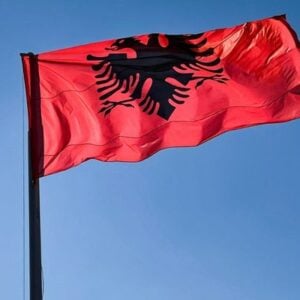
  • Understanding Sustainable Consumption in Albania: Consumer Trends, Market Preparedness, and Trust Factors
  • EASTECO and IUCEA Convene AI-Focused STI Conference in Rwanda
  • Carvival Funding Boost: €160,000 Awarded to 42 NGOs
  • Accelerating Vaccine Innovation: Gavi Announces Strategic Collaborations

Primary Sidebar

Latest News

Nepal Education Resilience: UNESCO and IIEP Strengthen Climate Data Systems

5 Lessons for Organisations Partnering to Empower Women Farmers

NBSCALE Project Insights: How Startups Grow into International Scaleups

360 Tons of Turkish Humanitarian Aid Delivered to Lebanon Amid Israeli Strikes

Cross-Border Emergency Planning Project Launched to Improve Crisis Response

Emergency EU Funding for Fisheries and Aquaculture Hit by Middle East Conflict

IDNR and NOAA Award $1M for Lake Michigan Shoreline Protection in Illinois

African Union Signs Grants with 13 Think Tanks for Africa Think Tank Platform

How Will £3 Million in Arts and Culture Funding Be Used?

UNIDO Joins ENACT Partnership to Scale Finance for Nature-Based Industrial Solutions

Western Balkans: New Deal to Improve Nature Protection Funding

Books Delivered by Horseback to Children in Vanuatu

Save the Children Warns of Severe Child Malnutrition in Pakistan

Ireland Launches 2026 Shared Island Civic Society Fund Round

New Grant Funding Boost for Charities and Social Enterprises

Burkina Faso: Rising Crackdown on Civil Society Groups

Advancing Gender Justice in the Crimes Against Humanity Convention

Global Human Rights: The Current State of the World

Haiti Hunger Alert: More Than 50% Facing Acute Food Insecurity

EIB Group and MCC Sign €400M Deal for Italian SMEs and Mid-Caps

Ethiopia Secures €110M EIB Funding for Agri Finance and Women-Led SMEs

EIB Global and Zemen Bank Unlock €40M for Ethiopian Agriculture

EIB Group Backs €2.4 Billion Energy and Deep Tech Innovation

European Union Launches Youth Agriculture Skills Programme

Quantum Economy Blueprint in Saudi Arabia: 5 Key Lessons

Empowering Indigenous Peoples: GEF’s Leadership Commitment

Uzbekistan Rangeland Restoration Backed by GEF Funding

5 Facts About Somalia’s Humanitarian Crisis Explained

Youth Empowerment Boosts Social Cohesion in Kyrgyzstan

$10.5 Million Boost to Strengthen Health Systems

Lessons from Ethiopia on Empowering Women and Reducing Hunger

UN Warns Development Goals at Risk as Global Financing Crisis Deepens

Gaza War Sets Development Back 77 Years, $71B Needed for Recovery

UN Forum Highlights Indigenous Healthcare Inequality and Rights

Global News: AI in Healthcare, DR Congo Aid Deal, Belarus Rights Concerns, Ukraine Children Impacted

Canada Summer Jobs 2026: Application Guide and Opportunities

How to Unlock Large-Scale SDG Financing

Protecting EU Health Investments in Heart Disease and Cancer Care

How Natural Farming is Changing Agriculture in Southern India

Peru Boosts Disability Inclusion in Public Sector with ILO Support

Funds for NGOs
Funds for Companies
Funds for Media
Funds for Individuals
Sample Proposals

Contact us
Submit a Grant
Advertise, Guest Posting & Backlinks
Fight Fraud against NGOs
About us

Terms of Use
Third-Party Links & Ads
Disclaimers
Copyright Policy
General
Privacy Policy

Premium Sign in
Premium Sign up
Premium Customer Support
Premium Terms of Service

©FUNDSFORNGOS LLC.   fundsforngos.org, fundsforngos.ai, and fundsforngospremium.com domains and their subdomains are the property of FUNDSFORNGOS, LLC 1018, 1060 Broadway, Albany, New York, NY 12204, United States.   Unless otherwise specified, this website is not affiliated with the abovementioned organizations. The material provided here is solely for informational purposes and without any warranty. Visitors are advised to use it at their discretion. Read the full disclaimer here. Privacy Policy. Cookie Policy.