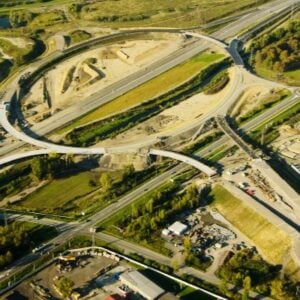
The Asian Development Bank (ADB) has approved a CNY 1.07 billion ($150 million) loan to support low-carbon and climate-resilient urban development in Xianning Municipality, Hubei Province, People’s Republic of China. The Hubei Xianning Low-Carbon and Climate-Resilient Urban Development Project aims to develop an efficient, smart, safe, and resilient transportation system and urban services in Xianning and Chibi City. ADB Country Director for the PRC, Asif Cheema, noted that the project aligns with both China’s goals for high-quality, low-carbon urban development and ADB’s country partnership strategy, while also serving as a replicable model for other small cities seeking to enhance urban resilience.
Xianning, located in southeastern Hubei along the middle reaches of the Yangtze River, has a population of 2.6 million, including Chibi City. Despite its natural resources and strategic position within the Wuhan City Circle, Xianning faces economic and livability challenges due to aging infrastructure, frequent flooding, traffic congestion, and high road safety risks. Public transport use is low, most roads lack bicycle lanes, and urban services have been repeatedly disrupted. Past flooding, such as in 2020, caused significant economic losses, while rapid urbanization has outpaced institutional capacity for coordinated planning and emergency response.
The project will modernize public transport and urban services through the construction of new infrastructure and digital information systems, a new water supply pipeline serving over 115,000 households, and upgraded nonmotorized transport and drainage infrastructure following a “dig once and build back better” approach. A low-emission zone will be established in Chibi’s ancient city area, with electric buses and boats introduced for commuting and tourism. Safety improvements will address at least 20 known blind spots, enhancing accessibility for women, children, older persons, and other vulnerable road users. The project will also create skilled jobs for women in the construction and operation of the integrated smart e-bus and e-ferry network.
ADB’s contribution includes hydrological and hydraulic modeling, artificial intelligence-based transport modeling, and the integration of low-emission zones. The build-back-better approach strengthens resilience by coordinating drainage improvements with road and transport upgrades and incorporating nonmotorized transport enhancements, nature-based solutions, and improved road safety. The project will leverage ADB knowledge platforms, including the Women in Transport Network and sustainable urban transport partnerships, to build institutional capacity and ensure long-term sustainability.
Founded in 1966, ADB is a leading multilateral development bank that supports inclusive, resilient, and sustainable growth across Asia and the Pacific. Owned by 69 members, including 50 from the region, ADB works with partners to address complex development challenges through innovative financial tools, strategic partnerships, and investments that transform lives, build quality infrastructure, and safeguard the environment.