• Skip to primary navigation
  • Skip to main content
  • Skip to primary sidebar

fundsforNGOs News

Grants and Resources for Sustainability

  • Subscribe for Free
  • Premium Support
  • Premium Sign in
  • Premium Sign up
  • Home
  • Grants & Funding
    • Funds for NGOs
      • Agriculture, Food & Nutrition
      • Animals and Wildlife
      • Arts & Culture
      • Children
      • Civil Society
      • Community Development
      • Democracy and Good Governance
      • Economic Development
      • Education
      • Disability
      • Employment and Labor
      • Environment
      • Family Support
      • Healthcare
      • HIV and AIDS
      • Housing & Shelter
      • Humanitarian Relief
      • Human Rights
      • Human Service
      • Information Technology
      • Livelihood Development
      • LGBTQIA2S+
      • Media and Development
      • Narcotics, Drugs and Crime
      • Old Age Care
      • Peace & Conflict Resolution
      • Poverty Alleviation
      • Refugees, Migration & Asylum Seekers
      • Science & Technology
      • Sports & Development
      • Sustainable Development
      • Water, Sanitation & Hygiene (WASH)
      • Women & Gender
      • Youth & Adolescents
    • Donors & Funders
    • Funds for Companies
      • Accounts & Finance
      • Agriculture, Food and Nutrition
      • AI
      • Education
      • Energy
      • Environment
      • Healthcare
      • Innovation
      • Manufacturing
      • Media
      • Research
      • Startups & Early-Stage
      • Sustainable Development
      • Technology
      • Travel & Tourism
      • Women
      • Youth
    • Funds for Individuals
  • Funds in Your Country
  • Proposal Writing
    • Sample Proposals
    • Agriculture Proposals
    • Business Proposals
    • Child Development Proposals
    • Climate Change & Biodiversity Proposals
    • Community Development Proposals
    • Democracy & Good Governance Proposals
    • Disability Proposals
    • Disaster & Humanitarian Relief Proposals
    • Environment Proposals
    • Education Proposals
    • Healthcare Proposals
    • Housing & Shelter Proposals
    • Human Rights Proposals
    • Livelihood Development Proposals
    • Nutrition & Food Security Proposals
    • Poverty Alleviation Proposals
    • Refugees, Migration & Asylum-Seekers’ Proposals
    • Rural Development Proposals
    • Sustainable Development Proposals
    • Water, Sanitation & Hygiene (WASH) Proposals
    • Women & Gender Proposals
    • Youth Development Proposals
  • Premium
    • Premium Sign-in
    • Premium Grants
    • Premium eBooks
    • Premium Webinars
    • Premium Videos
    • Premium Courses
    • Premium Support
  • NGOs.AI
  • Contact
    • Submit Your Opportunity
    • Learning Lab
    • Q&A
    • News
    • About us
You are here: Home / cat / New FAO-WFP Report Highlights Rising Risk of Acute Food Insecurity in 16 Crisis Hotspots

New FAO-WFP Report Highlights Rising Risk of Acute Food Insecurity in 16 Crisis Hotspots

Dated: November 13, 2025

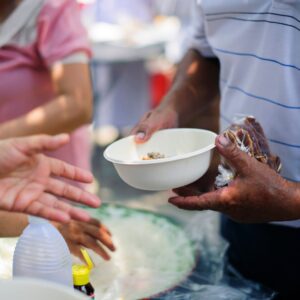
A new joint report by the Food and Agriculture Organization of the United Nations (FAO) and the UN World Food Programme (WFP) warns that acute food insecurity is rapidly worsening in 16 global hunger hotspots, putting millions at risk of famine. The report highlights that time is running out to prevent widespread starvation as conflict, economic shocks, extreme weather, and funding shortages drive already dire conditions to catastrophic levels. Despite the growing urgency, humanitarian aid remains severely underfunded, threatening the lives of millions who depend on it.

Covering the period from November 2025 to May 2026, the Hunger Hotspots report identifies that in 14 out of 16 countries, conflict and violence are the main causes of hunger. The six areas of highest concern—Haiti, Mali, Palestine, South Sudan, Sudan, and Yemen—face an imminent risk of famine (IPC/CH Phase 5). Another six countries—Afghanistan, the Democratic Republic of the Congo, Myanmar, Nigeria, Somalia, and the Syrian Arab Republic—are classified as being of very high concern, while Burkina Faso, Chad, Kenya, and the Rohingya refugee camps in Bangladesh also remain in crisis.

The report underscores that massive funding gaps are crippling humanitarian responses. By the end of October 2025, only US$10.5 billion of the US$29 billion needed to support the most vulnerable had been received. As a result, WFP has been forced to reduce rations, suspend vital nutrition and school feeding programmes, and narrow its assistance coverage, leaving millions—especially refugees and displaced people—at heightened risk of hunger. FAO also warns that insufficient funding is severely undermining agricultural support, preventing the delivery of seeds, livestock health services, and other inputs crucial for sustaining food production and resilience ahead of planting seasons.

Across all hunger hotspot regions, food production and household incomes remain far below basic survival needs. Both agencies stress that building resilience is now essential to protect livelihoods, reduce dependence on emergency aid, and prevent the recurrence of food crises. The report makes clear that famine is predictable and preventable if swift, coordinated, and adequately funded action is taken.

FAO Director-General QU Dongyu emphasized the importance of proactive measures, urging the global community to invest in livelihoods and social protection before hunger peaks, noting that famine prevention is both a moral obligation and a strategic investment in peace and stability. Similarly, WFP Executive Director Cindy McCain warned that the world is “on the brink of a completely preventable hunger catastrophe,” calling for immediate funding, political commitment, and humanitarian access to conflict-affected regions.

The FAO and WFP appeal to governments, donors, and humanitarian partners to act on early warning systems such as the Integrated Food Security Phase Classification (IPC) and Cadre Harmonisé (CH) before conditions deteriorate further. Anticipatory action—helping communities withstand shocks before crises escalate—is far more cost-effective than delayed emergency responses. Ensuring unimpeded humanitarian access remains critical for delivering life-saving food, nutrition, and agricultural aid.

The Hunger Hotspots report, published bi-annually with financial support from the European Union through the Global Network Against Food Crises (GNAFC), reinforces that while famine is preventable, achieving this requires immediate global solidarity, leadership, and funding. Millions of lives depend on decisive action now to avert further suffering and instability.

Related Posts

  • UN Unveils $74 Million Humanitarian Response for 2.2 Million Cubans Affected by Hurricane Melissa
  • FAO and Pan-African Parliament Collaborate to Enhance Africa’s Food Security and Nutrition Policies
  • Denmark Donates DKK 15 Million to WFP to Support Newly Arrived Refugees in Uganda with Emergency Food Assistance
  • World Food Programme Expands Relief Operations Following Twin Typhoons in the Philippines
  • WFP Receives Chinese Support to Assist Communities Facing Severe Drought in Zambia

Primary Sidebar

Latest News

Kenya Strengthens Public Sector Leadership for AI and Digital Transformation

Female healthcare worker in a white coat sits at a table with medical supplies; another clinician in blue scrubs and a scrub cap leans over to review papers outdoors at a community health event, with bystanders in the background.

Young Pastoralists in Kyrgyzstan Unite to Promote Sustainable Rangeland Management

New Zealand Advances Planning Reform to Support Growth and Environmental Protection

Unitaid Leadership Search Begins Amid Funding Crisis and Calls for Global Health Reform

Young People Build Their Futures Through Skills, Innovation and New Opportunities

WFP Warns El Obeid Becomes Centre of Sudan’s Growing Displacement and Hunger Crisis

El Obeid Emerges as New Epicentre of Sudan’s Displacement and Hunger Crisis, WFP Warns

Smart Water Technology Transforms Access to Clean Water in Ethiopia

UNFPA and Moldcell Partner to Promote Family-Friendly Workplaces and Employee Well-Being in Moldova

IUCN Members Advance Citizen Science as a Global Conservation Tool

Awaaz Afghanistan Strengthened to Expand Humanitarian Support and Community Access

BIREME Highlights Digital Health Innovation at Brazil’s 39th CONASEMS Congress

Latin American Countries Launch 24 Initiatives to Strengthen Food Safety Systems

UNDP and Spain Establish New Madrid Office to Strengthen Global Development Partnerships

UNDP and South Korea Launch $50 Million Initiative to Help Crisis-Affected Communities Recover

Three white ambulances with red stripes and blue emergency lights parked under a covered driveway, with green trees in the background.

The Gambia Receives 10 Ambulances and Medical Equipment to Strengthen Emergency Healthcare

African Development Bank and Japan Strengthen Partnership to Boost Private Investment in Africa

Victoria Foundation Distributes $6.19 Million to Support Local Charities and Community Programs

Kenya Launches $264 Million Program to Build Climate-Resilient Agriculture

Dangote Refinery Raises $2.5 Billion Ahead of Major Nigeria IPO

African Development Bank Approves CFA833.8 Billion in New Financing for Cameroon Since 2023

New Study Challenges Gender Gap in Socio-Emotional Skills Among Tanzanian Youth

Weekly Research Highlights: Migration, Public Jobs, Rural Markets, and the Future of Work

Burkina Faso Secures $120 Million to Expand Social Protection and Economic Inclusion

Coin stacks rise left to right with small plants, and a tree grows from a jar of cash beside scattered bills—symbolizing financial growth and investment.

IFC Considers $50 Million Loan for Zambia Hotel and Djibouti Warehouse Projects

UN Prepares Up to $100 Million for Early El Niño Response

AfDB Considers $1 Million Grant to Support Displaced Communities in Northern Togo

Ground sprinklers spraying water in multiple directions across a green lawn, creating arcs of spray.

AfDB Approves $94 Million to Expand Irrigation in Northern Cameroon

A vast shipping yard with many stacked colorful containers (red, orange, blue, white) under a clear sky; distant port buildings in the background.

Higher Timber Export Taxes Cut Cameroon’s Customs Revenue by CFA7.9 Billion

New Zealand and Fiji Renew Five-Year Duavata Partnership

Global Accelerator Reports Progress on Jobs and Social Protection Across 19 Countries

Morocco Adopts Landmark National Strategy for the Care Economy

Zambia, Japan and ILO Launch E-Waste Project to Create Green Jobs

United States Provides $24 Million for Sudanese Refugee Food Assistance in Egypt

Hands gripping rusted metal bars of a fence against a bright blue sky behind.

Djibouti Red Crescent Supports Migrants Facing Dangerous Desert Journeys

World Bank Supports South Africa’s Infrastructure Modernisation and Nearly 600,000 Jobs

World Bank Supports Business Reform and Inclusive Job Creation in São Paulo

Over 500 People Feared Dead in Maritime Incidents off Myanmar Coast

Two people share a plaid umbrella in heavy rain, seen through a raindrop-covered window.

Heavy Monsoon Rains Affect More Than One Million People in Bangladesh

African Development Bank Approves $400 Million for Municipal Utility Reform in South Africa

Funds for NGOs
Funds for Companies
Funds for Media
Funds for Individuals
Sample Proposals

Contact us
Submit a Grant
Advertise, Guest Posting & Backlinks
Fight Fraud against NGOs
About us

Terms of Use
Third-Party Links & Ads
Disclaimers
Copyright Policy
General
Privacy Policy

Premium Sign in
Premium Sign up
Premium Customer Support
Premium Terms of Service

©FUNDSFORNGOS LLC.   fundsforngos.org, fundsforngos.ai, and fundsforngospremium.com domains and their subdomains are the property of FUNDSFORNGOS, LLC 1018, 1060 Broadway, Albany, New York, NY 12204, United States.   Unless otherwise specified, this website is not affiliated with the abovementioned organizations. The material provided here is solely for informational purposes and without any warranty. Visitors are advised to use it at their discretion. Read the full disclaimer here. Privacy Policy. Cookie Policy.