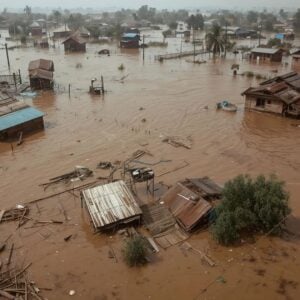
Across the Caribbean, coastal communities face the brunt of climate change — from rising seas and stronger hurricanes to accelerating erosion that threatens homes and livelihoods. Traditionally, the answer has been concrete: seawalls, breakwaters, and other “grey” infrastructure. But these solutions often fall short, offering only temporary relief while ignoring the ecosystems that naturally defend shorelines.
In Soubise, Grenada, a groundbreaking initiative by the Windward Islands Research and Education Foundation (WINDREF) is changing that narrative. The Innovative Grey-Green Infrastructure (ING) Project, funded through the Ecosystem-based Adaptation (EbA) Facility of the Caribbean Biodiversity Fund (CBF) — with support from Germany’s Federal Ministry for the Environment (BMUV) and KfW Development Bank — demonstrates how combining engineered structures with restored natural systems can protect coastlines and strengthen local communities.
A Nature-Based Blueprint for the Caribbean
Since 2016, the CBF’s EbA Facility has financed 34 projects across the Caribbean, empowering nations to integrate nature into their climate resilience strategies. Grenada’s ING Project stands out as a powerful example of how such hybrid solutions yield tangible, lasting results for both people and ecosystems.
Instead of relying solely on concrete barriers, WINDREF’s approach blends gabion baskets and boulders with mangroves, sea grapes, and coral reef rehabilitation. This design not only stabilizes the shoreline and absorbs wave energy but also provides vital habitats for marine species and safeguards nearby homes and roads.
Proving Resilience in the Face of Disaster
The project’s strength was tested in July 2024, when Hurricane Beryl — a Category 4 storm — brought surges up to 2.7 meters. While neighboring areas suffered heavy flooding and erosion, Soubise’s reinforced shoreline held strong. Vegetation cushioned the impact and survived the storm, minimizing damage and protecting the community.
For donors and partners, this was undeniable proof: grey-green infrastructure works.
More than 1,800 residents took part in restoration activities such as mangrove planting and coral nursery care, fostering a sense of ownership and ensuring long-term stewardship of the coastline.
Resilience That Sustains Livelihoods
WINDREF’s model also connects environmental restoration with economic empowerment. Through the introduction of sea moss farming, 14 locals (including 6 women) were trained and 11 farms were established, providing new income sources and training in food safety standards to access broader markets.
The restored coastline has become a vibrant community space — hosting a monthly seafood festival that attracts over 1,000 visitors, while local fishers use the safer shore for daily work and boat maintenance. The project shows that ecosystem-based adaptation (EbA) is not just about protection — it’s about creating thriving, sustainable livelihoods.
Overcoming Challenges with Innovation
Like many conservation efforts, the ING project faced hurdles. Coral bleaching and COVID-19 supply delays slowed progress, but these challenges spurred innovation. Additional support from the Global Environment Facility Small Grants Programme (GEF SGP) allowed WINDREF to establish deeper-water coral nurseries less vulnerable to rising sea temperatures — an adaptive move that reflects resilience in action.
Such flexibility underscores an essential truth: nature-based solutions must evolve with the ecosystems and communities they serve.
Scaling Up: A Regional Movement for Change
The ING Project’s success has captured national and regional attention. Grenadian government officials publicly endorsed the grey-green model, recognizing it as a cornerstone of the country’s coastal management strategy. Across the Caribbean — from Cuba to Grenada — similar CBF-supported EbA projects are redefining how island nations tackle climate change.
By fusing engineering ingenuity with ecosystem restoration, these projects are reinforcing coastlines, restoring biodiversity, securing freshwater sources, and strengthening local economies.
Looking to the Future
While the ING Project in Soubise has concluded, its impact continues. Ongoing funding is extending restoration and training to the Telescope area, ensuring continued protection and capacity building.
As the CBF’s EbA Facility marks six years of grantmaking, projects like this prove that investing in nature builds more than resilience — it builds hope, security, and prosperity.
Grenada’s experience offers a powerful message for the entire Caribbean: the future of climate adaptation lies in the harmony between nature and innovation.