• Skip to primary navigation
  • Skip to main content
  • Skip to primary sidebar

fundsforNGOs News

Grants and Resources for Sustainability

  • Subscribe for Free
  • Premium Support
  • Premium Login
  • Premium Sign up
  • Home
  • Funds for NGOs
    • Agriculture, Food and Nutrition
    • Animals and Wildlife
    • Arts and Culture
    • Children
    • Civil Society
    • Community Development
    • COVID
    • Democracy and Good Governance
    • Disability
    • Economic Development
    • Education
    • Employment and Labour
    • Environmental Conservation and Climate Change
    • Family Support
    • Healthcare
    • HIV and AIDS
    • Housing and Shelter
    • Humanitarian Relief
    • Human Rights
    • Human Service
    • Information Technology
    • LGBTQ
    • Livelihood Development
    • Media and Development
    • Narcotics, Drugs and Crime
    • Old Age Care
    • Peace and Conflict Resolution
    • Poverty Alleviation
    • Refugees, Migration and Asylum Seekers
    • Science and Technology
    • Sports and Development
    • Sustainable Development
    • Water, Sanitation and Hygiene (WASH)
    • Women and Gender
  • Funds for Companies
    • Accounts and Finance
    • Agriculture, Food and Nutrition
    • Artificial Intelligence
    • Education
    • Energy
    • Environment and Climate Change
    • Healthcare
    • Innovation
    • Manufacturing
    • Media
    • Research Activities
    • Startups and Early-Stage
    • Sustainable Development
    • Technology
    • Travel and Tourism
    • Women
    • Youth
  • Funds for Individuals
    • All Individuals
    • Artists
    • Disabled Persons
    • LGBTQ Persons
    • PhD Holders
    • Researchers
    • Scientists
    • Students
    • Women
    • Writers
    • Youths
  • Funds in Your Country
    • Funds in Australia
    • Funds in Bangladesh
    • Funds in Belgium
    • Funds in Canada
    • Funds in Switzerland
    • Funds in Cameroon
    • Funds in Germany
    • Funds in the United Kingdom
    • Funds in Ghana
    • Funds in India
    • Funds in Kenya
    • Funds in Lebanon
    • Funds in Malawi
    • Funds in Nigeria
    • Funds in the Netherlands
    • Funds in Tanzania
    • Funds in Uganda
    • Funds in the United States
    • Funds within the United States
      • Funds for US Nonprofits
      • Funds for US Individuals
      • Funds for US Businesses
      • Funds for US Institutions
    • Funds in South Africa
    • Funds in Zambia
    • Funds in Zimbabwe
  • Proposal Writing
    • How to write a Proposal
    • Sample Proposals
      • Agriculture
      • Business & Entrepreneurship
      • Children
      • Climate Change & Diversity
      • Community Development
      • Democracy and Good Governance
      • Disability
      • Disaster & Humanitarian Relief
      • Environment
      • Education
      • Healthcare
      • Housing & Shelter
      • Human Rights
      • Information Technology
      • Livelihood Development
      • Narcotics, Drugs & Crime
      • Nutrition & Food Security
      • Poverty Alleviation
      • Sustainable Develoment
      • Refugee & Asylum Seekers
      • Rural Development
      • Water, Sanitation and Hygiene (WASH)
      • Women and Gender
  • News
    • Q&A
  • Premium
    • Premium Log-in
    • Premium Webinars
    • Premium Support
  • Contact
    • Submit Your Grant
    • About us
    • FAQ
    • NGOs.AI
You are here: Home / cat / Sustainable Development in the Age of AI: Opportunities and Challenges

Sustainable Development in the Age of AI: Opportunities and Challenges

Dated: September 26, 2025

The UNDP Human Development Report 2025 poses a pressing question: Are we entering an AI-powered renaissance that advances human development, or are we headed toward a future of inequality and reduced freedoms? This dilemma reflects the growing influence of artificial intelligence, which is shifting rapidly from theoretical promise to a practical tool shaping global development. Its trajectory, however, depends on how it is applied—either deepening divides or tackling humanity’s most urgent challenges.

UNDP has already demonstrated AI’s potential through initiatives across the globe. In partnership with the Global Fund, portable AI-enabled X-ray machines are being used for tuberculosis screening in remote regions, strengthening healthcare access in places like Tajikistan, Turkmenistan, and the Pacific. In over 60 countries, AI has been applied to rapidly assess national biodiversity policies against global targets, streamlining research and enabling governments to prioritize dialogue and action. Another key tool, eMonitor+, is helping more than 25 countries combat hate speech, disinformation, and technology-facilitated gender-based violence. AI has also become central to crisis response, as seen in Ukraine, Myanmar, and Haiti, where it predicts displacement, evaluates damage, and supports recovery efforts. Through the Anticipatory Data Hub, practitioners can now use real-time analytics and conversational AI to better anticipate and respond to risks.

UNDP’s review of more than 50 AI applications has generated important lessons for responsible use. Multidisciplinary teams—combining policy experts, technologists, and mediators who bridge the two—are essential for solutions that address real-world problems. This was evident in projects like coffee traceability in Latin America, where AI-generated data helped smallholder farmers comply with the EU Deforestation-free Regulation. Success required not cutting-edge technology, but collaboration among farmers, officials, forest experts, and digital specialists.

Sustainability of AI solutions also depends on government ownership and local capacity. The Data in Climate Resilient Agriculture (DiCRA) platform illustrates this principle. Initially spearheaded by UNDP’s Accelerator Lab in India, DiCRA now operates as a Digital Public Good maintained by the National Bank for Agriculture and Rural Development. By providing open-access datasets and algorithms, it empowers policymakers and researchers to promote climate-resilient agriculture, ensuring that AI-driven innovation is sustained locally.

Governance is another critical pillar. For AI to benefit people and the planet, investment in ethical frameworks, capacity building, and oversight is vital. Many governments face gaps in technical expertise and limited engagement in global digital policy-making. To close this gap, UNDP and partners are offering training, peer networks, and tools to strengthen AI governance. At the same time, the environmental footprint of AI—rising energy and water demands, along with hardware material use—cannot be ignored. Initiatives like the Coalition for Sustainable AI are fostering collective action to mitigate these impacts. Governance, therefore, is not just technical but fundamental to safeguarding inclusivity, accountability, and human rights.

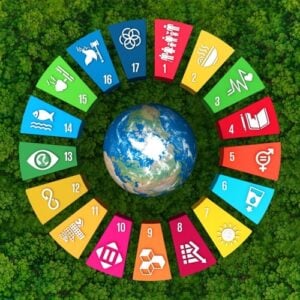
The report underscores a call to action: the future of AI will depend on choices made today. Through the AI Sprint initiative, UNDP is helping countries build strategies, infrastructure, and responsible ecosystems that ensure AI narrows, rather than widens, inequalities. This commitment was reinforced at the Hamburg Sustainability Conference, where global leaders endorsed the Hamburg Declaration on Responsible AI for the SDGs. However, declarations alone are insufficient—action, partnerships, and broader coalitions are needed to shape AI’s role in sustainable development.

The moment to act is urgent. Whether AI ushers in a renaissance or deepens divides will depend on collective will and global collaboration to ensure that technology works for both people and the planet.

Related Posts

  • IOM Chief Urges Stronger Global Cooperation on Migration at UN General Assembly
  • Finland Invests in UNDP to Accelerate Sustainable Development and Crisis Solutions
  • UNGA Hosts First-Ever Development Finance Summit to Accelerate SDGs
  • SDG Progress Alert: No Peace, Justice, or Inclusion Target on Track as 2030 Approaches
  • Africa Accelerates Circular Economy Shift at 2nd Africa Climate Summit

Primary Sidebar

Latest News

Healing Beyond Walls: Restoring Nirak Health Center in Ethiopia

Action Against Hunger Revives Critical Healthcare Services in Ethiopia

Tanzania Investment Summit 2026 to Unlock $2.85 Billion Investment Pipeline

$1 Million Prize Announced to Support Innovations in Mental Health Science

Sudan IPC Update 2026: 19.5 Million People Face Acute Hunger

Tunisia Eliminates Trachoma as Public Health Problem, WHO Confirms

WHO Global Traditional Medicine Strategy Drives Healthcare Action Across Africa

India & Uzbekistan 17th FOC: New Strategic Roadmap for 2026

£210,000 Funding Boost Supports Community Projects Across Suffolk

ADB Commits $1.75B Crisis Support for PH Amid Mideast Conflict

UN Reports Growing Humanitarian Emergencies in Somalia, DR Congo, and Cuba in Latest Global Update

$200 Million Anthropic-Gates Foundation Pact to Advance AI in Global Health

SRHR 2026: Global Leaders Reaffirm Political Commitment to Health

EIF and LABORAL Kutxa Mobilise €150M for Spanish Social Firms

US Commits $1.8 Billion to UN Humanitarian Efforts Amid Rising Global Crises

EIB & FiberCop Sign €1B Deal to Boost Italy’s 10 Gbps Broadband

Norway Invests Nearly NOK 700 Million in Women’s Rights and Reproductive Health

UN OCHA Highlights Impact of $2 Billion US Humanitarian Funding Allocation

Unlocking Green Water: The Hidden Catalyst for 2026 Global Growth

UN Emphasizes Funding Gaps, Peacebuilding, and Humanitarian Response in Latest Update

Designing for Development: Creating Nurturing Spaces for Infants

IPC Sudan 2026: 19.5 Million Face Severe Hunger and Starvation

CARE Launches Next-Gen CARE PACKAGE for Emergencies on 80th Anniversary

UN Update Details Aid Deliveries, Civilian Impact, and Rising Violence Across Several Global Hotspots

Strait of Hormuz Crisis: How a Global Blockade is Fueling Hunger

More Queenslanders Eligible for $10k Flood Resilience Grants

How Science-Based Community Action Is Transforming Land Restoration Efforts Globally

New $1.75M IOM-Church Pact to Boost Jobs Across Latin America

Pakistan & WHO Launch Rs 67bn Hepatitis C Drive in Islamabad

Caregiver in blue scrubs assists an elderly man with a walking cane, helping him stand in a bright living room.

EU Introduces Global Health Resilience Initiative to Enhance Early Warning Systems and Health Equity

BioHope Secures NKF Innovation Fund Support to Improve Personalized Kidney Transplant Outcomes

Dominica & PAHO Finalize National Integrated Surveillance Rules

New £20,000 MAB Foundation Funding Initiative Aims to Strengthen Impact of UK Charities

The Invisible Killer: Why Reducing Salt is Your Best Health Move

Qatar Launches $30M Venture Fund to Accelerate AI, Robotics, and Climate Tech Startups

UN Report: $73M Investment Boosts Eastern Caribbean Well-being

JCF Receives New High-Tech Speed Guns for Road Safety Drive

Blue holographic DNA double helix floating in a high-tech data center with server racks and digital interfaces nearby

Anthropic Partners with Gates Foundation in Major $200M Push for AI in Global Development

ILO 2026: Urgent Call for Decent Work for Migrant Workers

Govt Awards $1M to Reopen Tarawera and Ōkataina Tracks

Funds for NGOs
Funds for Companies
Funds for Media
Funds for Individuals
Sample Proposals

Contact us
Submit a Grant
Advertise, Guest Posting & Backlinks
Fight Fraud against NGOs
About us

Terms of Use
Third-Party Links & Ads
Disclaimers
Copyright Policy
General
Privacy Policy

Premium Sign in
Premium Sign up
Premium Customer Support
Premium Terms of Service

©FUNDSFORNGOS LLC.   fundsforngos.org, fundsforngos.ai, and fundsforngospremium.com domains and their subdomains are the property of FUNDSFORNGOS, LLC 1018, 1060 Broadway, Albany, New York, NY 12204, United States.   Unless otherwise specified, this website is not affiliated with the abovementioned organizations. The material provided here is solely for informational purposes and without any warranty. Visitors are advised to use it at their discretion. Read the full disclaimer here. Privacy Policy. Cookie Policy.