• Skip to primary navigation
  • Skip to main content
  • Skip to primary sidebar

fundsforNGOs News

Grants and Resources for Sustainability

  • Subscribe for Free
  • Premium Support
  • Premium Login
  • Premium Sign up
  • Home
  • Funds for NGOs
    • Agriculture, Food and Nutrition
    • Animals and Wildlife
    • Arts and Culture
    • Children
    • Civil Society
    • Community Development
    • COVID
    • Democracy and Good Governance
    • Disability
    • Economic Development
    • Education
    • Employment and Labour
    • Environmental Conservation and Climate Change
    • Family Support
    • Healthcare
    • HIV and AIDS
    • Housing and Shelter
    • Humanitarian Relief
    • Human Rights
    • Human Service
    • Information Technology
    • LGBTQ
    • Livelihood Development
    • Media and Development
    • Narcotics, Drugs and Crime
    • Old Age Care
    • Peace and Conflict Resolution
    • Poverty Alleviation
    • Refugees, Migration and Asylum Seekers
    • Science and Technology
    • Sports and Development
    • Sustainable Development
    • Water, Sanitation and Hygiene (WASH)
    • Women and Gender
  • Funds for Companies
    • Accounts and Finance
    • Agriculture, Food and Nutrition
    • Artificial Intelligence
    • Education
    • Energy
    • Environment and Climate Change
    • Healthcare
    • Innovation
    • Manufacturing
    • Media
    • Research Activities
    • Startups and Early-Stage
    • Sustainable Development
    • Technology
    • Travel and Tourism
    • Women
    • Youth
  • Funds for Individuals
    • All Individuals
    • Artists
    • Disabled Persons
    • LGBTQ Persons
    • PhD Holders
    • Researchers
    • Scientists
    • Students
    • Women
    • Writers
    • Youths
  • Funds in Your Country
    • Funds in Australia
    • Funds in Bangladesh
    • Funds in Belgium
    • Funds in Canada
    • Funds in Switzerland
    • Funds in Cameroon
    • Funds in Germany
    • Funds in the United Kingdom
    • Funds in Ghana
    • Funds in India
    • Funds in Kenya
    • Funds in Lebanon
    • Funds in Malawi
    • Funds in Nigeria
    • Funds in the Netherlands
    • Funds in Tanzania
    • Funds in Uganda
    • Funds in the United States
    • Funds within the United States
      • Funds for US Nonprofits
      • Funds for US Individuals
      • Funds for US Businesses
      • Funds for US Institutions
    • Funds in South Africa
    • Funds in Zambia
    • Funds in Zimbabwe
  • Proposal Writing
    • How to write a Proposal
    • Sample Proposals
      • Agriculture
      • Business & Entrepreneurship
      • Children
      • Climate Change & Diversity
      • Community Development
      • Democracy and Good Governance
      • Disability
      • Disaster & Humanitarian Relief
      • Environment
      • Education
      • Healthcare
      • Housing & Shelter
      • Human Rights
      • Information Technology
      • Livelihood Development
      • Narcotics, Drugs & Crime
      • Nutrition & Food Security
      • Poverty Alleviation
      • Sustainable Develoment
      • Refugee & Asylum Seekers
      • Rural Development
      • Water, Sanitation and Hygiene (WASH)
      • Women and Gender
  • News
    • Q&A
  • Premium
    • Premium Log-in
    • Premium Webinars
    • Premium Support
  • Contact
    • Submit Your Grant
    • About us
    • FAQ
    • NGOs.AI
You are here: Home / cat / Reviving Soil and Farming Livelihoods in Ethiopia for Sustainable Agriculture

Reviving Soil and Farming Livelihoods in Ethiopia for Sustainable Agriculture

Dated: August 21, 2025

Smallholder farmers across Ethiopia are learning sustainable farming practices such as vermicomposting and integrated pest management to restore soil health and improve their agricultural productivity. These techniques have already resulted in higher maize yields, enhancing household food security, strengthening family incomes, and supporting broader community resilience. Through the Ethiopia Food Systems Resilience Program (FSRP), more than 1.2 million farmers have so far been reached with a range of interventions designed to build climate resilience and ensure long-term food security.

For farmers like 56-year-old Yohanis Tesfaye from Oromia, these efforts have been life-changing. Years of unsustainable farming practices, coupled with erosion, heavy rainfall, and continuous chemical fertilizer use, had left his land infertile and unproductive. As maize yields declined, his family faced food shortages and economic hardship. His situation reflects a wider national challenge, as soil degradation threatens Ethiopia’s agriculture sector, which sustains over 85 percent of the population. More than seven million hectares of land have already turned acidic, reducing their suitability for crops and pushing many farming households deeper into poverty.

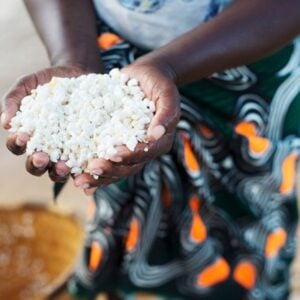
Tesfaye’s fortunes shifted after he attended FSRP-led training sessions organized by his district agricultural office. There, he was introduced to integrated soil fertility management techniques, including vermicomposting. With support from the program, he built a composting unit and began applying organic compost along with small amounts of inorganic fertilizer to his maize field. Within a single season, his maize yield increased by 67 percent—from 9 to 15 quintals—improving his family’s food supply and generating additional income.

The FSRP, supported by the World Bank and the Ethiopian government, has so far reached nearly 50,000 farmers directly with training on organic fertilizers, pest management, and soil restoration practices such as lime application. These hands-on demonstrations have helped farmers improve soil structure, correct acidity, and boost crop health. Beyond soil fertility, the program also strengthens farmer groups, builds agribusiness capacity, expands access to irrigation and inputs, and supports enterprise development. In total, over 1.2 million people have benefited from the program’s broader interventions.

Ethiopia’s participation in the wider regional Food Systems Resilience Program, spanning seven countries in Eastern and Southern Africa, has further enhanced its agricultural capacity. This cross-country initiative fosters knowledge-sharing on best practices in climate-smart agriculture, digital tools, market access, and policy reforms. In Ethiopia, the program is upgrading agricultural extension services, building digital agriculture platforms, and creating knowledge hubs to provide farmers with practical, hands-on training.

Tesfaye’s success illustrates the program’s impact at the grassroots level. By adopting sustainable farming practices, he has restored productivity on his farm, improved his household’s resilience, and is now encouraging neighboring farmers to follow suit. His story demonstrates how targeted investments in soil health and farmer training can transform livelihoods, strengthen food security, and pave the way for more sustainable and climate-resilient agriculture in Ethiopia.

Related Posts

  • Supporting Smallholder Farmers in Africa: Boosting Food Security and Rural Livelihoods
  • FAO Regional Office for Africa: Advancing Food Security and Sustainable Agriculture
  • FAO Regional Office for Africa: Advancing Food Security and Sustainable Agriculture
  • FAO Regional Office for Africa: Driving Food Security and Sustainable Agriculture
  • €28 Million Suckler Farmers Scheme Launched by Minister Heydon

Primary Sidebar

Latest News

Foundation Alloy Raises $22 Million to Scale Advanced Metals Manufacturing Technology

Technology and Creativity Help Young People Discover Cultural Heritage in Bosnia and Herzegovina

Zafiri Launches $176 Million Initiative to Expand Clean Energy Access Across Africa

African Development Bank and Brazil Partner to Strengthen Africa’s Food Systems

Bezos Earth Fund Invests $26 Million in Satellite System to Fight Wildfires

Lantmännen Opens SEK 25 Million Research Call for Future Farming and Food Systems

Cameroon Launches Northern Farming Season to Address Food Security Challenges

Experimental mRNA Vaccine Offers Hope Against Deadly Hantavirus

Zafiri Launches $176 Million Fund to Expand Renewable Energy Access Across Africa

USDA Rural Development Announces Modernization Effort to Better Serve Rural Communities

Rights Defender Killings Reach Record High as UN Warns of Growing Humanitarian Challenges

Hate Speech Is the First Step Toward Dehumanization, UN Chief Warns

Worsening Hunger Could Push Millions Closer to Famine in 13 Global Hotspots

UN80 Reform Initiative Enters Key Phase as United Nations Pushes for Greater Efficiency and Impact

WHO Expands Ebola Treatment Capacity in DR Congo Amid Ongoing Outbreak

EBRD Expands Support for Uzbekistan’s Mortgage Market with $50 Million Loan

EBRD Provides $50 Million to Support Young Entrepreneurs in Uzbekistan

EBRD Backs Digital Transformation of Uzbekistan Railways with €38.4 Million Loan

EBRD Supports Electric Bus Expansion in Uzbekistan’s Nukus

UN General Assembly President Highlights Kenya’s Inclusive Digital Transformation During DigiKen Visit

EBRD and Uzbekistan Strengthen Partnership to Support Economic Growth and SMEs

UNEP Calls for Greater Protection of Rangelands Supporting Billions Worldwide

Sustainable Farming Projects Bring Hope and Food Security to Communities Across Africa

ILO and Switzerland Launch Initiative to Support Productivity and Decent Work in Ukraine

Governments Launch New ILO Platform to Promote Social and Solidarity Economy

WFP Welcomes $800 Million U.S. Contribution to Fight Rising Global Hunger

FAO and WFP Warn of Rising Hunger Risks Across 13 Global Hotspots

UNIDO and UNOOSA Partner to Use Space Technology for Sustainable Industry

Kresge Support Helps Launch Rosa Parks Courtyard Lounge at Obama Presidential Center

PAHO Strengthens Public Health Collaboration with Dutch Caribbean Experts at DuCaPHEN 2026

EU Grants Over CFA37 Billion to Support Cameroon’s Digital, Cocoa and Timber Sectors

$1 Million Commitment to Advance Gene-Agnostic Treatments for Retinal Diseases

Switzerland and UNDP Launch $12.5 Million Partnership to Support Ukraine’s Community Recovery

UNDP Supports Digital Forest Financing System in Kyrgyzstan

Protecting Nature Could Help Safeguard Jobs and Financial Stability in Malaysia

IFC Supports Uzbekistan’s Private Banking Sector with Ipoteka Bank Investment

EIB Supports Latvia’s Energy Transition with €20 Million Latvenergo Green Bond Investment

Malawi Targets Private Sector Reforms to Expand Jobs, Exports and Foreign Exchange

World Bank Approves $150 Million to Improve Rural Infrastructure in Uzbekistan

Switzerland and UNDP Launch $12.5 Million Partnership to Support Ukraine’s Community Recovery

Funds for NGOs
Funds for Companies
Funds for Media
Funds for Individuals
Sample Proposals

Contact us
Submit a Grant
Advertise, Guest Posting & Backlinks
Fight Fraud against NGOs
About us

Terms of Use
Third-Party Links & Ads
Disclaimers
Copyright Policy
General
Privacy Policy

Premium Sign in
Premium Sign up
Premium Customer Support
Premium Terms of Service

©FUNDSFORNGOS LLC.   fundsforngos.org, fundsforngos.ai, and fundsforngospremium.com domains and their subdomains are the property of FUNDSFORNGOS, LLC 1018, 1060 Broadway, Albany, New York, NY 12204, United States.   Unless otherwise specified, this website is not affiliated with the abovementioned organizations. The material provided here is solely for informational purposes and without any warranty. Visitors are advised to use it at their discretion. Read the full disclaimer here. Privacy Policy. Cookie Policy.