• Skip to primary navigation
  • Skip to main content
  • Skip to primary sidebar

fundsforNGOs News

Grants and Resources for Sustainability

  • Subscribe for Free
  • Premium Support
  • Premium Login
  • Premium Sign up
  • Home
  • Funds for NGOs
    • Agriculture, Food and Nutrition
    • Animals and Wildlife
    • Arts and Culture
    • Children
    • Civil Society
    • Community Development
    • COVID
    • Democracy and Good Governance
    • Disability
    • Economic Development
    • Education
    • Employment and Labour
    • Environmental Conservation and Climate Change
    • Family Support
    • Healthcare
    • HIV and AIDS
    • Housing and Shelter
    • Humanitarian Relief
    • Human Rights
    • Human Service
    • Information Technology
    • LGBTQ
    • Livelihood Development
    • Media and Development
    • Narcotics, Drugs and Crime
    • Old Age Care
    • Peace and Conflict Resolution
    • Poverty Alleviation
    • Refugees, Migration and Asylum Seekers
    • Science and Technology
    • Sports and Development
    • Sustainable Development
    • Water, Sanitation and Hygiene (WASH)
    • Women and Gender
  • Funds for Companies
    • Accounts and Finance
    • Agriculture, Food and Nutrition
    • Artificial Intelligence
    • Education
    • Energy
    • Environment and Climate Change
    • Healthcare
    • Innovation
    • Manufacturing
    • Media
    • Research Activities
    • Startups and Early-Stage
    • Sustainable Development
    • Technology
    • Travel and Tourism
    • Women
    • Youth
  • Funds for Individuals
    • All Individuals
    • Artists
    • Disabled Persons
    • LGBTQ Persons
    • PhD Holders
    • Researchers
    • Scientists
    • Students
    • Women
    • Writers
    • Youths
  • Funds in Your Country
    • Funds in Australia
    • Funds in Bangladesh
    • Funds in Belgium
    • Funds in Canada
    • Funds in Switzerland
    • Funds in Cameroon
    • Funds in Germany
    • Funds in the United Kingdom
    • Funds in Ghana
    • Funds in India
    • Funds in Kenya
    • Funds in Lebanon
    • Funds in Malawi
    • Funds in Nigeria
    • Funds in the Netherlands
    • Funds in Tanzania
    • Funds in Uganda
    • Funds in the United States
    • Funds within the United States
      • Funds for US Nonprofits
      • Funds for US Individuals
      • Funds for US Businesses
      • Funds for US Institutions
    • Funds in South Africa
    • Funds in Zambia
    • Funds in Zimbabwe
  • Proposal Writing
    • How to write a Proposal
    • Sample Proposals
      • Agriculture
      • Business & Entrepreneurship
      • Children
      • Climate Change & Diversity
      • Community Development
      • Democracy and Good Governance
      • Disability
      • Disaster & Humanitarian Relief
      • Environment
      • Education
      • Healthcare
      • Housing & Shelter
      • Human Rights
      • Information Technology
      • Livelihood Development
      • Narcotics, Drugs & Crime
      • Nutrition & Food Security
      • Poverty Alleviation
      • Sustainable Develoment
      • Refugee & Asylum Seekers
      • Rural Development
      • Water, Sanitation and Hygiene (WASH)
      • Women and Gender
  • News
    • Q&A
  • Premium
    • Premium Log-in
    • Premium Webinars
    • Premium Support
  • Contact
    • Submit Your Grant
    • About us
    • FAQ
    • NGOs.AI
You are here: Home / cat / Investing in People: How Nepal Can Drive Better Jobs and Economic Growth

Investing in People: How Nepal Can Drive Better Jobs and Economic Growth

Dated: August 21, 2025

In Nepal, one of the biggest barriers to better jobs and economic growth is not geography, natural resources, or access to finance, but the country’s limited investment in its people. Many young Nepalis are growing up without quality education, healthcare, and skills, particularly in remote and poorer regions. This has left much of Nepal’s human capital underdeveloped, reinforcing inequality and limiting productivity, innovation, and inclusive growth.

The challenge is not unique to Nepal. Globally, successful economies are those that prioritize investments in human capital—ensuring access to education, healthcare, and nutrition—rather than relying solely on natural resources. Strong human capital foundations lead to healthier, more productive communities and sustained economic growth, while neglecting these investments traps generations in cycles of low opportunity and limited development.

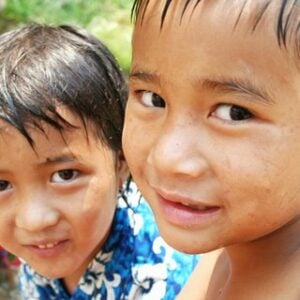
A new World Bank report, the Nepal Human Capital Review, highlights the scale of the problem. A child born in Nepal today is expected to reach just 51 percent of their full productivity potential by age 18 due to gaps in education, health, and nutrition. Inequalities are stark: a child in Karnali is expected to achieve only 46 percent of their potential, compared to 58 percent for a child in Bagmati. These disparities reflect unequal access to services, with children in wealthier regions benefiting from private investments while poorer families must rely on underfunded public systems.

Even for those who manage to build their skills, the labor market often fails to reward them. Quality jobs are scarce, with only four in ten new entrants to the workforce between 2010 and 2018 securing paid employment. Most available jobs are informal, poorly paid, and insecure, particularly in rural areas where investment lags. The challenges are sharper for young people, over a third of whom are not in education, employment, or training, and for women, whose labor force participation stands at just 29 percent. As a result, a child born today is expected to realize only 18 percent of their productivity potential in Nepal’s current job market—one of the lowest rates globally.

To reverse this trend, Nepal must invest more in education, healthcare, and social protection, ensuring that resources reach the most disadvantaged communities. Every child should have access to early learning, qualified teachers, learning materials, nutritious food, and basic health services. These are essential for building human capital and ensuring that where a child is born does not dictate their life opportunities.

Equally critical is the urgent need to create jobs. Nepal will require 6.5 million new jobs over the next three decades to match population growth. Achieving this demands long-term, strategic investments in people, skills, and systems while improving the business environment to attract both domestic and foreign investment. Stronger connections between training and labor market needs, expanded reskilling programs, and public-private partnerships can help equip young people with relevant skills, particularly in digital and technical fields.

Nepal stands at a crossroads: bold action today can ensure that its youth have opportunities to thrive in a modern economy. Investing in people is not just a moral obligation but the smartest path to creating jobs, driving growth, and building an inclusive society where all Nepalis can prosper.

Related Posts

  • Education Cannot Wait and Donor Partners Commit $7 Million to Support Education in Niger
  • ILO Launches New Project to Strengthen Worker Protections in Lao PDR
  • IOM Partners with Mission 89 to Combat Child Trafficking in Sports
  • Minister Foley Grants Over €1 Million for Digital and Assistive Technology Projects Supporting People with Disabilities
  • Ohio Invests $7.1M in Career Pathways to Prepare Students for High-Demand Jobs

Primary Sidebar

Latest News

WA secures $339.9M funding boost to improve road safety across the state

Blended Finance Partnership: Kitabisa, Bakti Barito Aim Rp13B for Climate Education

Centre Gives 2026 Returns May 6–7 to Support Nonprofits in Centre County

India rolls out $1.08B Startup India Fund of Funds 2.0 with new DPIIT guidelines

Amazon India to scale logistics and quick commerce with ₹2,800 crore investment plan

QuoIntelligence raises €7.3M led by Elevator Ventures to strengthen cyber risk solutions

Effective Non-Profit Marketing: Case Studies in Audience Engagement

Tech Startup Funding Challenges: Case Studies in Data-Driven Innovation

Bucharest tram upgrade to be boosted with €266 million EIB financing tranche

Hannover Messe: EIB Backs €2.4B for Energy Security and Innovation

Belarus: GDF Project Boosts Healthcare in Chernobyl-Affected Areas

Restoring Wetlands in Chernobyl-Affected Territories

Philippines to Lead ASEAN Climate Finance Action at 2026 Climate Week

UN, Civil Society and Partners Boost Libyan Women’s Voices

Kyrgyzstan Advances GovTech and Digital Health Systems

EIB and Catalonia Sign €300M Loan for Barcelona Line 8 Extension

EIB Provides €250M Loan to KONE for Smart Elevator Technology

EIB Invests €100M in Malta-Italy Electricity Interconnector

EIB Announces €10 Billion to Speed Up Clean Energy in Europe

EIB Boosts Clean Energy and Just Transition in Four Coal Regions

EU Launches Global Green Bond Fund to Mobilise €20 Billion Investment

EU and EIB Boost Business Growth with €1.3 Billion Financing Plan

EIB Vice-President Karl Nehammer Visits Ukraine to Support Recovery

Government Funds New Domestic Violence Refuge in Balbriggan

Scalable Regenerative Agriculture Fund for Agri-Innovation in EMDEs

Acute Food Insecurity and Malnutrition Surge, UN-EU Report Warns

WFP Supports Ethiopia’s Somali Region with Solar Irrigation Scheme

Global Fund Launches Regional Malaria Grant for Southern Africa

Cambodia: Women Migrant Workers and Students Break Stereotypes

CVC Credit Raises $1B Fourth CLO Equity Vehicle

EBRD President Opening Speech at Chornobyl Nuclear Safety Conference

Ending Malaria in Our Lifetime: WHO Call for Pakistan Action

PAHO Strengthens ICD-11 Capacity Building Across the Region

Jamaica Observes Vaccination Week in the Americas

WHO Prequalifies First-Ever Malaria Drug for Infants

Vaccines Save 150 Million Lives Across Generations – WHO

Airliner Safety, Somalia Drought and Solar Farming in Ethiopia Update

How Sport Is Empowering Girls in Uganda

Renewables Rising Part 1: Four Countries Reshaping Energy Security

Toxic Legacy Threatens South Pacific Islands as Communities Resist

Funds for NGOs
Funds for Companies
Funds for Media
Funds for Individuals
Sample Proposals

Contact us
Submit a Grant
Advertise, Guest Posting & Backlinks
Fight Fraud against NGOs
About us

Terms of Use
Third-Party Links & Ads
Disclaimers
Copyright Policy
General
Privacy Policy

Premium Sign in
Premium Sign up
Premium Customer Support
Premium Terms of Service

©FUNDSFORNGOS LLC.   fundsforngos.org, fundsforngos.ai, and fundsforngospremium.com domains and their subdomains are the property of FUNDSFORNGOS, LLC 1018, 1060 Broadway, Albany, New York, NY 12204, United States.   Unless otherwise specified, this website is not affiliated with the abovementioned organizations. The material provided here is solely for informational purposes and without any warranty. Visitors are advised to use it at their discretion. Read the full disclaimer here. Privacy Policy. Cookie Policy.