
In 2025, approximately 118 million children have been pushed into hunger, with around 63 million—over half—driven into this situation by conflict, according to a new analysis by Save the Children on World Food Day. Unlike hunger caused by drought, environmental shocks, or economic pressures, conflict remains the primary driver of the most severe forms of… [Read More]
WHO
WFP–KOICA Partnership Enhances Health and Nutrition for Kyrgyzstan’s Schoolchildren

The United Nations World Food Programme (WFP), in collaboration with the Ministry of Education of the Kyrgyz Republic and the Korea International Cooperation Agency (KOICA), has launched a three-year, US$10 million project aimed at improving the health and nutrition of school-aged children. The initiative will directly benefit 15,000 children, half of whom are girls, across… [Read More]
Sierra Leone to Boost Food Security with $2.25 Million African Development Bank Support
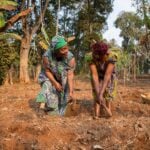
The African Development Bank Group’s Board of Directors has approved a $2.25 million financing package to strengthen agricultural productivity and food security in Sierra Leone through the Fostering Africa’s Agricultural Productivity through Fertilizer Value Chain Financing (FOSTER) project. Implemented by Welthungerhilfe, the initiative aims to help thousands of smallholder farmers access quality fertilizers using innovative… [Read More]
Strengthening Health in Namibia: New Programs Target Women, Children, and Adolescents

Namibia has taken a significant step to enhance the health and well-being of women, children, and adolescents with the official launch of two critical health policy documents by the Ministry of Health and Social Services (MoHSS) on 9 October 2025 in Windhoek. Supported by the World Health Organization (WHO) and partner organizations, the launch introduced… [Read More]
Strengthening Health Security: Tanzania’s New Pandemic Fund Project

The United Republic of Tanzania has officially launched the Pandemic Fund Project in Mwanza, a landmark initiative designed to strengthen the country’s capacity to prevent, prepare for, and respond to future health emergencies and pandemics. Supported by a US$25 million grant from the Pandemic Fund and an additional US$13.7 million in co-investments and co-financing, the… [Read More]
Serbia’s Economic Growth Must Respect Human Rights and the Environment, Say UN Experts
The UN Working Group on Business and Human Rights has emphasized that Serbia’s economic development must be closely aligned with the protection of human rights. Experts Lyra Jakulevičienė and Robert McCorquodale acknowledged Serbia’s legal framework and efforts to meet EU standards on environmental protection and labor rights, but noted that implementation remains inconsistent and weak,… [Read More]
Mexico’s Supreme Court Decision: A Step Forward, Yet Incomplete

On October 13, Martha García, a young disability activist and student at the National Autonomous University of Mexico, learned that the Supreme Court planned to change a legal precedent that could weaken the rights of people with disabilities to participate in the democratic process. In response, she and other activists organized a demonstration outside the… [Read More]
European Union Expands Support for UNHCR Winter Programs to Aid Ukrainians Impacted by Conflict
As Ukraine faces its fourth winter amid full-scale war, the European Union (EU) has announced an additional €12 million in support to UNHCR, the UN Refugee Agency, to provide life-saving winter assistance to 359,000 of the most vulnerable people affected by the conflict. The funding targets primarily families and individuals living near the frontline or… [Read More]
Future Farmer Initiative in PEI Aims to Build Sustainable Careers for Young Farmers
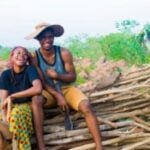
The Government of Prince Edward Island, in partnership with Agriculture and Agri-Food Canada, has launched the revamped Future Farmer Program 2.0 to support new and emerging farmers in establishing profitable and sustainable farm businesses. The program provides mentorship, project funding, and training to help participants set business goals and strengthen essential planning, management, and technical… [Read More]
UN and Tajikistan Showcase Green Investments and Food Security Initiatives at Dushanbe Forum

A side-event conference themed “Improve Nutrition by Leveraging Investments for Nutrition-Sensitive Food System Interventions in Tajikistan” was held in Dushanbe on 13 October 2025 as part of the Dushanbe International Investment Forum. The event focused on nutrition-sensitive food systems, sustainable agriculture, and green investment, highlighting strategies to combat malnutrition while promoting climate-resilient and inclusive agricultural… [Read More]
EIB Global Provides $191 Million to Upgrade Water Systems in Uttarakhand, India

The European Investment Bank’s development arm, EIB Global, is lending the Indian government $191 million to upgrade and expand water and sewerage infrastructure in the northern state of Uttarakhand. This marks EIB Global’s first operation fully dedicated to India’s water sector, targeting improvements in both water supply and sanitation amid the state’s rapid growth in… [Read More]
Post-Quake Afghanistan: Rising Health Risks for Children
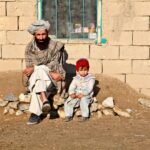
A 6.3-magnitude earthquake struck eastern Afghanistan near the Pakistan border on 31 August, destroying homes and critical water, sanitation, and hygiene infrastructure. The disaster has left child survivors living in overcrowded displacement camps and makeshift shelters without access to toilets or safe water, creating conditions highly conducive to disease outbreaks. Dr. Tajudeen Oyewale, UNICEF’s representative… [Read More]
Post-Quake Afghanistan: Rising Health Risks for Children

A 6.3-magnitude earthquake struck eastern Afghanistan near the Pakistan border on 31 August, destroying homes and critical water, sanitation, and hygiene infrastructure. The disaster has left child survivors living in overcrowded displacement camps and makeshift shelters without access to toilets or safe water, creating conditions highly conducive to disease outbreaks. Dr. Tajudeen Oyewale, UNICEF’s representative… [Read More]
Right to Work Initiative in Ethiopia Paves the Way for Economic and Social Transformation

Ethiopia has introduced groundbreaking legislation granting refugees and asylum seekers the right to work for the first time in the country’s history, a milestone achieved through the 2019 Refugee Proclamation. This historic law allows refugees to engage in wage employment, self-employment, and business ownership, significantly expanding their economic opportunities. Since its implementation, over 24,000 refugees… [Read More]
Empowering Africa’s Rural Women: Celebrating the International Day of Rural Women 2025
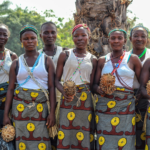
The International Day of Rural Women highlights the essential role women play in Africa’s development as farmers, entrepreneurs, and innovators who sustain families, drive rural economies, and protect the environment. Despite these contributions, many still face barriers to land ownership, finance, and decision-making. For the African Development Bank Group (AfDB), this day underscores its mission… [Read More]
Promoting Healthy Ageing: WHO South-East Asia Sets Regional Agenda

The Member States of the WHO South-East Asia Region have adopted the Colombo Declaration on ‘Healthy Ageing through Strengthened Primary Health Care’, addressing the health and well-being of the region’s ageing population, which is expected to nearly double by 2050. The declaration was endorsed during a ministerial round table attended by Health Ministers, senior representatives,… [Read More]
Global-Hub Spotlight: Indigenous Peoples’ Food Systems at WFF 2025

Indigenous Peoples leaders, ministers, and high-level delegates gathered at the FAO headquarters in Rome for the Global-Hub on Indigenous Peoples’ Food Systems, held in two Sami Nomadic tents symbolizing an Indigenous territory. This third edition coincides with FAO’s 80th anniversary and the World Food Forum, bringing together Indigenous scientists and non-Indigenous experts to co-create proposals… [Read More]
Bangladesh Begins Nationwide Typhoid Vaccine Drive to Protect 50 Million Children
The Government of Bangladesh, with support from UNICEF, Gavi, and WHO, launched a nationwide Typhoid Conjugate Vaccine (TCV) campaign on 12 October 2025, aiming to vaccinate approximately 50 million children aged 9 months to under 15 years. Bangladesh becomes the eighth country globally to introduce TCV, a life-saving vaccine designed to protect children from deadly… [Read More]
Rising Cholera Cases in Sudan as Conflict Intensifies
Sudan is grappling with a severe cholera outbreak, worsened by ongoing conflict, displacement, and heavy rains that have created ideal conditions for the spread of waterborne diseases. The World Health Organization (WHO) has reported a concerning case fatality rate of 2.8%, nearly three times the emergency threshold, indicating the outbreak is escalating rapidly and necessitating… [Read More]
Kenya introduces pioneering AI and digital skills courses to modernize public service
Kenya is positioning itself as a global leader in artificial intelligence (AI) and digital governance training for civil servants through the launch of a new Massive Open Online Course (MOOC). Developed in collaboration with UNESCO, the University of Oxford, and the Kenya School of Government (KSG), the course is designed to equip public officials with… [Read More]
11 Million Deaths Every Year from Neurological Conditions: Why Urgent Care Is Critical

The World Health Organization (WHO) has highlighted a critical global health challenge: neurological disorders now affect over 3 billion people worldwide, contributing to more than 11 million deaths annually. Despite the immense burden, less than one in three countries has a national policy to address these conditions, leaving millions without access to essential care. The… [Read More]
Digitizing Health in Africa: WHO and EU Launch Strategic Collaboration
The World Health Organization (WHO) and the European Union (EU) have launched a new partnership to advance the digital transformation of health systems in sub-Saharan Africa, with a focus on expanding the adoption of WHO’s Global Digital Health Certification Network (GDHCN). The collaboration, announced at the World Health Summit 2025, aims to enhance pandemic preparedness,… [Read More]
Angola Steps Up Fight Against Guinea Worm with New WHO-Carter Center Agreement
The World Health Organization (WHO) and the Carter Center have signed a new cooperation agreement worth US$300,000 to ensure the continuity of efforts to combat Guinea worm disease in Angola’s Cunene province. This agreement reinforces both organizations’ commitment to supporting Angola in eliminating this neglected tropical disease, which is targeted for global eradication by 2030…. [Read More]


