The Dominican Republic has carried out a nationwide consultation on gender equality that gathered input from more than 4,750 women and girls across all 31 provinces, shaping new policy recommendations that will influence both national reforms and the country’s position at the United Nations.
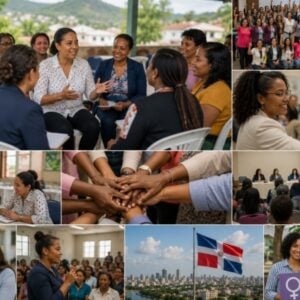
Led by the Ministry of Women’s Affairs in partnership with UN agencies and supported by the United Kingdom, the “Gran Consulta Nacional” brought together voices from remote rural communities and urban areas to document lived experiences around justice, safety, economic dependence and access to public services.
The consultation was conducted through a combination of provincial discussions, a national online survey and in-person engagement sessions. Officials said the process was designed to ensure that policy positions were directly informed by lived realities rather than developed in isolation within government institutions.
Findings revealed that unpaid care work remains one of the most significant barriers to women’s participation in economic and public life. A large majority of respondents identified domestic responsibilities and limited job opportunities as key constraints affecting financial independence and equality.
The study also highlighted regional disparities in access to justice and services, with rural women and those living in poverty facing the greatest challenges. Limited infrastructure, distance from service centers and economic constraints were identified as persistent obstacles.
UN agencies involved in the initiative emphasized that coordinated action across health, education, data and policy systems is essential for advancing gender equality. The process was supported by a multi-agency coordination framework that helped translate data into policy recommendations.
The results of the consultation were presented ahead of the 70th Session of the Commission on the Status of Women, where they contributed to shaping the Dominican Republic’s international engagement on gender issues. The country is also set to assume the presidency of the Commission for 2026–2027, giving it a leading role in global gender policy discussions.
Officials say the consultation demonstrates how inclusive, large-scale public engagement can directly influence national and international policy frameworks, turning lived experiences into structured governance priorities.