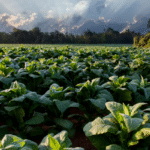
Malawi’s economy heavily relies on agriculture, which contributes nearly a quarter of GDP and employs around three-quarters of the population, primarily through small-scale subsistence farming. In rural areas, 93 percent of Malawians work in the food sector. Despite this, poverty, recurring shocks, and weak livelihoods have intensified food insecurity, with over one in four Malawians… [Read More]
WHO
WHO Health Response in Afghanistan Expands with Increased EU Humanitarian Funding
The World Health Organization (WHO) in Afghanistan has received an additional €1 million from European Union (EU) Humanitarian Aid, bringing the total EU health funding in the country to €7 million since May 2025. This increased funding will allow WHO to expand its emergency health response, focusing on providing lifesaving services to underserved communities and… [Read More]
Three Czechia Initiatives Receive EU Support to Upgrade Public Services

Three municipalities in the Ústí nad Labem and Moravia-Silesia regions of Czechia have received nearly €1.4 million from the Public Sector Loan Facility (PSLF) to support sustainable urban development projects. These initiatives aim to enhance public infrastructure, improve energy efficiency, and foster social inclusion, representing key steps toward a just transition and climate resilience in… [Read More]
UK Urged to Maintain £1 Billion Global Fund Pledge by NHS and Health Experts

More than 355,000 NHS and UK health workers with global roots have called on the UK Prime Minister to maintain Britain’s £1 billion commitment to the Global Fund to Fight AIDS, Tuberculosis and Malaria, warning that any reduction would cost lives and threaten UK health security. Coordinated by Global Health Partnerships, the open letter from… [Read More]
Addressing Urban Displacement: UN Expert Calls for Rights-Based Approaches

Urban displacement is emerging as one of the most pressing human rights challenges globally, according to the UN Special Rapporteur on the human rights of internally displaced persons (IDPs), Paula Gaviria Betancur. In her report to the General Assembly, she emphasized that while cities can provide safety and opportunities, they can also increase vulnerability if… [Read More]
Health Experts Warn: Polio Can Still Be Ended Despite 30% Funding Drop
Global health officials have emphasized that eradicating polio remains possible despite significant funding cuts, outlining plans to cope with the shortfall. The Global Polio Eradication Initiative (GPEI), a partnership that includes the World Health Organization and the Gates Foundation, faces a 30% budget reduction in 2026 and a $1.7 billion funding gap projected through 2029…. [Read More]
Over One Million People Return to Khartoum as Sudan’s Recovery Remains Fragile
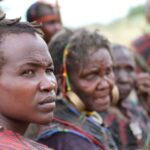
Between November 2024 and September 2025, over one million people returned to Khartoum, Sudan, according to the International Organization for Migration (IOM). These families are seeking to rebuild their lives after months of displacement caused by ongoing conflict. Ugochi Daniels, IOM Deputy Director General for Operations, highlighted that while the return of families reflects resilience,… [Read More]
DR Congo Faces Surge in Sexual Violence Against Women, UN Reports

Speaking to journalists at the UN Office in Geneva, Shoko Arakaki, director of humanitarian affairs at the UNFPA, highlighted a sharp rise in sexual violence against women and girls in the Democratic Republic of Congo (DRC). Essential services have been severely disrupted, and incidents of rape and conflict-related sexual violence have surged by a third… [Read More]
Congo Reports Declining Cholera Cases Amid Ongoing Response
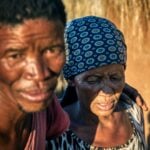
The cholera outbreak in Congo is showing significant signs of decline, with no confirmed cases reported between 15 and 16 October 2025. This progress reflects the strengthened response efforts led by the Ministry of Health and Population, supported by partners including the World Health Organization (WHO). Improved treatment and care have been key to reducing… [Read More]
Advancing Public Health in Africa: WHO and Africa CDC Deepen Collaboration

Addis Ababa, October 6, 2025 — The World Health Organization Regional Office for Africa (WHO AFRO) and the Africa Centers for Disease Control and Prevention (Africa CDC) have signed a landmark framework to strengthen their collaboration on disease prevention, health security, and universal health coverage across the continent. The agreement provides a strategic platform to… [Read More]
Grassroots Initiative Continues the Fight Against Hunger and Food Poverty

Wiltshire’s Positive Community Action (PCA) has reached a significant milestone by cooking 8,000 free meals for vulnerable people in the Marlborough and Pewsey area, reaffirming its commitment to tackling food poverty and social isolation. The community group, founded to address deprivation and support those in need, relies on a dedicated team of volunteers who have… [Read More]
“Our Children Cannot Wait”: Bié Residents Take Action Against Malaria
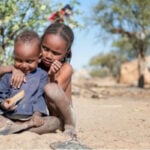
Thousands of families in Angola continue to face the threat of malaria, a disease that disproportionately affects children and pregnant women. To reduce this burden and strengthen community protection, a new mosquito net distribution campaign has been launched across Bié province. The initiative is led by the National Malaria Control Programme, with technical support from… [Read More]
Nearly 900 Million Poor at Risk from Climate Change, Warns UN
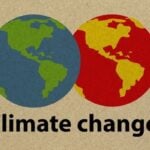
Nearly 80% of the world’s poorest, or roughly 900 million people, are directly exposed to climate hazards intensified by global warming, according to the United Nations. This population bears a “double and deeply unequal burden,” facing frequent and increasingly severe impacts from droughts, floods, heat waves, and air pollution. Haoliang Xu, acting administrator of the… [Read More]
The High Cost of Suppressing Rights in Vietnam
Vietnam has attracted increasing attention from governments worldwide due to its rapid economic growth and strategic position in Asia. The country has secured comprehensive strategic partnerships with major powers, including the U.S., EU, Japan, Australia, and several ASEAN nations, positioning itself as a key trade partner and a potential counterbalance to Chinese influence. These partnerships… [Read More]
Human Rights at Risk: UN Expert Urges Reform in Global Water Governance
Governments must move away from market-driven models and adopt democratic, rights-based approaches to water governance, according to Pedro Arrojo Agudo, the UN Special Rapporteur on the human rights to safe drinking water and sanitation. In a report to the UN General Assembly, he emphasized that water is a common good essential to life, dignity, and… [Read More]
Community Arts Group Secures Funding to Support Local Creativity

Peterborough Presents, a community-focused arts organisation, has welcomed £800,000 in funding to support its local projects and artists. The organisation collaborates with neighbourhoods across the city to develop creative activities and events, with support from partners including Nene Park Trust and the city council. The funding comes from Arts Council England’s £42 million Creative People… [Read More]
EmpowHER Fund Launching Soon – Empowering Women in Business

The EmpowHER Fund is a new initiative designed to address the disproportionate burden of HIV among girls and young women in Southern Africa, who account for nearly 63% of new infections in the region. Adolescent girls and young women aged 15–24 face infection rates three times higher than their male peers due to intersecting factors… [Read More]
Government of Canada Allocates $36 Million for Anti-Violent Extremism Initiatives

On October 20, 2025, the Honourable Ruby Sahota, Secretary of State for Combatting Crime, announced a federal investment of $36,912,380 to 19 organizations to enhance Canada’s capacity to prevent and counter radicalization to violence. This funding, provided through the Community Resilience Fund (CRF), supports programs aimed at directing at-risk individuals away from violent extremism, strengthening… [Read More]
Lead Exposure Crisis: Why Immediate Action Is Essential
Lead exposure remains one of the world’s most pervasive yet preventable health threats, affecting millions of children and adults globally. As the thirteenth International Lead Poisoning Prevention Week (ILPPW) approaches from 19 to 25 October 2025, the World Health Organization (WHO) and its partners have emphasized that there is no safe level of lead, calling… [Read More]
New Health Works Leaders Coalition Aims to Strengthen Health Systems and Drive Job Creation

The World Bank Group, the Government of Japan, and the World Health Organization (WHO) have launched the Health Works Leaders Coalition, a global alliance uniting health and finance ministers, business leaders, philanthropic organizations, global health agency heads, and civil society representatives. The coalition aims to promote investments in health systems as a driver of economic… [Read More]
Digital Health for Stronger Health Systems: Global Strategies and Country Empowerment

Digital technologies are rapidly reshaping health systems worldwide, from electronic medical records and telemedicine to artificial intelligence and data-driven surveillance, redefining how care is delivered, managed, and evaluated. However, this transformation poses challenges, particularly in low- and middle-income countries, where digital initiatives often remain fragmented or misaligned with national priorities. Without strong national capacities to… [Read More]
Countering Nicotine and Tobacco Addiction on World No Tobacco Day 2026

The World Health Organization (WHO) has announced the theme for World No Tobacco Day 2026: “Unmasking the appeal – countering nicotine and tobacco addiction.” The campaign focuses on revealing how the tobacco and nicotine industry continuously reinvents and repackages its products to attract a new generation, particularly children and adolescents, while evading stronger tobacco control… [Read More]
Strengthening NTD Programmes: WHO Partners Improve Supply Chain and Coordination

From 23 to 26 September 2025, the World Health Organization (WHO), alongside health ministries, pharmaceutical donors, implementing partners, and technical support platforms, convened three major meetings in Geneva to strengthen coordination and stewardship of supply chains for neglected tropical disease (NTD) medicines. The gatherings—the NTD Supply Chain Forum (NTD-SCF), the Supply Chain Technical Support Mechanism… [Read More]


