
The Irish Government has announced a €3.5 million Shared Island investment to redevelop cricket facilities at the Stormont Estate in Belfast as Ireland prepares to co-host the 2030 Men’s T20 Cricket World Cup with the United Kingdom. The funding will support the upgrade of the Stormont cricket venue, which is expected to host matches during… [Read More]
Teacher Development Drives Better Learning Results in Belize Schools

Belize has made significant progress in improving educational outcomes through the Education Quality Improvement Program II (EQIP II), supported by the Inter-American Development Bank. The initiative focused on transforming classroom practices by strengthening teaching methods, promoting student-centered learning, and ensuring that educational reforms were guided by evidence and measurable results. The program addressed long-standing challenges… [Read More]
Ireland Moves Toward UNESCO Agreement to Improve Global Recognition of Higher Education Qualifications

Ireland has approved plans to formally apply for ratification of the UNESCO Global Convention on the Recognition of Qualifications concerning Higher Education. The move aims to strengthen international education links, improve student mobility, and make it easier for qualifications earned in Ireland to be recognized worldwide. The decision, announced by the Minister for Further and… [Read More]
Countries and Experts Join Forces to Protect Forests from Invasive Species in Europe and Central Asia

Experts, policymakers, and forestry professionals from across Europe and Central Asia have come together in Kyrgyzstan to strengthen regional cooperation in tackling invasive species and protecting forest ecosystems. The meeting brought together representatives from 22 countries to address shared challenges affecting forest health and biodiversity. The annual gathering of the Forest Invasive Species Network for… [Read More]
ADB Launches First Digital Solutions Bond to Accelerate Digital Growth Across Asia and the Pacific

The Asian Development Bank (ADB) has issued its first digital solutions theme bond to support digital transformation projects across Asia and the Pacific. The $100 million, three-year bond will finance initiatives focused on improving connectivity, digital infrastructure, cybersecurity, and technology-driven public services. The bond was issued under ADB’s Theme Bonds for Sustainable Development programme and… [Read More]
ADB Supports Cambodia’s Clean Energy Transition with Major Battery Storage Project

The Asian Development Bank (ADB) has approved a $63.44 million financing package to support Cambodia’s renewable energy transition through a large-scale battery energy storage project. The initiative aims to improve grid stability, strengthen energy security, and expand the country’s ability to integrate clean energy. The Utility-Scale Battery Energy Storage Project will support the construction of… [Read More]
World Bank Group and Banco Santander Launch Financing Initiative to Support Emerging Markets

The World Bank Group, through the International Finance Corporation (IFC), and Banco Santander S.A. have launched a new risk-sharing facility designed to expand access to working capital, strengthen supply chains, and support job creation across emerging markets. The initiative will help businesses, particularly small and medium-sized enterprises (SMEs), access financing by allowing suppliers to obtain… [Read More]
EU Provides €15 Million to Support Humanitarian Aid Near Ukraine’s Frontline

The European Union (EU) has allocated €15 million to the United Nations World Food Programme (WFP) to help sustain critical humanitarian assistance for communities living near Ukraine’s frontline areas. The funding will support emergency cash assistance and humanitarian logistics operations for people affected by the ongoing conflict. The contribution will enable WFP to provide financial… [Read More]
EU and WFP Launch Initiative to Improve Child Nutrition and Local Food Systems in Sierra Leone

The European Union (EU) and the United Nations World Food Programme (WFP) have partnered on a new initiative to strengthen child nutrition, support local food production, and improve livelihoods in Sierra Leone. The programme is expected to benefit more than 25,000 people through investments in food processing, farming, and nutrition support. The four-year project will… [Read More]
ILO and Jordan Trade Unions Launch New Phase to Strengthen Workers’ Rights and Gender Equality

The International Labour Organization (ILO) and the General Federation of Jordanian Trade Unions (GFJTU) have launched a new phase of the “Union Power for a More Inclusive and Gender-Equal World of Work” project in Jordan. The initiative aims to strengthen workers’ rights, promote gender equality, and support more inclusive labour practices. The renewed nine-month partnership… [Read More]
World Bank Provides $200 Million to Strengthen Togo’s Logistics and Transport Sector

Togo has secured $200 million in financing from the World Bank Group for the Logistics and Transport Services Improvement Program. The program aims to strengthen the country’s competitiveness as a regional logistics hub by improving road, rail and urban transport systems. A major focus of the program is the rehabilitation of the railway line connecting… [Read More]
Kenya Seeks $1.2 Billion to Expand Jomo Kenyatta International Airport

Kenya has appointed the Trade and Development Bank and the Africa Finance Corporation to structure financing for the planned expansion of Jomo Kenyatta International Airport in Nairobi. The project is expected to cost up to 154.2 billion Kenyan shillings, equivalent to about $1.2 billion. The expansion aims to increase JKIA’s annual passenger handling capacity from… [Read More]
Mission 300 Gets $70 Million Boost Through Green Guarantee Company Deals

Green Guarantee Company has completed its first two transactions, mobilizing $70 million to support electricity access projects under Mission 300. The Africa-wide electrification initiative, led by the World Bank and the African Development Bank, aims to connect 300 million people to electricity by 2030. The deals mark the first completed transactions by Green Guarantee Company,… [Read More]
UN Chief Unveils Global Blueprint for Clean Energy Transition Amid Climate Crisis
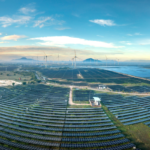
United Nations Secretary-General António Guterres has called for urgent global action to address the climate crisis, warning that continued dependence on fossil fuels is increasing environmental damage, economic instability, and energy insecurity. In a major speech during London Climate Action Week, the UN chief presented a roadmap for accelerating the transition to clean energy. Guterres… [Read More]
UAE Investment Boosts Egypt’s Real Estate Sector with $3.1 Billion Project

UAE-based Majid Al Futtaim has signed a partnership agreement with Egypt’s MIDAR for Investment and Urban Development to develop a $3.1 billion integrated urban center in Mada City, east of Cairo. The agreement adds to the growing flow of Gulf investments into Egypt’s real estate, tourism and urban development sectors. The project will be developed… [Read More]
ReSea Project Supports Blue Economy Growth in Pemba Through New Equipment for Coastal Enterprises

The Regenerative Seascapes for People, Climate and Nature (ReSea) Project has strengthened sustainable livelihoods in Pemba, Tanzania, by providing productive equipment to community-based and women-led Blue Economy Enterprises. The initiative aims to improve coastal resilience, support local businesses, and promote sustainable marine resource management. The equipment handover marks an important step in expanding opportunities for… [Read More]
Senegal’s $7.7 Billion Debt Maturity Challenge Puts Economy Under Strain
Senegal is facing a major debt repayment challenge, with CFA4,654 billion, equivalent to about $7.7 billion, in regional market debt due by the end of 2030. The pressure is especially intense in the short term, as around CFA1,007 billion is scheduled to mature before December 2026. Data from UMOA-Titres show that Senegal held CFA5,060 billion… [Read More]
Afreximbank Provides $500 Million Loan to Support Tunisia’s Trade Obligations

Tunisia has secured a new $500 million term loan facility from the African Export-Import Bank to finance essential imports, strengthen foreign-currency liquidity and meet maturing trade-related obligations. The facility is being extended through the Central Bank of Tunisia on behalf of the Ministry of Finance. The agreement was signed in Cairo between Afreximbank President George… [Read More]
UNIDO and Tanzania Sign Five-Year Partnership to Boost Sustainable Industrial Growth

The United Nations Industrial Development Organization (UNIDO) and the United Republic of Tanzania have signed a five-year Programme for Country Partnership (PCP) covering the period from 2026 to 2031. The agreement is designed to accelerate inclusive and sustainable industrial development while supporting Tanzania’s long-term economic vision. Developed at the request of the Tanzanian government, the… [Read More]
Cameroon Closes CFA78.6 Billion Bond With CFA4.5 Billion Interest Payment

Cameroon has completed repayment of a CFA78.6 billion bond issued in 2023, leading to its removal from the Central African Stock Exchange. The bond, listed as “ECMR 5.8% Net 2023-2026,” reached maturity and was delisted from Bvmac on June 23, 2026. The security represented the first tranche of a multi-tranche bond issue launched by the… [Read More]
UNIDO and Chad Launch Five-Year Partnership to Accelerate Sustainable Industrial Development
The United Nations Industrial Development Organization (UNIDO) and the Republic of Chad have signed a new five-year Programme for Country Partnership (PCP) covering the period from 2026 to 2030. The agreement aims to promote inclusive and sustainable industrial development while supporting Chad’s long-term economic transformation and diversification goals. The partnership serves as a government-led platform… [Read More]
UNOPS Supports School Recovery After Powerful Mindanao Earthquake in the Philippines

The United Nations Office for Project Services (UNOPS) is helping Philippine authorities restore safe learning environments following the devastating 7.8-magnitude earthquake that struck off the coast of Sarangani in Southern Mindanao on June 8, 2026. The earthquake caused widespread disruption across the region just as the new academic year was beginning. Initial estimates indicate that… [Read More]
UN High-Level Meeting on HIV/AIDS Marks Critical Moment in Global Fight Against AIDS

World leaders have gathered in New York for the United Nations High-Level Meeting on HIV/AIDS, a pivotal event that takes place only once every five years to shape the global response to the HIV epidemic. The summit is expected to define key priorities and commitments that will guide international HIV and AIDS efforts over the… [Read More]


