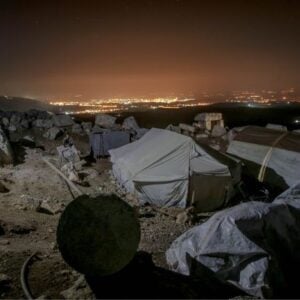
Hundreds of thousands of migrants pass through Djibouti each year along the Eastern Migration Route, often enduring extreme heat, hunger, dehydration, violence and exploitation while searching for safety and employment.
Djibouti, a country of just over one million people, is located at the crossroads of Africa and the Middle East. Its relative stability has made it a major transit point for people travelling towards Gulf countries and, in some cases, Europe.
Around half a million people travelled through Djibouti in 2025, equivalent to approximately half of the country’s population. Despite the scale of this movement, the humanitarian situation receives limited international attention.
Many migrants travel through isolated desert areas where temperatures can reach between 45°C and 47°C. Women and children are among those making these dangerous journeys, with some children travelling alone or without adequate protection.
During a visit to the western region of Dikhil, International Federation of Red Cross and Red Crescent Societies President Kate Forbes joined a Djibouti Red Crescent mobile team delivering food, drinking water, hygiene supplies and dignity kits.
The team met a group of 10 young men, including a 14-year-old boy, who had been walking for eight days. They showed clear signs of dehydration, hunger and exhaustion.
Volunteers later assisted a group of approximately 16 women who had travelled together for five days. Although they had started their journeys separately, they joined one another along the route for safety and companionship.
People move through Djibouti for different reasons. Some are escaping conflict, while others are affected by poverty, unemployment and food insecurity. Many may never reach their intended destinations, while others may settle temporarily in Djibouti or return home.
The Djibouti Red Crescent is one of the few humanitarian organisations maintaining a consistent presence along these migration routes. Its staff and volunteers provide emergency assistance without discrimination while helping migrants preserve their dignity.
The response is supported by the European Civil Protection and Humanitarian Aid Operations, the Italian Red Cross and the IFRC. Assistance includes food, water, essential supplies, protection and compassionate support for vulnerable people.
Humanitarian organisations have warned that the growing needs cannot be addressed without sustained international assistance. Climate change, economic hardship and regional instability are likely to continue driving migration through Djibouti.
The work of the Djibouti Red Crescent highlights the importance of protecting people on the move, even when their journeys remain far from global headlines.