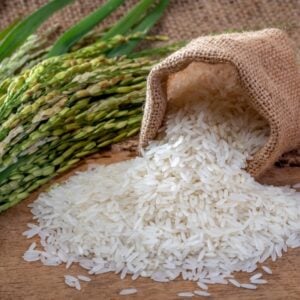
Accra — June 5, 2026 — West Africa has sealed a landmark $1.54 billion investment deal to boost rice production, aiming for self-sufficiency by 2035. The commitments were announced at the West Africa Rice Investment Roundtable, held in Accra from June 2–3, 2026, and organized by the ECOWAS Commission, the Government of Ghana, and the World Bank.
The event culminated in the Accra Declaration, a political framework signed by ministers from 14 countries. The declaration sets ambitious targets: doubling annual paddy production, raising yields from 2.1 to 4.1 tonnes per hectare, reducing post-harvest losses to below 10%, and cutting import dependency to less than 15%. Governments also pledged to create 15 million jobs across the rice value chain, with women and youth accounting for at least half of direct beneficiaries.
To achieve these goals, countries have prepared national rice investment plans worth $25.6 billion through 2035, embedded in a $28 billion regional envelope. Financing will be structured through government contributions, development finance, climate mechanisms, blended finance instruments, and private-sector investments.
The roundtable secured $1.54 billion in immediate pledges, with Togo and Nigeria emerging as leading beneficiaries, attracting a combined $707.5 million. The largest share of commitments — $964 million — was directed toward enabling reforms, infrastructure, and coordination mechanisms.
A Regional Rice Investment Compact is expected by September 2026 to translate commitments into structured action, aligning financing, policy reforms, and priority projects. The compact will serve as the operational framework for monitoring progress and ensuring accountability.
Boladale Adebowale, Coordinator of the ECOWAS Rice Agenda, emphasized that the pledges reflect strong investor confidence in transforming West Africa’s rice industry. The next milestones include validating commitments, appointing national focal points, and conducting a first progress review in September.
This landmark agreement positions West Africa to reduce dependency on imports, strengthen food security, and build a climate-resilient rice sector capable of feeding the region and creating millions of jobs by 2035.