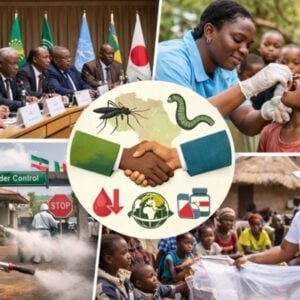
Geneva — May 25, 2026 — On the sidelines of the Seventy‑ninth World Health Assembly, global leaders, donors, and technical experts convened to accelerate progress toward eliminating malaria and neglected tropical diseases (NTDs). The meeting underscored the urgency of cross‑border collaboration and integrated health approaches to protect vulnerable populations across Africa and beyond.
Malaria continues to affect over 282 million people annually, causing approximately 610,000 deaths, while NTDs impact nearly one billion individuals worldwide. Global targets for 2030 include a 90% reduction in malaria cases and deaths, elimination of at least one NTD in 100 countries, and malaria eradication in 35 countries. Despite significant progress — including 2.3 billion malaria cases and 14 million deaths averted since 2000 — fragile health systems, drug resistance, and declining funding threaten these gains.
Leaders emphasized that diseases do not respect borders. Migration, trade, and climate change increase transmission risks, making regional cooperation essential. Ministers from countries including Liberia, Senegal, and Tanzania highlighted the need for integrated health systems, stronger surveillance, and equitable access to care in border regions.
A joint Memorandum of Understanding (MoU) on cross‑border collaboration is being developed to combat both malaria and NTDs, signaling a concrete commitment to structured regional cooperation. This framework aims to prevent reinfection, sustain elimination gains, and strengthen health security across nations.
Speakers stressed that moving beyond fragmented, disease‑specific approaches is critical. Integrated health services, political leadership, and domestic resource mobilization will be key to sustaining progress. As Dr Daniel Ngamije Madandi, WHO Director of Malaria and NTDs, noted, “If we act together with urgency and unity, a future free of malaria and neglected tropical diseases is within reach.”
Eliminating malaria and NTDs contributes directly to Sustainable Development Goal 3.3, while also advancing poverty reduction, food security, and education. WHO and partners called for sustained investment, innovation, and evidence‑based strategies to protect hard‑won gains and accelerate progress toward a healthier, more resilient future.