• Skip to primary navigation
  • Skip to main content
  • Skip to primary sidebar

fundsforNGOs News

Grants and Resources for Sustainability

  • Subscribe for Free
  • Premium Support
  • Premium Login
  • Premium Sign up
  • Home
  • Funds for NGOs
    • Agriculture, Food and Nutrition
    • Animals and Wildlife
    • Arts and Culture
    • Children
    • Civil Society
    • Community Development
    • COVID
    • Democracy and Good Governance
    • Disability
    • Economic Development
    • Education
    • Employment and Labour
    • Environmental Conservation and Climate Change
    • Family Support
    • Healthcare
    • HIV and AIDS
    • Housing and Shelter
    • Humanitarian Relief
    • Human Rights
    • Human Service
    • Information Technology
    • LGBTQ
    • Livelihood Development
    • Media and Development
    • Narcotics, Drugs and Crime
    • Old Age Care
    • Peace and Conflict Resolution
    • Poverty Alleviation
    • Refugees, Migration and Asylum Seekers
    • Science and Technology
    • Sports and Development
    • Sustainable Development
    • Water, Sanitation and Hygiene (WASH)
    • Women and Gender
  • Funds for Companies
    • Accounts and Finance
    • Agriculture, Food and Nutrition
    • Artificial Intelligence
    • Education
    • Energy
    • Environment and Climate Change
    • Healthcare
    • Innovation
    • Manufacturing
    • Media
    • Research Activities
    • Startups and Early-Stage
    • Sustainable Development
    • Technology
    • Travel and Tourism
    • Women
    • Youth
  • Funds for Individuals
    • All Individuals
    • Artists
    • Disabled Persons
    • LGBTQ Persons
    • PhD Holders
    • Researchers
    • Scientists
    • Students
    • Women
    • Writers
    • Youths
  • Funds in Your Country
    • Funds in Australia
    • Funds in Bangladesh
    • Funds in Belgium
    • Funds in Canada
    • Funds in Switzerland
    • Funds in Cameroon
    • Funds in Germany
    • Funds in the United Kingdom
    • Funds in Ghana
    • Funds in India
    • Funds in Kenya
    • Funds in Lebanon
    • Funds in Malawi
    • Funds in Nigeria
    • Funds in the Netherlands
    • Funds in Tanzania
    • Funds in Uganda
    • Funds in the United States
    • Funds within the United States
      • Funds for US Nonprofits
      • Funds for US Individuals
      • Funds for US Businesses
      • Funds for US Institutions
    • Funds in South Africa
    • Funds in Zambia
    • Funds in Zimbabwe
  • Proposal Writing
    • How to write a Proposal
    • Sample Proposals
      • Agriculture
      • Business & Entrepreneurship
      • Children
      • Climate Change & Diversity
      • Community Development
      • Democracy and Good Governance
      • Disability
      • Disaster & Humanitarian Relief
      • Environment
      • Education
      • Healthcare
      • Housing & Shelter
      • Human Rights
      • Information Technology
      • Livelihood Development
      • Narcotics, Drugs & Crime
      • Nutrition & Food Security
      • Poverty Alleviation
      • Sustainable Develoment
      • Refugee & Asylum Seekers
      • Rural Development
      • Water, Sanitation and Hygiene (WASH)
      • Women and Gender
  • News
    • Q&A
  • Premium
    • Premium Log-in
    • Premium Webinars
    • Premium Support
  • Contact
    • Submit Your Grant
    • About us
    • FAQ
    • NGOs.AI
You are here: Home / cat / UNDP Framework for Assessing Climate Investment Flows

UNDP Framework for Assessing Climate Investment Flows

Dated: April 24, 2026

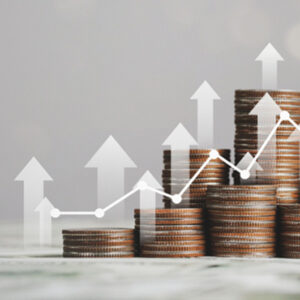
Climate finance is a critical requirement for achieving the goals of the Paris Agreement, with global needs estimated at around US$7.4 trillion annually. To effectively implement Nationally Determined Contributions (NDCs), countries must first understand their total climate finance requirements and identify how to mobilize funding from both domestic and international, public and private sources. In response to this need, UNDP developed a methodology to help countries assess investment and financial flows required to address climate change based on their national circumstances, capacities, and resources.

The methodology works by helping countries systematically analyse their climate priorities and financial needs. It guides governments in identifying planned climate actions across key sectors, mapping current investment flows, and determining the additional financing required to meet national climate targets. It also helps assess which policies and incentives are needed to shift financial flows toward low-carbon and climate-resilient development pathways.

Countries begin by translating national climate plans such as NDCs, National Adaptation Plans, and long-term low-emission strategies into concrete mitigation and adaptation measures. They then build two financial scenarios, one reflecting current business-as-usual climate spending and another outlining the investment required to achieve national climate goals. This comparison helps identify funding gaps and reallocation needs.

The methodology also provides structured guidance across 10 key sectors, enabling countries to evaluate where investments should be increased, reduced, or redirected. It supports governments in identifying appropriate financing sources and designing policy measures to unlock additional investment. The approach is flexible and can be adapted to national priorities, including integration with broader sustainable development strategies and considerations such as biodiversity and land use.

The expected outcomes of using the methodology include stronger public financial planning, improved mobilization of climate finance, and better alignment between national budgets and climate goals. Governments can more effectively determine the roles of public and private finance, prioritize investment policies, and strengthen fiscal planning for climate action.

It also supports more informed policymaking by helping countries develop national climate strategies, integrate sectoral standards into legal frameworks, and manage climate risks more effectively. In addition, it enables governments to build stronger business cases for climate finance, supporting proposals to international funding mechanisms such as the Green Climate Fund and Adaptation Fund.

The methodology further improves long-term planning by allowing countries to track climate finance flows, monitor progress on NDC implementation, and identify additional sectors where investment analysis may be needed. It is primarily designed for governments but encourages collaboration across ministries, private sector actors, academia, and civil society to ensure robust data collection and analysis.

Since its introduction in 2008, the methodology has been applied in around 60 assessments worldwide. It can be used at an economy-wide level or through sector-specific modules depending on national priorities. The framework includes detailed guidance materials and training resources, and it was most recently updated in 2026 to reflect evolving climate and financing needs.
Related Posts

  • New Climate Investment Opportunities in Central Asia
  • New BNPB–IOM Initiative Strengthens Climate Displacement Risk Data System
  • Navigating the First Loss and Damage Funding Cycle
  • Nepal Education Resilience: UNESCO and IIEP Strengthen Climate Data Systems
  • AfDB and ILX Complete First Renewable Energy Deal in Egypt

Primary Sidebar

Latest News

European Union Approves 20th Round of Sanctions on Russia

Portugal Gets €81M European Funding to Build Six Research Centres

Deloitte Unveils Asia Pacific Health Institute for Tech-Enabled Healthcare Access

Senegal Boosts Assistive Technology Access for Improved Well-being

Lessons from Southern Laos’ Unsold Carbon Credits in REDD+ Projects

Indonesia Tests Digital Social Protection Pilot Ahead of National Rollout

Kazakhstan Launches Just Energy Transition Investment Platform

What Australia’s First Sustainability Reports Teach Us

What India Can Learn from Global MSME Financing Models

UNDP Framework for Assessing Climate Investment Flows

Government of Canada Boosts Support for Seniors Nationwide

Kenya Girls Leading the Digital Future

North Dakota Launches $3.6M Rural Health Grant Program

Italy Launches €56.6M PRIN Hybrid Research Call

Dusk city skyline with tall illuminated buildings, palm trees in the foreground, and a residential street with red car light trails moving through the block.

Latin America VC Reforms: Lessons on Startups, Trust, and Governance

ILO Project Boosts Jobs and Social Cohesion in Mali

Banda Aceh MSMEs Boosted by ILO Perfume City Programme

The Meaning of Giving in Africa: Lessons from Akan Adɔyɛ

South Africa Spekboom Bond Priced by World Bank

Global Strategies to Manage High-Cost Medicines Offer Lessons for US Policy

UN Mission Reports Massive Destruction and Humanitarian Crisis in South Lebanon

Syria Gets $225M World Bank Funding for Water and Healthcare

Modern cityscape with diverse people and digital interfaces.

UN Urges Mexico to End Impunity and Tackle Disappearances Crisis

Global Update: Gaza Civilian Risk, Duterte ICC Trial, Yemen UN Detentions

AfDB Grants $24.5M for Clean Energy in São Tomé and Príncipe

Zimbabwe Gets $25M AfDB Support for Drought Resilience

Global Measles Surge Driven by Conflict and Vaccine Misinformation

Kuwait Charity Expands Global Aid with Water Projects in India and Chad

New BNPB–IOM Initiative Strengthens Climate Displacement Risk Data System

New Arab States Partnership to Boost Green Finance for SMEs

Europe Boosts Earth Observation Capacity with ESA–EDA Joint Study (2026)

ICOS Welcomes €10M EU Funding for Bioeconomy Demonstration Projects

Asia-Pacific Food Forum opens in Brunei Darussalam with FAO

WHO declares Bahamas has eliminated mother-to-child HIV transmission

Zambia launches national NCD STEPS survey for health data

How simulation training is improving maternal health in Niger

Strengthening health emergencies: Malawi rolls out AVoHC–SURGE cohort 2

STOSAR II highlights Zimbabwe’s agricultural competitiveness at ZITF 2026

New Climate Investment Opportunities in Central Asia

Why Nature Reporting Matters for Financial Institutions

Funds for NGOs
Funds for Companies
Funds for Media
Funds for Individuals
Sample Proposals

Contact us
Submit a Grant
Advertise, Guest Posting & Backlinks
Fight Fraud against NGOs
About us

Terms of Use
Third-Party Links & Ads
Disclaimers
Copyright Policy
General
Privacy Policy

Premium Sign in
Premium Sign up
Premium Customer Support
Premium Terms of Service

©FUNDSFORNGOS LLC.   fundsforngos.org, fundsforngos.ai, and fundsforngospremium.com domains and their subdomains are the property of FUNDSFORNGOS, LLC 1018, 1060 Broadway, Albany, New York, NY 12204, United States.   Unless otherwise specified, this website is not affiliated with the abovementioned organizations. The material provided here is solely for informational purposes and without any warranty. Visitors are advised to use it at their discretion. Read the full disclaimer here. Privacy Policy. Cookie Policy.