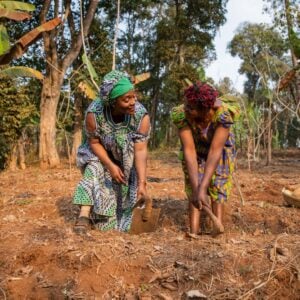
The Bill & Melinda Gates Foundation has announced a new $1.4 billion, four-year commitment to help smallholder farmers adapt to the escalating impacts of climate change. Unveiled at COP30 in Belém, Brazil, the initiative focuses on improving resilience and protecting progress against poverty across sub-Saharan Africa and South Asia, where agricultural communities are increasingly vulnerable to droughts, floods, and rising temperatures. Despite their critical role in feeding local populations, less than 1% of global climate finance supports these farmers. Bill Gates emphasized that empowering farmers with the right tools is one of the smartest investments for both people and the planet.
The foundation’s new commitment aims to close the global adaptation funding gap, recognizing that farmers in low-income nations produce one-third of the world’s food yet face severe climate threats. Studies from the World Bank and World Resources Institute suggest that well-targeted adaptation investments can yield high social and economic returns—boosting GDP in some regions by up to 15% and returning more than ten times their cost within a decade. Gates Foundation CEO Mark Suzman called climate adaptation an “economic and moral imperative,” urging governments and private sectors to prioritize adaptation alongside mitigation efforts.
The funding will expand farmer-led, evidence-based innovations that strengthen food systems and rural livelihoods. This includes scaling digital advisory services that provide farmers with real-time weather and planting information, climate-resilient crops and livestock that withstand heat and drought, and soil health innovations to restore degraded land and boost productivity. A $30 million partnership with the Novo Nordisk Foundation will advance soil science research.
The initiative builds on partnerships established through the foundation’s COP27 commitments, already benefiting millions of farmers. For example, the AIM for Scale program reached nearly 40 million Indian farmers with AI-powered weather forecasts, while collaborations like TomorrowNow and KALRO are delivering localized weather alerts to millions of farmers in East Africa. These efforts are helping protect crops, improve yields, and enhance rural incomes through data-driven solutions.
The new commitment also aligns with global cooperation efforts at COP30, emphasizing locally led solutions and sustainable agriculture. Brazil’s model of linking social programs with green innovation serves as a guide for equitable growth. In collaboration with partners including Brazil’s Ministry of Agriculture, Embrapa, AGRA, CGIAR, FARA, CAAS, and the United Arab Emirates, the Gates Foundation will co-host the Agricultural Innovation Showcase at COP30, highlighting affordable, climate-smart technologies designed for and by farmers. The investment underscores the belief that with the right tools, smallholder farmers can adapt faster and lead the transition toward a more resilient and sustainable food future.